Neurosteroid Linked to Brain Connectivity Changes in Depression
A study by UT Southwestern Medical Center researchers suggests that pregnenolone may alter brain connectivity patterns in women with depression, offering potential insights for future treatments.


Researchers from UT Southwestern Medical Center and UT Dallas have found that pregnenolone, a steroid hormone produced from cholesterol, may alter communication between key brain regions linked to depression and cognitive control. The study, conducted with the UT Dallas Center for BrainHealth, was published in the Journal of Clinical Psychiatry and involved a double-blind, placebo-controlled crossover trial with 29 women diagnosed with mild to moderate major depressive disorder (source ID 1). [1]
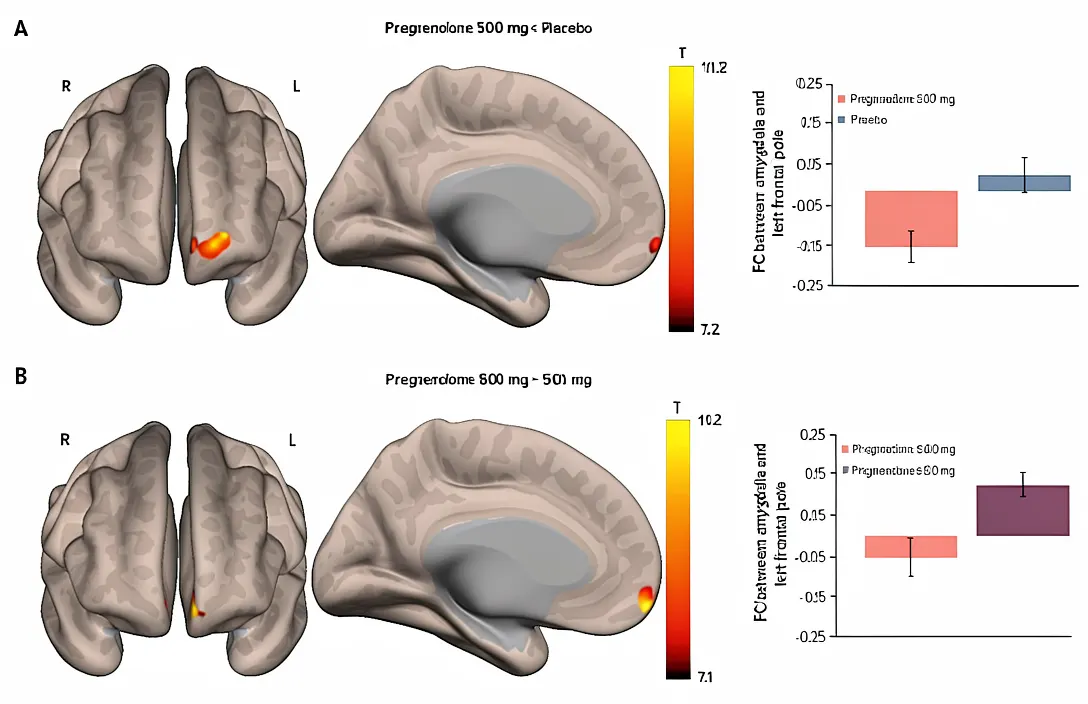
Participants received either 500 mg or 800 mg of pregnenolone per day or a placebo over three separate seven-day treatment periods. Functional MRI (fMRI) scans were used to assess brain activity, revealing that the 500 mg dose of pregnenolone reduced functional connectivity between the amygdala and the left frontal pole. These brain regions are involved in emotional processing and cognitive control, and this change may indicate improved emotional regulation, a process often impaired in depression (source ID 1). [1]
The study also found that both doses of pregnenolone significantly increased levels of allopregnanolone, a downstream neurosteroid involved in regulating brain signaling. However, the 800 mg dose did not produce a greater effect on brain connectivity compared to the 500 mg dose, suggesting a potential ceiling effect (source ID 1). [1]
The researchers noted that the next steps include determining whether the observed brain connectivity changes are associated with improvements in depressive symptoms or cognition, as well as replicating the findings in a larger sample. The ultimate goal is to establish whether pregnenolone or related compounds can provide a clinically meaningful treatment option for depression (source ID 1). [1]
Advertisement
Researchers from UT Southwestern Medical Center and UT Dallas have found that pregnenolone, a steroid hormone produced from cholesterol, may alter communication between key brain regions linked to depression and cognitive control (Source ID: 1). The study, conducted with the UT Dallas Center for BrainHealth and published in the Journal of Clinical Psychiatry, involved 29 women with mild to moderate major depressive disorder in a double-blind, placebo-controlled crossover trial of pregnenolone. Participants received three seven-day treatment conditions—500 or 800 milligrams (mg) per day of pregnenolone or placebo—taken orally. Testing was performed via serum samples and functional MRI (fMRI) exams, a brain-imaging technique that enables researchers to study brain activity by measuring changes in blood flow and oxygen levels. [1]
Compared with the placebo, participants taking 500 mg/day of pregnenolone had reduced functional connectivity between the amygdala and left frontal pole, the regions of the brain involved in emotional processing and cognitive control (Source ID: 1). This change may reflect improved emotional regulation, a process that is often impaired in people with depression. The findings may help explain how pregnenolone and related neurosteroids could have an antidepressant effect. Intriguingly, the connectivity change was seen with the 500 mg dose but not the 800 mg dose, suggesting that more pregnenolone does not necessarily produce a greater effect on these brain circuits. [1]
Both doses were well tolerated, with no serious adverse events reported. Blood tests also showed that both doses of pregnenolone significantly increased levels of allopregnanolone, a downstream neurosteroid involved in regulating brain signaling (Source ID: 1). The next steps for researchers will be to determine whether observed connectivity changes are associated with improvement in depressive symptoms or cognition and to replicate the findings in a larger sample. "Ultimately, the goal is to establish whether pregnenolone or related compounds can provide a clinically meaningful treatment option," said corresponding author E. Sherwood Brown. [1]
Researchers from UT Southwestern Medical Center and UT Dallas have found that pregnenolone, a steroid hormone produced from cholesterol, may alter communication between key brain regions linked to depression and cognitive control (Source ID: 1). The study, conducted with the UT Dallas Center for BrainHealth and published in the Journal of Clinical Psychiatry, involved 29 women with mild to moderate major depressive disorder in a double-blind, placebo-controlled crossover trial of pregnenolone. Participants received three seven-day treatment conditions—500 or 800 milligrams (mg) per day of pregnenolone or placebo—taken orally. Testing was performed via serum samples and functional MRI (fMRI) exams, a brain-imaging technique that enables researchers to study brain activity by measuring changes in blood flow and oxygen levels. [1]
Advertisement
Compared with the placebo, participants taking 500 mg/day of pregnenolone had reduced functional connectivity between the amygdala and left frontal pole, the regions of the brain involved in emotional processing and cognitive control (Source ID: 1). This change may reflect improved emotional regulation, a process that is often impaired in people with depression. The findings may help explain how pregnenolone and related neurosteroids could have an antidepressant effect. Intriguingly, the connectivity change was seen with the 500 mg dose but not the 800 mg dose, suggesting that more pregnenolone does not necessarily produce a greater effect on these brain circuits. [1]
Blood tests also showed that both doses of pregnenolone significantly increased levels of allopregnanolone, a downstream neurosteroid involved in regulating brain signaling (Source ID: 1). Both doses were well tolerated, with no serious adverse events reported. The next steps for researchers will be to determine whether observed connectivity changes are associated with improvement in depressive symptoms or cognition and to replicate the findings in a larger sample. [1]
Sources
Prepared with AI assistance from the cited sources.
The Cali Reporter newsletter
The stories worth your time.
California, the country, and what comes next. Join our free newsletter for reporting that keeps you informed.
More in Health & Medicine
- Understanding Fascia and the Evidence Behind Fascia Release
Fascia is a connective tissue that plays a structural role in the human body, but evidence supporting specific exercises or tools for 'fascia release' remains limited.
- Antidepressant Effectiveness and Long-Term Use
A new review suggests that some antidepressants may be more effective than others in helping people manage depression symptoms over the long term, according to a study published in The Lancet Psychiatry.
- Experimental Weight-Loss Drug Shows Promise for Knee Osteoarthritis Pain
A new study suggests that an experimental weight-loss drug, retatrutide, may significantly reduce knee pain in people with osteoarthritis and obesity.