NASA Launches Competition to Advance Mid-Power Electric Rocket Technology
NASA has initiated a competition to support the development of mid-power Hall effect thrusters, a key propulsion technology for future space missions.

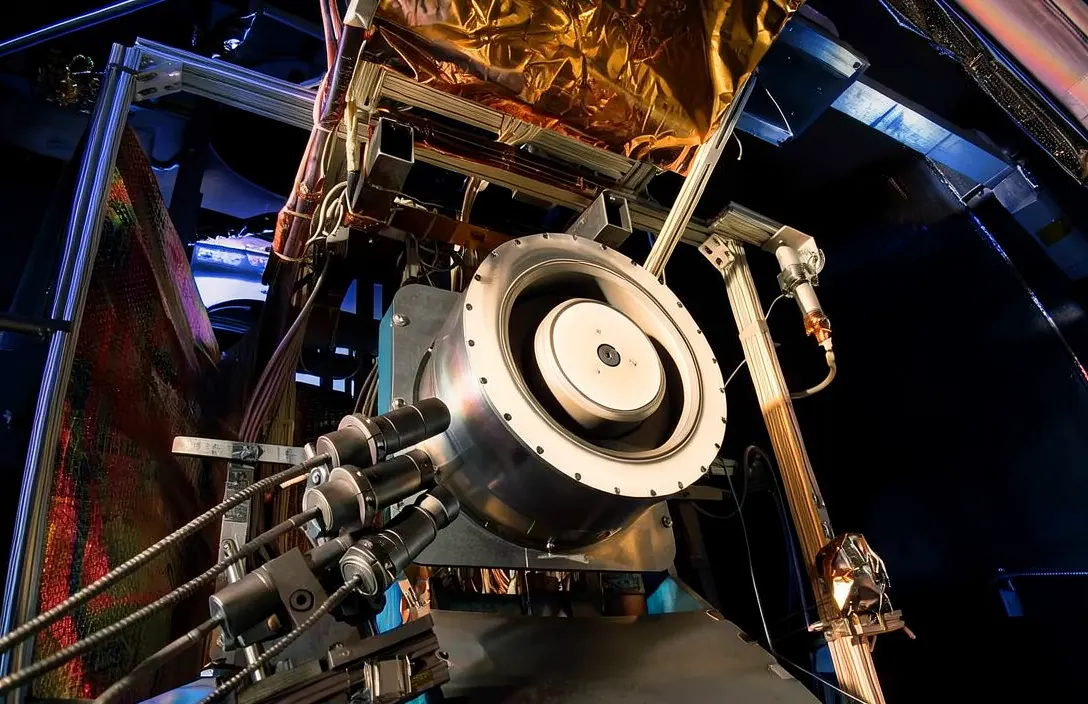
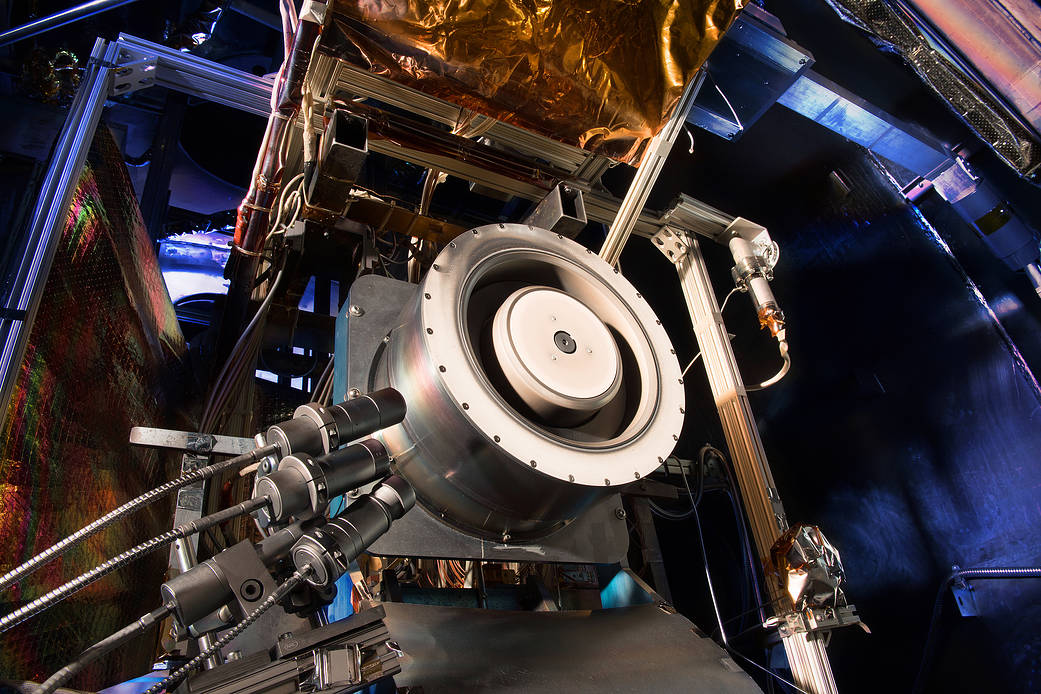
NASA launched a new competition inviting U.S. companies to produce prototypes of mid-power Hall effect thrusters – a type of electric propulsion system considered crucial for future space operations and exploration. Hall effect thrusters use an electric field to accelerate a propellant gas, producing efficient thrust for long-duration missions. Used for propelling satellites and deep space robotic vehicles, Hall effect thruster systems are critical for space operations and exploration. This information is sourced from NASA's official announcement regarding the Advanced Mid-Power Electric Rocket (AMPERE) Challenge (1). [1]
NASA’s Advanced Mid-Power Electric Rocket (AMPERE) Challenge is offering $500,000, split between two winning U.S. companies, to accelerate the maturation of mid-power systems that could be foundational to supporting future NASA and commercial missions. Interested parties can learn more at an AMPERE Virtual Industry Day hosted by NASA on Thursday, Nov. 19. The competition is the first of NASA’s Tech Maturation Prize series, which seeks to accelerate development of breakthrough technologies in support of NASA missions while strengthening the U.S. space economy. This detail is supported by the NASA announcement on the AMPERE Challenge (1). [1]
The AMPERE Challenge includes three phases. In Phase 1, each participating team will submit a concept design, manufacturing plan, and cost and performance projections. NASA may select two winners to advance to Phase 2, where teams will develop prototypes and collaborate with NASA personnel. In Phase 3, prototypes will be tested at NASA Glenn at no cost to the participating teams. The challenge supports the Advanced Mid-Power Electric Rocket project, managed by NASA Glenn and NASA’s Jet Propulsion Laboratory in Southern California. This structure and timeline are outlined in the NASA AMPERE Challenge documentation (1). [1]
NASA launched a new competition inviting U.S. companies to produce prototypes of mid-power Hall effect thrusters – a type of electric propulsion system considered crucial for future space operations and exploration. Hall effect thrusters use an electric field to accelerate a propellant gas, producing efficient thrust for long-duration missions. Used for propelling satellites and deep space robotic vehicles, Hall effect thruster systems are critical for space operations and exploration (source ID 1). [1]
Advertisement
NASA’s Advanced Mid-Power Electric Rocket (AMPERE) Challenge is offering $500,000, split between two winning U.S. companies, to accelerate the maturation of mid-power systems that could be foundational to supporting future NASA and commercial missions. Interested parties can learn more at an AMPERE Virtual Industry Day hosted by NASA on Thursday, Nov. 19 (source ID 1). [1]
The competition includes three phases. In Phase 1, each participating team will submit a concept design, manufacturing plan, and cost and performance projections. NASA may select two winners to advance to Phase 2, where teams will develop prototypes and collaborate with NASA personnel. Through no-cost licensing, these teams can gain early access to NASA-developed Hall effect thruster technologies that use krypton as a propellant (source ID 1). [1]
In Phase 3, prototypes will be tested at NASA Glenn at no cost to the participating teams. In total, two winning teams may be selected to receive up to $250,000 each. The AMPERE Challenge is open for registration until Jan. 27, 2027, at 5 p.m. EST (source ID 1). [1]
NASA launched a new competition inviting U.S. companies to produce prototypes of mid-power Hall effect thrusters – a type of electric propulsion system considered crucial for future space operations and exploration. Hall effect thrusters use an electric field to accelerate a propellant gas, producing efficient thrust for long-duration missions. Used for propelling satellites and deep space robotic vehicles, Hall effect thruster systems are critical for space operations and exploration (source ID: 1). [1]
Advertisement
NASA’s Advanced Mid-Power Electric Rocket (AMPERE) Challenge is offering $500,000, split between two winning U.S. companies, to accelerate the maturation of mid-power systems that could be foundational to supporting future NASA and commercial missions. Interested parties can learn more at an AMPERE Virtual Industry Day hosted by NASA on Thursday, Nov. 19 (source ID: 1). [1]
The competition includes three phases. In Phase 1, each participating team will submit a concept design, manufacturing plan, and cost and performance projections. NASA may select two winners to advance to Phase 2, where teams will develop prototypes and collaborate with NASA personnel. Through no-cost licensing, these teams can gain early access to NASA-developed Hall effect thruster technologies that use krypton as a propellant (source ID: 1). [1]
In Phase 3, prototypes will be tested at NASA Glenn at no cost to the participating teams. In total, two winning teams may be selected to receive up to $250,000 each. The AMPERE Challenge is open for registration until Jan. 27, 2027, at 5 p.m. EST (source ID: 1). [1]
Sources
Prepared with AI assistance from the cited sources.
The Cali Reporter newsletter
The stories worth your time.
California, the country, and what comes next. Join our free newsletter for reporting that keeps you informed.
More in Science
- Volcanic Eruption Reshapes Iwo Jima’s Coastline
A recent volcanic eruption near Iwo Jima has temporarily extended the island's black sand beaches, though the longevity of the new land remains uncertain.
- Galaxies in the NGC 7771 Group Engage in Cosmic Merger
Astronomers have observed a group of galaxies in the NGC 7771 Group, which is located approximately 200 million light-years away in the constellation Pegasus. These galaxies are in the process of merging, a phenomenon…
- NASA Awards Contract for NOAA’s Near Earth Orbit Network Program
NASA has awarded a contract to Northrop Grumman Systems Corporation for the Sounder for Microwave-Based Applications (SMBA) instruments on NOAA’s Near Earth Orbit Network (NEON) satellites. The contract includes a…