Montgomery Bus Ruling at 70: A Receipt Trail, Not a Vibe
A 1956 civil-rights suit, a 2-1 district ruling, an appeal, a Supreme Court summary affirmance and an official written notice by federal marshals—what the anniversary evidence shows, what it leaves open and what readers can check next.

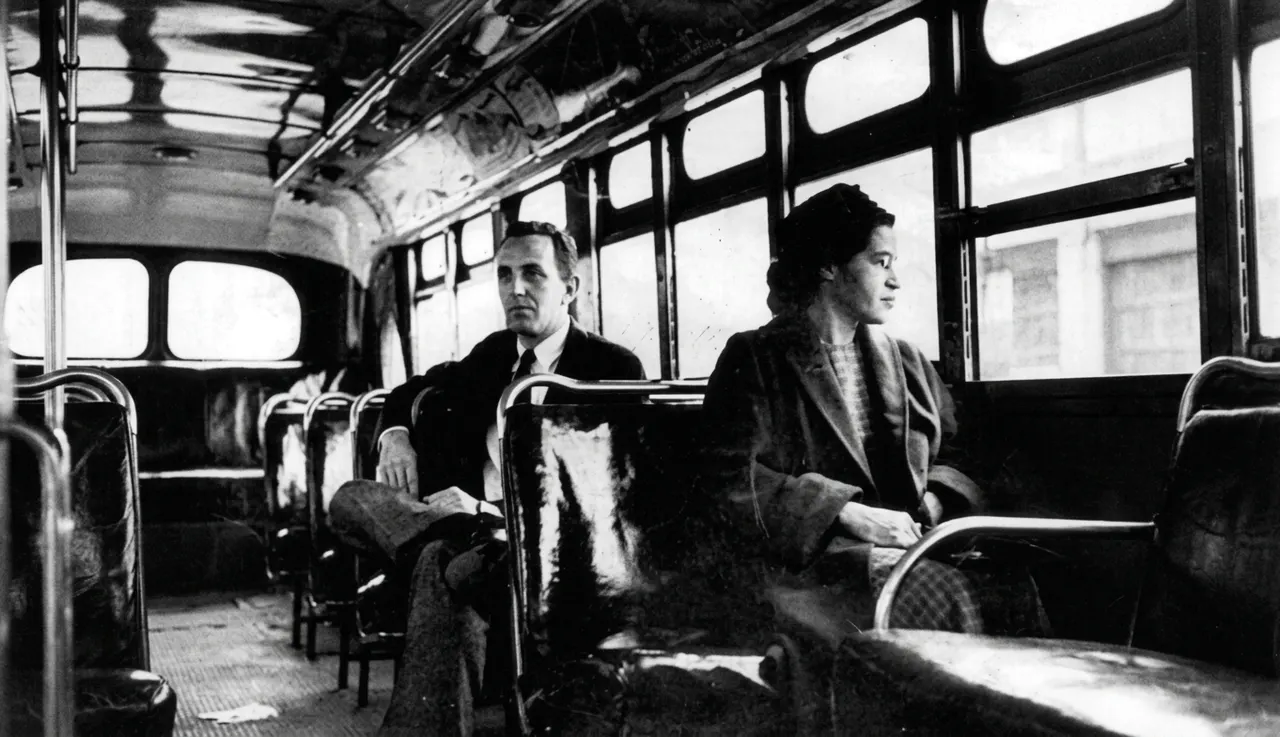

Good News Network’s anniversary roundup marks 70 years since the U.S. Supreme Court struck down Alabama’s policy of racial segregation on public buses, an action the item says ended the Montgomery Bus Boycott made famous by Rosa Parks. The entry frames the breakthrough as court-driven: civil rights lawyers filed a lawsuit in June, a three-judge District Court panel ruled 2-1, Alabama and the city appealed, and the Supreme Court summarily affirmed. That sequence—date, split vote, appeal, affirmance and enforcement—is the spine of the anniversary. [1]
The district court’s reasoning, as summarized in the item, was specific: enforced segregation of black and white passengers on motor buses operating in the City of Montgomery violated the Constitution and laws of the United States because the conditions deprived people of equal protection under the Fourteenth Amendment. That is the evidentiary core. The ruling tied a bus practice to a constitutional guarantee and found the conditions legally defective. The 2-1 split shows the outcome was contested at the trial level. [1]
The Supreme Court’s summary affirmance came after the appeal, and the item says the Court ordered the buses desegregated with an official written notice by federal marshals. The source does not quote that order or give a separate high-court vote count. It does supply the operational detail that turns a legal victory into a public-facing change: a written notice, tied to an order to desegregate and identified as an official written notice by federal marshals. That is the difference between a ruling on paper and an enforcement step the source attaches to federal marshals. [1]
The ruling matters because it converted a local transit policy into a federal constitutional question and attached an enforcement mechanism. The Fourteenth Amendment’s equal-protection guarantee was the hook; the district court’s 2-1 finding was the first legal receipt; the appeal and summary affirmance were the next; the official written notice by federal marshals was the delivery system named by the source. For readers who want solutions with receipts, that is the receipt trail: a lawsuit, a ruling, an appeal, a high-court affirmance and an order to desegregate with an official written notice by federal marshals. It shows how a civil-rights claim can move from a local grievance to a national court and back to the transit system where the harm occurred. [1]
Advertisement
The Montgomery Bus Boycott is the public-memory hook, but the item’s decisive action is judicial. That distinction keeps the story anchored in what can be verified here: the Fourteenth Amendment reasoning, the 2-1 district vote, the appeal by Alabama and the city, the Supreme Court’s summary affirmance and the official written notice by federal marshals. The boycott is named and tied to Rosa Parks; the source’s through-line is the legal sequence. That makes the anniversary a useful moment to separate memory from the steps the item says ended the protest. [1]
Within the limits of an anniversary roundup, the item verifies several anchors: the Supreme Court action is placed 70 years ago and marked 1956; the policy struck down was racial segregation on public buses in Alabama; the boycott is identified as the Montgomery Bus Boycott made famous by Rosa Parks; the lawsuit was filed in June; the district panel ruled 2-1; the constitutional basis was equal protection under the Fourteenth Amendment; Alabama and the city appealed; and the Supreme Court summarily affirmed and ordered desegregation with an official written notice by federal marshals. Those facts are enough to reconstruct the legal spine without going beyond the evidence. [1]
The item also carries a photo caption identifying the Montgomery, Alabama, bus line ridden by Rosa Parks and the Henry Ford Museum, with a GFDL/CC license credit to Eege Fot vum Lizenz. That caption is an artifact note, not a substitute for the court file. The source does not supply the full case name, the plaintiffs’ names or the complete text of the order, so readers should treat those as open items. The verified background here is the legal sequence, the constitutional rationale and the named memory hook. [1]
The source’s wording is specific: the district court found that enforced segregation of black and white passengers on motor buses operating in the City of Montgomery violated the Constitution and laws of the United States because the conditions deprived people of equal protection under the Fourteenth Amendment. That is a legal finding, not a general statement that segregation was unpopular or impractical. The 2-1 vote and appeal show it was contested; the summary affirmance and the order to desegregate with an official written notice by federal marshals show it carried final consequences. [1]
Advertisement
For Montgomery’s bus system, the immediate implication was structural: under the challenged policy, the system could no longer enforce segregation of black and white passengers on motor buses, and the desegregation order was to be communicated through an official written notice by federal marshals. That is a concrete change in public administration, not merely a court statement. The source links the constitutional violation to the conditions of bus travel and then links the remedy to an official written notice by federal marshals. The source does not describe the notice’s recipients or content, so those details remain outside the supplied evidence. [1]
For legal observers, the case is a reminder that summary affirmance can still carry consequences. The district court’s 2-1 ruling supplies the reasoning; the Supreme Court’s affirmance supplies finality; the official written notice by federal marshals supplies the enforcement step named by the source. The source’s account does not include a lengthy Supreme Court opinion, but it does include an order to desegregate with an official written notice by federal marshals. The broader lesson is that equal-protection claims can travel from a local bus policy to the nation’s highest court and back to the transit system. The item does not claim the ruling alone eliminated every form of discrimination or that resistance ended immediately. It claims a specific legal and policy result. [1]
Several questions remain open on the supplied evidence. The source does not specify the exact calendar date of the Supreme Court action, the full case name, the plaintiffs, the precise wording of the order, the Supreme Court’s vote count or how quickly the official written notice by federal marshals was issued. It does not say who received the written notice or what the notice said. It does not detail how the boycott ended operationally or whether local officials complied without further delay. These are limits of the evidence available here, and they mark where readers should look for the fuller record. [1]
Another open question is how the photo caption and museum reference fit the legal record. The source identifies the Montgomery, Alabama, bus line ridden by Rosa Parks and the Henry Ford Museum, with a license credit, but it does not explain the artifact’s provenance or whether the museum holds the vehicle, a replica or another object. Readers should treat the caption as a pointer, not a full exhibit label. The legal chronology remains the stronger verified through-line; the caption is best read as a visual aid to the anniversary rather than proof of the court sequence. [1]
Advertisement
A further question is how the item’s phrase that the Supreme Court action ended the boycott should be read alongside the district court’s 2-1 ruling and the appeal. The item supplies the sequence but not a detailed chronology of the boycott’s final days. It also does not say how the official written notice by federal marshals interacted with local transit administration after the order. These are questions about implementation and timing, not about whether the source supports the core legal facts. They are the right questions for anyone who wants to go beyond the anniversary summary and into the documents. [1]
The next watch item is not a forecast; it is the source’s own open checklist. The item does not provide the full case name, the plaintiffs, the exact calendar date of the Supreme Court action, the high court’s vote count, the precise wording of the order, the recipients or text of the official written notice by federal marshals, or a detailed chronology of the boycott’s final days. Those gaps are visible in the source’s account, and they are the specifics an update would need to supply to deepen the record without changing its verified anchors. [1]
A second watch item is consistency with the verified anchors. Any fuller account should still match the source’s sequence: 1956; the June lawsuit; the 2-1 district ruling; the Fourteenth Amendment equal-protection rationale; the appeal by Alabama and the city; the Supreme Court’s summary affirmance; and the order to desegregate with an official written notice by federal marshals. The source does not say how quickly the notice was issued or how local officials responded, so those remain questions rather than conclusions. Readers can watch for details that fill those gaps while preserving the sequence. [1]
Readers can do something concrete with the record: read the Good News Network item and follow its link, then use its own details as a receipts-first checklist when comparing other accounts. Start with the 1956 date, the June lawsuit, the 2-1 district ruling, the appeal, the summary affirmance and the official written notice by federal marshals. If visiting the Henry Ford Museum, check the caption details the source supplies for the Montgomery bus line ridden by Rosa Parks. That is a practical way to mark the anniversary: begin with the documented sequence and ask what the fuller record adds. [1]
Advertisement
A second practical step is to keep the legal and memorial threads separate but connected. The source gives readers a named boycott, a named figure in Rosa Parks, a constitutional rationale and an enforcement notice. Anyone retelling the anniversary can use those four elements as a short verification set. The point is not to demand that a roundup entry be a court file. The point is to use the entry’s specific claims—1956, June, 2-1, Fourteenth Amendment, appeal, summary affirmance, official written notice by federal marshals—as the starting line for further reading. [1]
Sources
Prepared with AI assistance from the cited sources.
The Cali Reporter newsletter
The stories worth your time.
California, the country, and what comes next. Join our free newsletter for reporting that keeps you informed.
More in Good News
- World's First Non-Malignant Bone Marrow Transplant Successfully Treats Aplastic Anemia
A groundbreaking medical achievement has been made with the successful use of a deceased organ donor's bone marrow to treat a non-malignant disease, offering new hope for patients with aplastic anemia.
- Preserving Kids' Art Through Collaborative Collages
An artist has found a way to help parents preserve their children's artwork while reigniting their own creativity, leading to a growing trend among families.
- Spain's Cantabrian Brown Bear Population Doubles in 20 Years
Spain has witnessed a remarkable recovery of its Cantabrian brown bear population over the last two decades, with numbers doubling to 370 individuals and their breeding range expanding significantly.