Molecular Weakness in Glioblastoma Tumor Cells Discovered
Researchers have identified a shared molecular trait in glioblastoma, an aggressive brain cancer, which may offer a new treatment target.

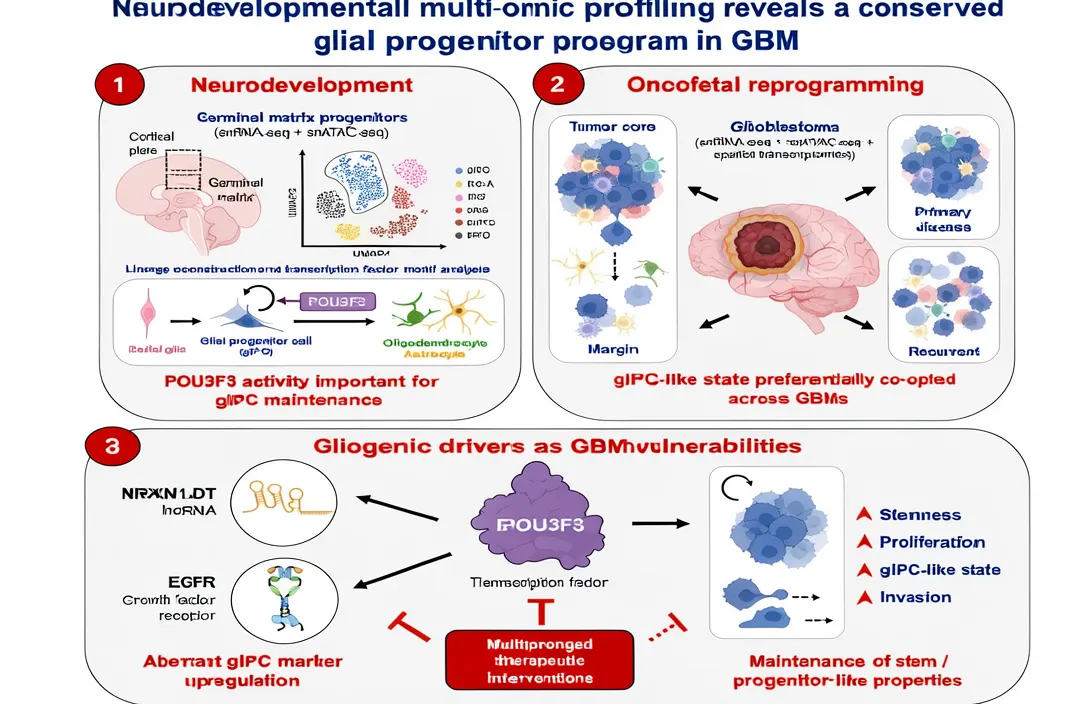

A study published in Neuron on November 11, 2026, reveals that glioblastoma cells share a molecular trait resembling that of immature brain cells known as glial intermediate progenitor cells (gIPCs). Researchers at the Icahn School of Medicine at Mount Sinai found that many glioblastoma cells exhibit characteristics similar to these developmental cells, which play a role in brain development. This discovery suggests a potential target for future treatments, as the shared trait may be a vulnerability in the tumor's biology (source ID: 1). [1]
The study identifies POU3F3, a protein that regulates gene activity, as a key factor in maintaining the gIPC-like state in glioblastoma cells. Experiments using patient-derived tumor cells showed that reducing POU3F3 activity decreased the aggressiveness of the tumor cells. This finding indicates that POU3F3 may be a potential molecular target for developing new therapies against glioblastoma (source ID: 1). [1]
The research builds on earlier work by the same team, which identified gIPCs as a distinct brain cell type present during late pregnancy and early infancy. By comparing gene activity patterns in developing brain cells with glioblastoma tumor data, the researchers found that glioblastoma cells most closely resembled gIPCs. This shared biological program may represent a new weakness in glioblastoma that could be targeted with future treatments (source ID: 1). [1]
A study published in Neuron on November 11, 2026, reveals that glioblastoma cells share a molecular trait resembling that of immature brain cells known as glial intermediate progenitor cells (gIPCs). The study identifies POU3F3, a protein that regulates gene activity, as a key factor in maintaining the gIPC-like state in glioblastoma cells. This discovery was supported by research from the Icahn School of Medicine at Mount Sinai, which found that reducing POU3F3 activity in patient-derived tumor cell models made tumor cells less aggressive (Source ID 1). [1]
Advertisement
Glioblastoma is difficult to treat in part because its cells can differ substantially, even within a single tumor. Despite this diversity, researchers found that many glioblastomas share a pattern of gene activity resembling that of gIPCs, which help generate supporting brain cells and can divide and move through developing tissue. The pattern appeared in samples from multiple patients, including newly diagnosed and recurrent glioblastomas, and across different tumor regions and genetic backgrounds (Source ID 1). [1]
POU3F3 is a transcription factor, a protein that helps control which genes are active. The researchers identified it as an important regulator of the gIPC-like state in glioblastoma cells. In experiments using primary tumor cells derived from patients, lowering POU3F3 levels reduced features associated with aggressive tumor behavior, including the ability to keep producing tumor cells, multiply and invade surrounding tissue (Source ID 1). [1]
A study published in Neuron on November 11, 2026, reveals that glioblastoma cells share a molecular trait resembling that of immature brain cells known as glial intermediate progenitor cells (gIPCs). Researchers at the Icahn School of Medicine at Mount Sinai identified POU3F3, a protein that regulates gene activity, as an important factor in maintaining this resemblance. In patient-derived tumor cell models, reducing POU3F3 activity made tumor cells less aggressive, suggesting a potential direction for future drug development (Source ID: 1). [1]
Glioblastoma is difficult to treat in part because its cells can differ substantially, even within a single tumor. This diversity, or heterogeneity, makes it hard to target all cells in the tumor with one approach. Despite tumor heterogeneity, researchers found that many glioblastomas share a pattern of gene activity resembling that of gIPCs, which help generate supporting brain cells and can divide and move through developing tissue (Source ID: 1). [1]
Advertisement
POU3F3 is a transcription factor, a protein that helps control which genes are active. The researchers identified it as an important regulator of the gIPC-like state in glioblastoma cells. In experiments using primary tumor cells derived from patients, lowering POU3F3 levels reduced features associated with aggressive tumor behavior, including the ability to keep producing tumor cells, multiply and invade surrounding tissue (Source ID: 1). [1]
A study published in Neuron on November 11, 2026, reveals that glioblastoma cells share a molecular trait resembling that of immature brain cells known as glial intermediate progenitor cells (gIPCs). Researchers at the Icahn School of Medicine at Mount Sinai identified POU3F3, a protein that regulates gene activity, as an important factor in maintaining this resemblance (source ID 1). The study suggests that this molecular trait could be a target for future treatments, potentially leading to more effective therapies for this aggressive brain cancer. [1]
Glioblastoma is difficult to treat in part because its cells can differ substantially, even within a single tumor. This diversity, or heterogeneity, makes it hard to target all cells in the tumor with one approach. Despite tumor heterogeneity, researchers found that many glioblastomas share a pattern of gene activity resembling that of gIPCs, which help generate supporting brain cells and can divide and move through developing tissue (source ID 1). [1]
POU3F3 is a transcription factor, a protein that helps control which genes are active. The researchers identified it as an important regulator of the gIPC-like state in glioblastoma cells. In experiments using primary tumor cells derived from patients, lowering POU3F3 levels reduced features associated with aggressive tumor behavior, including the ability to keep producing tumor cells, multiply and invade surrounding tissue (source ID 1). [1]
Advertisement
The Cali Reporter newsletter
The stories worth your time.
California, the country, and what comes next. Join our free newsletter for reporting that keeps you informed.
More in Health & Medicine
- Understanding Fascia and the Evidence Behind Fascia Release
Fascia is a connective tissue that plays a structural role in the human body, but evidence supporting specific exercises or tools for 'fascia release' remains limited.
- Antidepressant Effectiveness and Long-Term Use
A new review suggests that some antidepressants may be more effective than others in helping people manage depression symptoms over the long term, according to a study published in The Lancet Psychiatry.
- Experimental Weight-Loss Drug Shows Promise for Knee Osteoarthritis Pain
A new study suggests that an experimental weight-loss drug, retatrutide, may significantly reduce knee pain in people with osteoarthritis and obesity.