Mild Respiratory Infections and Immune Age
A recent study suggests that mild to moderate viral infections such as the common cold or mild cases of COVID-19 do not lead to a permanent increase in immune age, according to findings published in the journal…

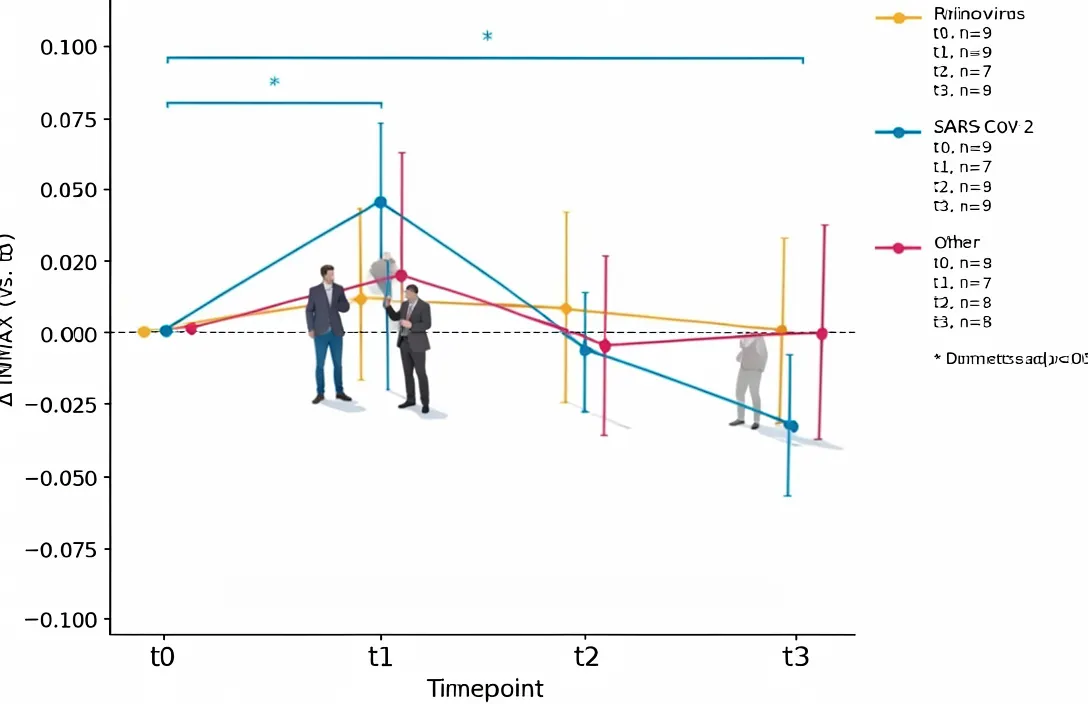

Researchers at the Leibniz Research Center for Working Environments and Human Factors Dortmund (IfADo) investigated the impact of viral infections on immune age, which refers to the biological age of the immune system compared to chronological age. The study used the IMMune Age indeX (IMMAX), a scientific measure derived from blood samples, to assess immune age in 77 adults aged 21 to 65 (source ID: 1). [1]
Participants who experienced a mild to moderate viral infection, including the common cold, flu, or mild cases of COVID-19, had their immune age measured at three time points: immediately after symptom onset, one week later, and four weeks later. The results showed that immune age returned to baseline levels four weeks after the infection, indicating that changes observed during the acute phase were temporary (source ID: 1). [1]
The study found that the temporary rise in immune age was most pronounced in individuals with SARS-CoV-2 infections. However, even in these cases, immune age normalized after recovery. This contrasts with previous observations on chronic latent infections, such as those caused by cytomegalovirus (CMV), where immune age increases permanently (source ID: 1). [1]
The study was conducted by researchers at the Leibniz Research Center for Working Environments and Human Factors Dortmund (IfADo), located in Dortmund, Germany. The research involved 77 adults aged 21 to 65, who were monitored for six months following the onset of respiratory symptoms. Blood samples were collected at three distinct time points: immediately upon symptom onset, one week later, and four weeks after the initial symptoms. The focus was on individuals experiencing mild to moderate viral infections, including the common cold, flu, and mild cases of COVID-19. [1]
Advertisement
The IMMune Age indeX (IMMAX) was used to measure immune age, derived from blood samples. The study specifically examined the changes in immune age over time, with particular attention to the acute phase of illness. Researchers observed that, during the initial days of infection, especially in cases of SARS-CoV-2, there was a more pronounced temporary increase in immune age compared to infections caused by other respiratory pathogens. However, by the four-week mark, immune age returned to baseline levels, indicating no long-term impact from mild to moderate infections. [1]
The research also highlighted differences between acute and latent infections. Previous studies on chronic latent infections, such as those caused by cytomegalovirus (CMV), have shown a permanent increase in immune age. In contrast, this study found that mild to moderate acute infections, such as the common cold or mild COVID-19, do not result in a lasting increase in immune age after recovery. The findings do not provide conclusions about severe or complicated infections, as the study was limited to mild to moderate cases. [1]
A study conducted by researchers at the Leibniz Research Center for Working Environments and Human Factors Dortmund (IfADo) investigated the impact of viral infections on immune age, which measures the biological age of the immune system relative to chronological age (1). The study involved 77 adults aged 21 to 65, with immune age assessed using the IMMune Age indeX (IMMAX), a scientific measure derived from blood samples. Blood samples were collected at three time points: immediately after symptom onset, one week later, and four weeks later, focusing on individuals who experienced mild to moderate viral infections, such as the common cold, flu, or mild cases of COVID-19. The findings suggest that immune age temporarily increases during acute viral infections, but returns to its original level following recovery. [1]
The study found that the temporary rise in immune age was most pronounced in individuals with SARS-CoV-2 infections (1). However, this increase was not permanent, as immune age returned to baseline levels four weeks after the infection. The research highlights a distinction between acute infections, such as the common cold or mild cases of COVID-19, and chronic latent infections, such as those caused by cytomegalovirus (CMV), which have previously been associated with a permanent increase in immune age. This suggests that the immune system responds differently to various types of infections, with acute viral infections not leading to a long-term elevation in immune age once recovery is complete. [1]
Advertisement
The findings emphasize that the immune system's response to mild to moderate viral infections is temporary and part of the natural immune activation process. While the study does not provide conclusions regarding severe or complicated infections, it contributes to the understanding of how different types of infections influence immune age. These insights may help in developing strategies for immune health management and further research into the long-term effects of viral infections on the immune system. [1]
Sources
Prepared with AI assistance from the cited sources.
The Cali Reporter newsletter
The stories worth your time.
California, the country, and what comes next. Join our free newsletter for reporting that keeps you informed.
More in Health & Medicine
- Understanding Fascia and the Evidence Behind Fascia Release
Fascia is a connective tissue that plays a structural role in the human body, but evidence supporting specific exercises or tools for 'fascia release' remains limited.
- Antidepressant Effectiveness and Long-Term Use
A new review suggests that some antidepressants may be more effective than others in helping people manage depression symptoms over the long term, according to a study published in The Lancet Psychiatry.
- Experimental Weight-Loss Drug Shows Promise for Knee Osteoarthritis Pain
A new study suggests that an experimental weight-loss drug, retatrutide, may significantly reduce knee pain in people with osteoarthritis and obesity.