LSD and Artistic Creativity: A Reanalysis of Historical Data
A new reanalysis of mid-century artworks created under the influence of LSD challenges the notion that the drug enhances artistic creativity. The study found that while LSD increased abstraction in paintings, it did…

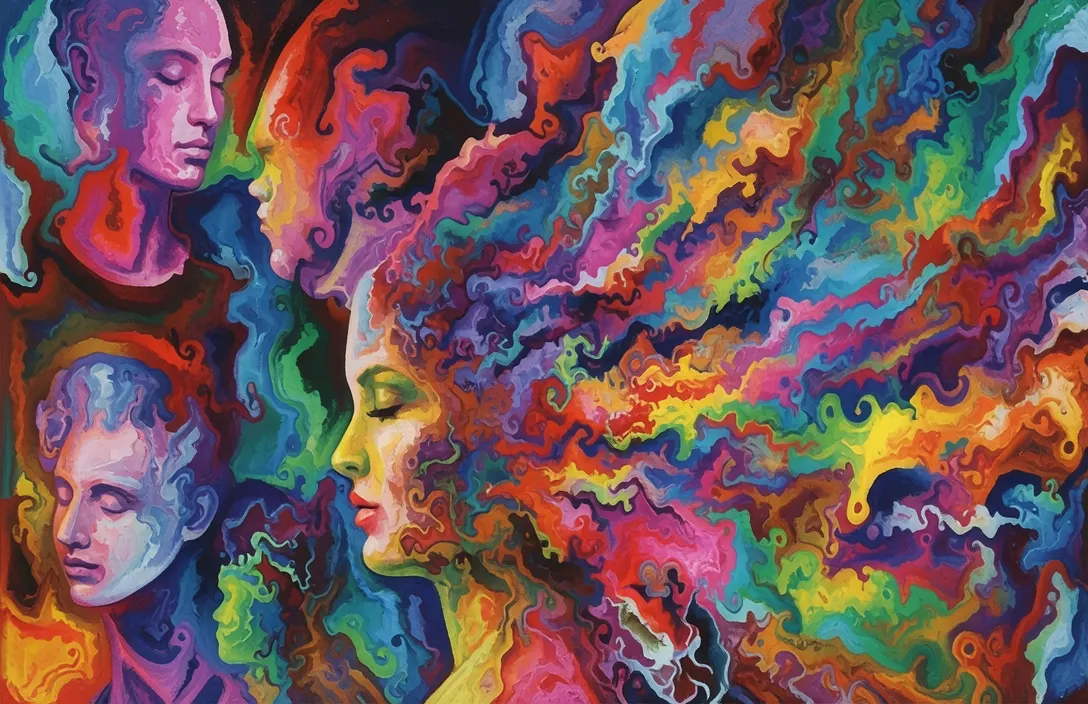
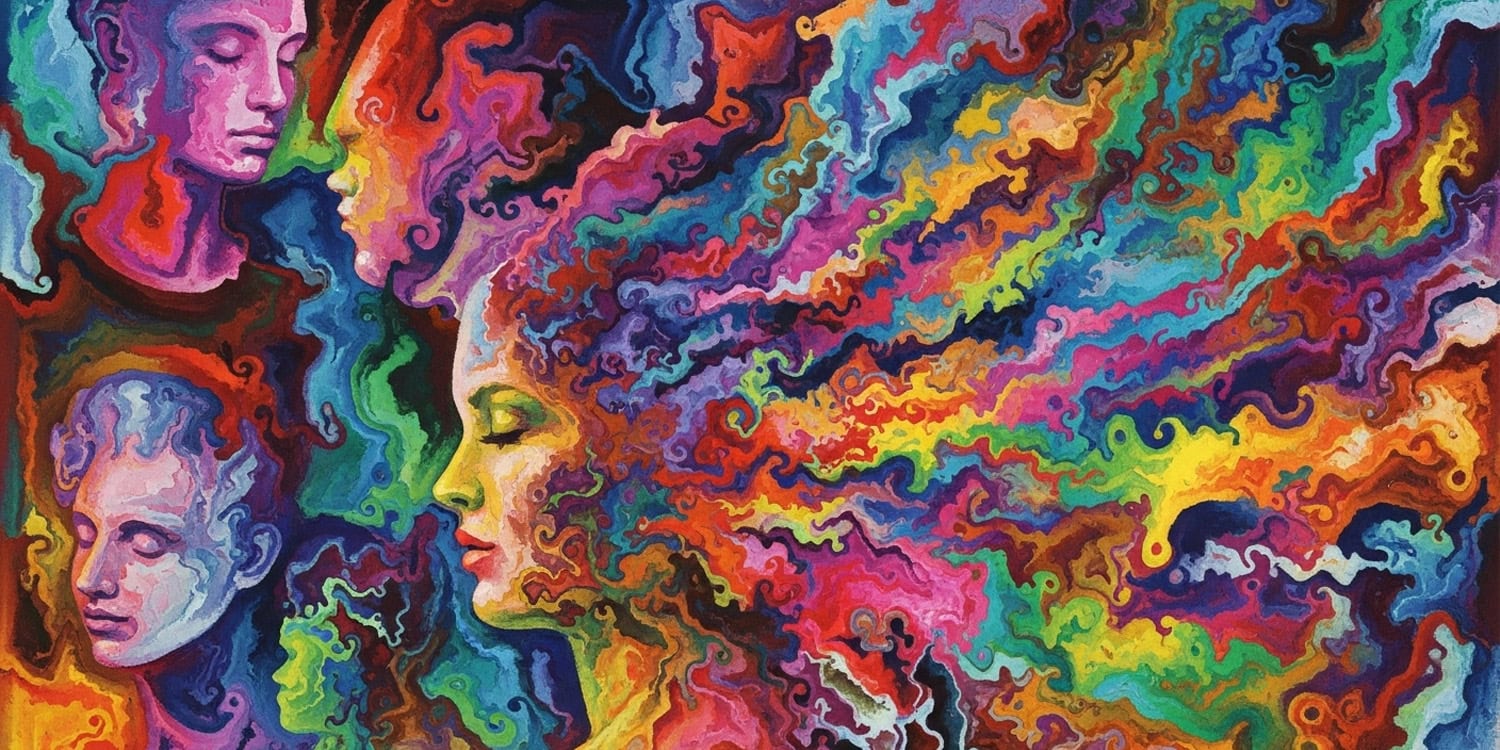
Professional artists who painted under the influence of LSD produced markedly more abstract works than they did before taking the drug, according to a new reanalysis of archived mid-century artworks published in Psychology of Aesthetics, Creativity, and the Arts (1). At the same time, blind evaluations by art experts detected no meaningful boost in the paintings’ overall creativity or aesthetic appeal, and no reliable drop in technical skill. The findings indicate that while psychedelic experiences can shift an artist’s visual style toward abstraction, they do not necessarily make the finished work more creative. [1]
Lysergic acid diethylamide, commonly known as LSD, is a potent hallucinogenic substance that alters visual perception, emotion, and thought primarily by stimulating specific serotonin receptors in the brain (1). Alongside renewed clinical interest in psychedelic substances over the past two decades, anecdotal accounts from technology workplaces and visual arts communities have popularized the claim that taking LSD in either tiny microdoses or full hallucinogenic amounts can unlock artistic breakthroughs. Yet subjective impressions during a drug experience can be misleading, making it difficult to tell whether a substance genuinely improves creative work or merely makes ideas feel deeper in the moment. [1]
In psychological science, creativity is typically defined as the ability to produce something that is both original and fitting or effective for its context (1). Reaching that balance requires two complementary modes of thinking: divergent thinking, which involves loosening mental filters to generate many unusual ideas, and convergent thinking, which involves focused attention to evaluate, refine, and execute the best options. Neuroimaging research indicates that psychedelics temporarily disrupt communication across brain networks responsible for self-focused thought and executive control, a shift that theoretical models suggest may encourage free-flowing associations while interfering with deliberate evaluation. [1]
Controlled studies have largely echoed that distinction rather than confirming popular claims of an all-purpose creative boost (1). For instance, a 2023 meta-analysis comparing 12 creativity-enhancement methods in adults found that cognitive-manipulation drugs were the least effective option and essentially ineffective at boosting creativity, whereas non-drug approaches such as structured training courses, meditation, and cultural exposure produced meaningful gains. [1]
Advertisement
Professional artists who painted under the influence of LSD produced markedly more abstract works than they did before taking the drug, according to a new reanalysis of archived mid-century artworks published in Psychology of Aesthetics, Creativity, and the Arts (1). Lysergic acid diethylamide, commonly known as LSD, is a potent hallucinogenic substance that alters visual perception, emotion, and thought primarily by stimulating specific serotonin receptors in the brain (1). In psychological science, creativity is typically defined as the ability to produce something that is both original and fitting or effective for its context (1). [1]
The study, conducted by researchers at UCLouvain and Yale University, reexamined 140 verified artworks from 20 professional artists who participated in a 1950s study led by psychiatrist Oscar Janiger (1). Participants created artworks both before and after taking LSD, and their works were later evaluated by six independent art experts using the Consensual Assessment Technique (1). The researchers found that artworks created under the influence of LSD showed a significant increase in abstraction but no meaningful improvement in creativity or aesthetic appeal (1). [1]
The findings suggest that while LSD may influence an artist’s visual style toward abstraction, it does not necessarily enhance the creative quality or technical skill of the final product (1). The study highlights the limitations of earlier evaluations, which relied on a single art professor’s subjective ratings, and emphasizes the importance of blind, multi-judge assessments in evaluating artistic creativity (1). The researchers note that their findings do not rule out the possibility that LSD may enhance creativity in other contexts, but they argue that the current study provides a more rigorous and modern perspective on the relationship between psychedelics and artistic output (1). [1]
Professional artists who painted under the influence of LSD produced markedly more abstract works than they did before taking the drug, according to a new reanalysis of archived mid-century artworks published in Psychology of Aesthetics, Creativity, and the Arts (1). The study, conducted by researchers at UCLouvain and Yale University, reexamined 140 verified artworks from 20 professional artists who participated in a 1950s study led by psychiatrist Oscar Janiger (1). The findings suggest that while LSD may influence an artist’s visual style toward abstraction, it does not necessarily enhance the creative quality or technical skill of the finished work (1). [1]
Advertisement
Blind evaluations by art experts detected no meaningful boost in the paintings’ overall creativity or aesthetic appeal, and no reliable drop in technical skill (1). The study authors, Mathilde Firmin and Baptiste Barbot, noted that the increase in abstraction was large in size, meaning the shift toward more abstract artworks after LSD was substantial and clearly detectable by raters (1). However, differences between pre-LSD and acute-LSD paintings were not statistically significant for creativity, aesthetic appeal, or technical quality (1). [1]
The researchers used the Consensual Assessment Technique, an established method in which knowledgeable judges rely on their own subjective understanding of a domain to evaluate creative products (1). Each judge independently rated every randomly ordered image on a 7-point scale across four separate criteria: creativity, aesthetic appeal, technical quality, and level of abstraction, with no information about the study’s purpose, the involvement of LSD, or whether a piece was created before or during the drug session (1). [1]
The researchers emphasized that their findings differ from Janiger’s original work, which reported higher creativity in artworks made under LSD (1). A key difference is that the original study relied on a single rater based on artistic productions likely selected a priori by the researcher, whereas the new study used blind ratings from six raters with the Consensual Assessment Technique, a more rigorous method (1). [1]
Professional artists who painted under the influence of LSD produced markedly more abstract works than they did before taking the drug, according to a new reanalysis of archived mid-century artworks published in Psychology of Aesthetics, Creativity, and the Arts (1). Lysergic acid diethylamide, commonly known as LSD, is a potent hallucinogenic substance that alters visual perception, emotion, and thought primarily by stimulating specific serotonin receptors in the brain (1). In psychological science, creativity is typically defined as the ability to produce something that is both original and fitting or effective for its context (1). Controlling for subjective bias, the study found that while LSD may influence an artist’s visual style toward abstraction, it does not necessarily enhance the creative quality or technical skill of the finished work (1). [1]
Advertisement
The study, conducted by researchers at UCLouvain and Yale University, reexamined 140 verified artworks from 20 professional artists who participated in a 1950s study led by psychiatrist Oscar Janiger (1). The findings suggest that while LSD may influence an artist’s visual style toward abstraction, it does not necessarily enhance the creative quality or technical skill of the finished work (1). The researchers used the Consensual Assessment Technique, an established method in which knowledgeable judges rely on their own subjective understanding of a domain to evaluate creative products (1). The researchers evaluated the artworks using blind assessments to avoid bias and found no significant differences in creativity, aesthetic appeal, or technical skill between works made before and during LSD intoxication (1). [1]
Blind evaluations by art experts detected no meaningful boost in the paintings’ overall creativity or aesthetic appeal, and no reliable drop in technical skill (1). The researchers used a statistical model to adjust for individual raters’ scoring tendencies and found that abstraction was the only dimension that changed reliably, climbing by 0.80 points on the standardized consensus scale (1). This increase in abstraction was large in size, meaning the shift toward more abstract artworks after LSD was substantial and clearly detectable by raters (1). However, creativity, aesthetic appeal, and technical quality were not significantly different between artworks created before and during LSD intoxication (1). [1]
Sources
Prepared with AI assistance from the cited sources.
The Cali Reporter newsletter
The stories worth your time.
California, the country, and what comes next. Join our free newsletter for reporting that keeps you informed.
More in Relationships
- Screen vs. Print: How Executive Functions Influence Word Learning in Preschoolers
A new study explores how preschoolers learn new words from print and digital books, revealing that individual differences in executive functions significantly influence comprehension outcomes.
- Smartphone Use and ADHD-Like Symptoms in Adolescents
A study published in the Journal of Affective Disorders found that problematic smartphone use among adolescents is associated with increased ADHD-like symptoms, particularly in late adolescence.
- Lack of Assertiveness and Hostility Linked to Depression Over 23 Years
A long-term study of Swedish twins found that lack of assertiveness and hostility are both associated with increased depressive symptoms over time, though some links may be influenced by shared genetic factors.