

Lopez: In L.A.'s underground, the public servants are 80, 90 and 100. It's tough getting old
Los Angeles is forcing its oldest residents into underground tunnels to fix crumbling pipes while the city debates whether 45 miles of annual replacements is enough.
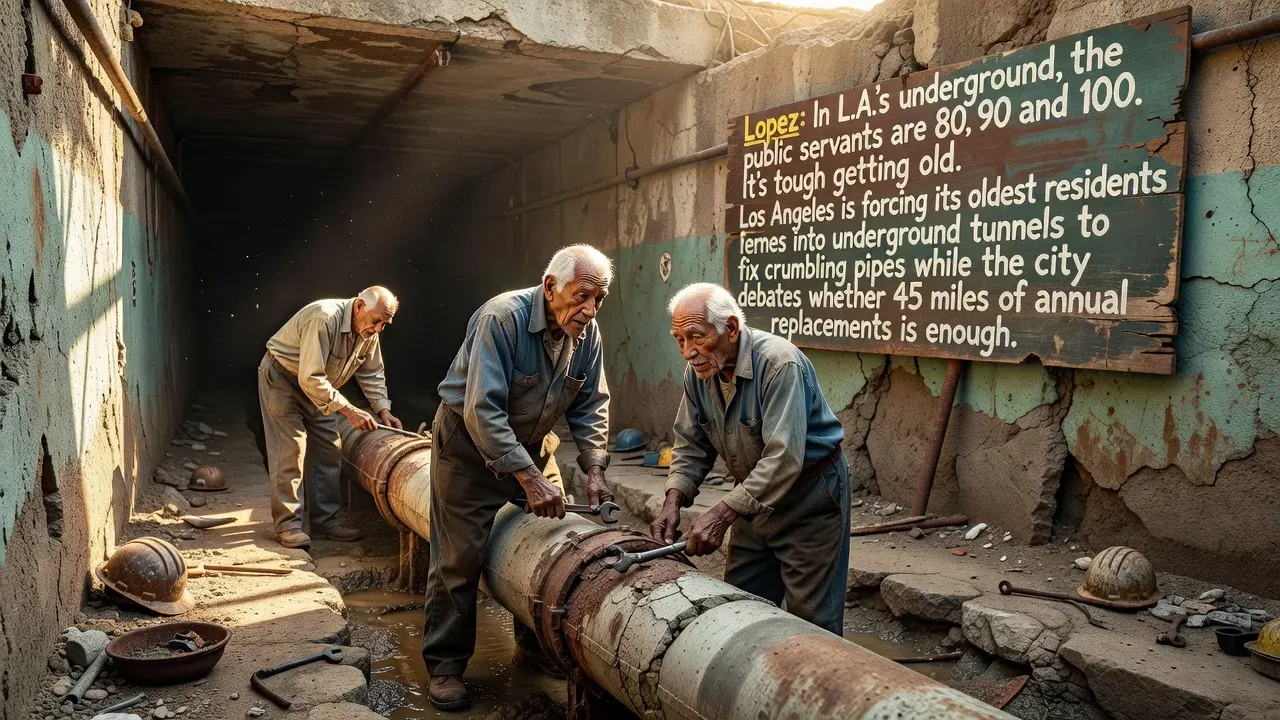
In the stifling darkness beneath Los Angeles, the people keeping water flowing through the city’s decaying infrastructure are often 80, 90, or pushing 100 years old. These aren’t veteran engineers reviewing blueprints from air-conditioned offices. They are the corroded cast-iron and clay pipes themselves, laid down when Woodrow Wilson was president, now leaking, cracking, and forcing crews to descend into century-old tunnels that double as time capsules of urban neglect.
The Los Angeles Department of Water and Power replaces 45 miles of these aging water lines every year. That number sounds impressive until you consider the scale of the problem: thousands more miles of pipe are past their designed lifespan, sprouting leaks that waste millions of gallons while Angelenos are told to conserve during droughts. The underground public servants, as columnist Steve Lopez calls them, have become a subterranean embarrassment for a city that markets itself as a capital of innovation.
Crews navigating these narrow, hazardous passages encounter not just failing infrastructure but literal relics: wooden timbers installed during the Great Depression, rusted valves stamped with manufacturers long out of business, and pipes so brittle that repairs risk triggering larger collapses. The physical toll on human workers is real, but the deeper story is how a modern metropolis has deferred maintenance so thoroughly that its water system now depends on what amounts to archaeological preservation rather than engineered renewal.

Officials acknowledge the challenge yet frame the 45-mile annual replacement pace as responsible stewardship. Critics inside and outside the department argue it is inadequate given population growth, climate stress, and the accelerating failure rate of pre-1930s infrastructure. Every new leak becomes both a literal and political rupture, exposing the gap between Los Angeles’s green rhetoric and its aging mechanical reality.
The contradiction is stark: a city that lectures the world on sustainability cannot keep its own foundational water system from disintegrating underground. As leaks continue sprouting faster than they can be replaced, the question isn’t whether LADWP should do more. It’s how much longer the city can ask its 80-, 90-, and 100-year-old underground servants to hold the system together before the next major failure forces everyone’s hand.
Original reporting: LA Times.
Original reporting: LA Times, California.
More in California
- UC Berkeley Lab Proposes New Civic Framework for California’s Next Governor
A research-driven agenda calls for institutionalizing 'co-governance' to address low public trust and lack of resident influence in state decision-making.
- Five Tax Measures on California’s Ballot Aim to Reshape State Finances
Propositions 3, 40–43 would alter income, wealth and local taxation rules—marking the highest number of tax measures on a general election ballot since 1994.
- Catalina Helicopter Crash Highlights Risks of Island Medevac Flights
A medical evacuation chopper carrying Catalina Romero, pilot, and nurse Jessica Devries crashed into the ocean shortly after takeoff, killing all three; federal investigators are assessing causes including night flying, spatial disorientation, and the island’s challenging Pebbly Beach heliport.