Light Can Act as Resistance for Interstellar Solar Sails
New research reveals that light, which is typically used to propel solar sails, can begin to act as a resistance when spacecraft reach speeds near 75% of the speed of light.

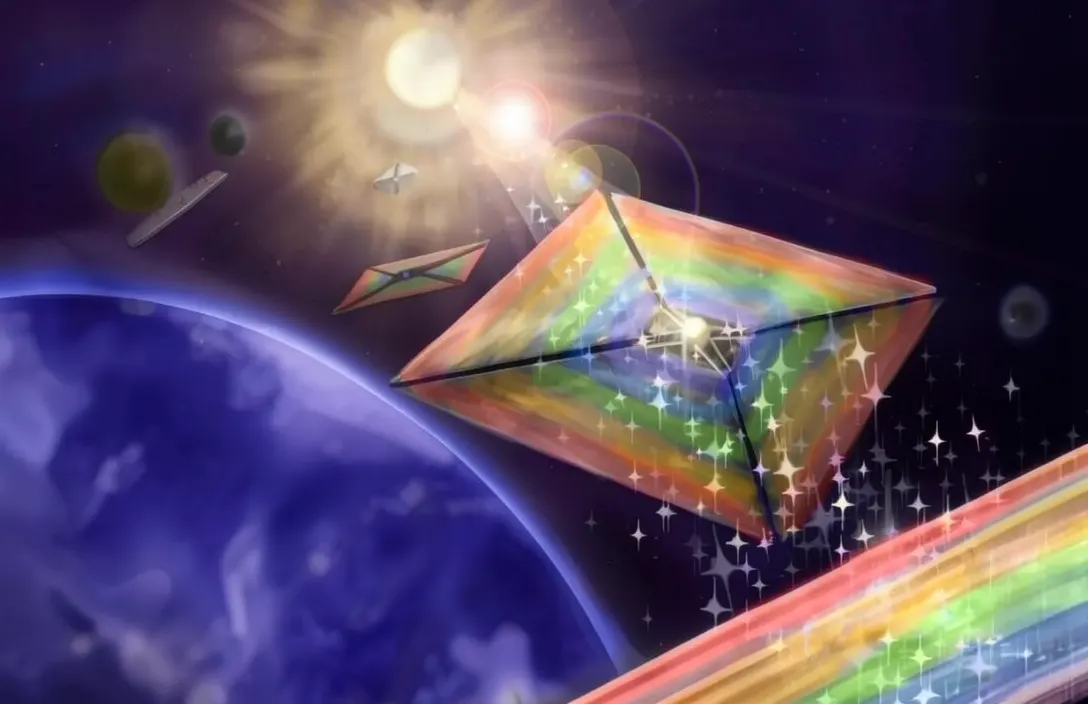
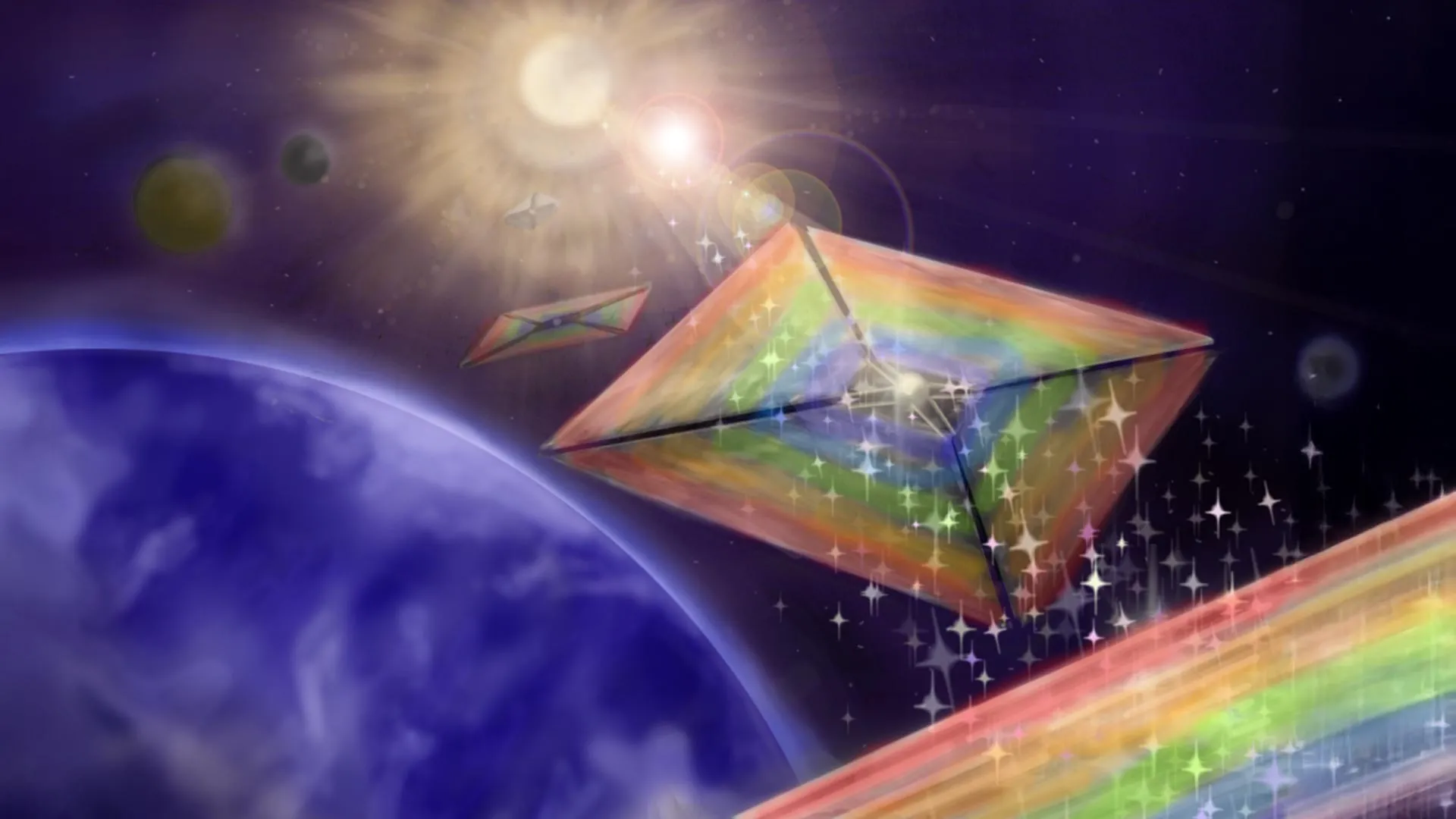
Reaching another star will require spacecraft capable of traveling far faster than anything humanity has built so far. Conventional rockets powered by chemical fuel simply cannot achieve the enormous speeds needed to cross the distances between stars within a practical amount of time. One promising alternative is the solar sail, a vast, lightweight reflective surface that uses the momentum of light to propel a spacecraft through space. Some proposed interstellar missions would take this concept even further by using powerful lasers to push sails to extraordinary speeds, potentially reaching a substantial fraction of the speed of light (Source ID: 1). [1]
However, new research suggests that this approach comes with an unexpected complication. At extreme speeds, some of the very light driving the spacecraft forward could begin acting against it. In a recent paper available on arXiv, Chao Shen and Jiaze Li of the Harbin Institute of Technology investigate how light interacts with a rapidly accelerating solar sail. Their findings reveal a surprising source of resistance that emerges as the spacecraft approaches 75% of the speed of light (Source ID: 1). [1]
The researchers identified an especially unusual effect once the sail reaches approximately 75% of the speed of light. At this point, a phenomenon known as relativistic light aberration changes how the scattered light is distributed. Relativistic aberration describes how the apparent directions in which light travels are altered by motion at speeds approaching the speed of light. From the viewpoint of an observer at rest on Earth, the diffusely scattered light becomes increasingly concentrated in the spacecraft's forward direction. Because emitting light carries momentum, the sail experiences a corresponding recoil in the opposite direction (Source ID: 1). [1]
Reaching another star will require spacecraft capable of traveling far faster than anything humanity has built so far. Conventional rockets powered by chemical fuel simply cannot achieve the enormous speeds needed to cross the distances between stars within a practical amount of time. One promising alternative is the solar sail, a vast, lightweight reflective surface that uses the momentum of light to propel a spacecraft through space. Some proposed interstellar missions would take this concept even further by using powerful lasers to push sails to extraordinary speeds, potentially reaching a substantial fraction of the speed of light. However, new research suggests that this approach comes with an unexpected complication. At extreme speeds, some of the very light driving the spacecraft forward could begin acting against it. In a recent paper available on arXiv, Chao Shen and Jiaze Li of the Harbin Institute of Technology investigate how light interacts with a rapidly accelerating solar sail. Their findings reveal a surprising source of resistance that emerges as the spacecraft approaches 75% of the speed of light. [1]
Advertisement
The situation becomes considerably more complicated once a solar sail reaches relativistic speeds, meaning speeds high enough that the effects predicted by Einstein's theory of relativity become important. As the sail accelerates away from its laser source, it experiences an increasingly strong Doppler effect. This is the same basic phenomenon that changes the apparent pitch of a passing ambulance siren, except that light experiences a change in frequency rather than sound. For the accelerating sail, the incoming laser light becomes progressively redshifted, meaning its frequency decreases from the sail's perspective. As a result, the light transfers momentum less effectively, reducing the thrust generated by all three contributions examined in the study. In other words, the faster the spacecraft travels, the less effective its laser propulsion becomes. Even with a powerful beam continuously striking the sail, gaining additional speed becomes increasingly difficult. [1]
The researchers identified an especially unusual effect once the sail reaches approximately 75% of the speed of light. At this point, a phenomenon known as relativistic light aberration changes how the scattered light is distributed. Relativistic aberration describes how the apparent directions in which light travels are altered by motion at speeds approaching the speed of light. From the viewpoint of an observer at rest on Earth, the diffusely scattered light becomes increasingly concentrated in the spacecraft's forward direction. Because emitting light carries momentum, the sail experiences a corresponding recoil in the opposite direction. This means that diffuse scattering (admittedly the weakest of the three forces) begins producing drag rather than helping propel the spacecraft forward. The result is a striking paradox: some of the light intended to accelerate an interstellar spacecraft actually begins resisting its motion. [1]
Sources
Prepared with AI assistance from the cited sources.
The Cali Reporter newsletter
The stories worth your time.
California, the country, and what comes next. Join our free newsletter for reporting that keeps you informed.
More in Science
- Volcanic Eruption Reshapes Iwo Jima’s Coastline
A recent volcanic eruption near Iwo Jima has temporarily extended the island's black sand beaches, though the longevity of the new land remains uncertain.
- Galaxies in the NGC 7771 Group Engage in Cosmic Merger
Astronomers have observed a group of galaxies in the NGC 7771 Group, which is located approximately 200 million light-years away in the constellation Pegasus. These galaxies are in the process of merging, a phenomenon…
- NASA Awards Contract for NOAA’s Near Earth Orbit Network Program
NASA has awarded a contract to Northrop Grumman Systems Corporation for the Sounder for Microwave-Based Applications (SMBA) instruments on NOAA’s Near Earth Orbit Network (NEON) satellites. The contract includes a…