LEGO Model Design Process with Stud Checks
The LEGO model design process on Mister Blocks involves multiple stages to ensure accuracy and quality, including research, planning, design, shape checks, and stud verification.

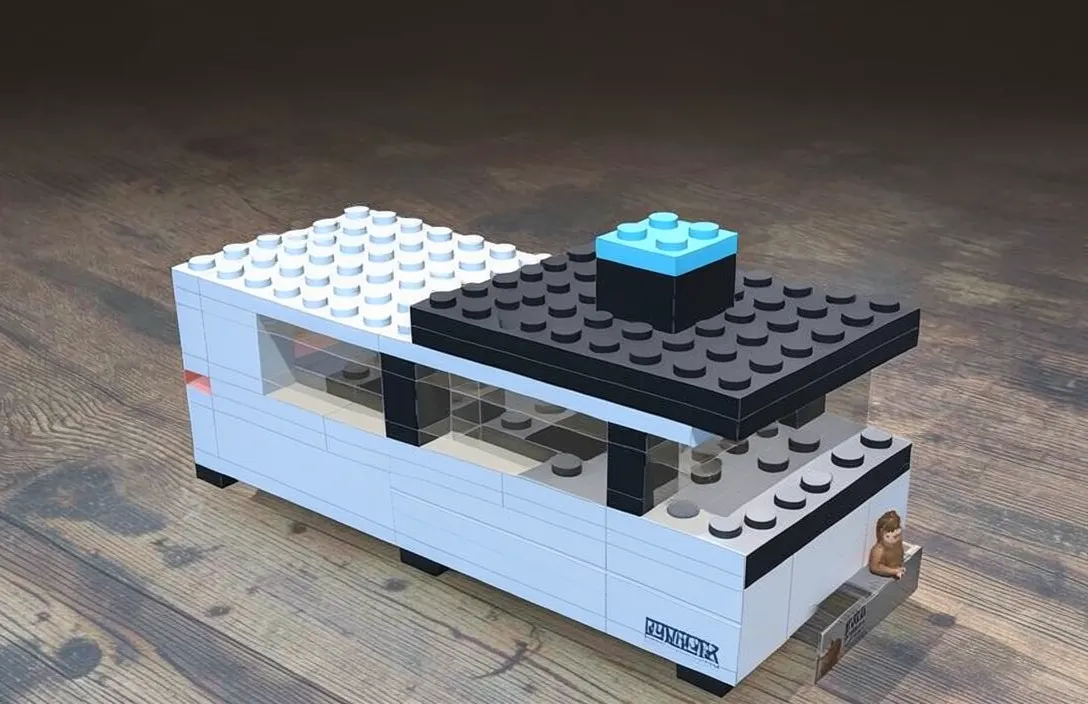

The LEGO model design process on Mister Blocks begins with research, where a search budget is capped at three searches to determine if an idea is buildable. The planner evaluates the concept and declines hateful symbols, sexual content, and real-world gore. It then creates a short plan, including a name, piece target, size in studs, and a brief of 8–14 steps with colors for each visible part (source ID 1). [1]
The designer writes the model as plain text, one line per piece, specifying the type, position, and color of each part. This approach allows for easier counting and parsing during the design process. The model is wrapped in a strict JSON schema to ensure consistency and reliability (source ID 1). [1]
Before finalizing the design, the model undergoes a shape check to ensure it meets the planned size and piece count. If the model is too small or does not match the planned dimensions, it is revised up to two rounds. This step ensures that the final design is both accurate and appropriate for the intended build (source ID 1). [1]
After the shape check, the model is reviewed for visual accuracy by drawing it in ASCII format. This allows for a comparison with the real-world object and helps catch issues such as incorrect colors or missing parts. Finally, a stud checker reviews the model for any remaining issues, such as unknown sizes or overlapping pieces, ensuring the final product is both functional and visually accurate (source ID 1). [1]
Advertisement
The LEGO model design process on Mister Blocks starts with research, where a search budget is capped at three searches to determine if an idea is buildable (Dev.to, 2023). This initial phase helps filter out ideas that are not suitable due to content restrictions such as the exclusion of hateful symbols, sexual content, and real-world gore. The planner then creates a short plan, including a name for the model, a target number of pieces, and a brief description of the model's size and color scheme. This planning stage is crucial to ensure that the model aligns with the intended specifications and visual accuracy (Dev.to, 2023). [1]
After the research and planning phase, the designer writes the model as plain text, one line per piece, specifying the type, position, and color of each part (Dev.to, 2023). This text-based approach allows for a straightforward and efficient design process, as it can be easily parsed and counted while streaming. The design must adhere to strict JSON schema guidelines to ensure consistency and accuracy in the model's structure. This phase is essential for creating a detailed and structured model that can be further refined in subsequent stages (Dev.to, 2023). [1]
Before finalizing the design, the model undergoes a shape check to ensure it meets the planned size and piece count (Dev.to, 2023). This step is critical to prevent common failures such as models that are too small or do not meet the specified dimensions. If the model does not meet the required size or piece count, it is adjusted through up to two rounds of revisions. This iterative process ensures that the final model is both structurally sound and visually accurate, aligning with the initial plan (Dev.to, 2023). [1]
The design process on Mister Blocks begins with research, where a search budget is capped at three searches to determine if an idea is buildable (Dev.to, 2023). This phase ensures that the model adheres to certain content guidelines, declining hateful symbols, sexual content, and real-world gore. The planner then generates a short plan, including a name, piece target, size in studs, and a brief of steps with color specifications for visible parts (Dev.to, 2023). [1]
Advertisement
The designer writes the model as plain text, one line per piece, specifying the type, position, and color of each part (Dev.to, 2023). This format is chosen for its simplicity and efficiency, allowing the system to count pieces as they are streamed. The design is then subjected to a shape check, comparing the model to the planned size and piece count to ensure it meets the target specifications (Dev.to, 2023). [1]
After the shape check, the model undergoes a look review, where it is drawn in ASCII format to ensure visual accuracy by comparing it with the real-world object (Dev.to, 2023). This step helps catch discrepancies such as incorrect colors or missing parts. The model then proceeds to a final phase where every stud is checked for issues like missing colors, overlaps, and incorrect piece placement, with up to six rounds of fixes if necessary (Dev.to, 2023). [1]
Sources
Prepared with AI assistance from the cited sources.
The Cali Reporter newsletter
The stories worth your time.
California, the country, and what comes next. Join our free newsletter for reporting that keeps you informed.
More in Technology
- Modern Web Guidance 1.0 and Browser Compatibility
Modern Web Guidance 1.0, announced by Chrome for Developers on November 10, introduces browser compatibility data to assist coding agents in building web features. The initiative emphasizes the importance of fallback…
- Apache mod_http2 Vulnerability Detection with Nmap
A new Nmap scripting module has been developed to detect the Apache mod_http2 vulnerability (CVE-2026-119618), addressing the challenges of identifying affected systems accurately.
- Securing Remote Vendor Access in Industrial Networks
Best practices for managing remote vendor access in operational technology (OT) networks emphasize controlled access points, multifactor authentication, and time-bound sessions to reduce cybersecurity risks.