Lab-Grown Mini-Guts Offer New Way to Study Gut Renewal
Researchers have developed an expandable line of intestinal support cells that can sustain miniature gut tissues in the laboratory without added growth factors, offering new tools for studying intestinal stem cell…

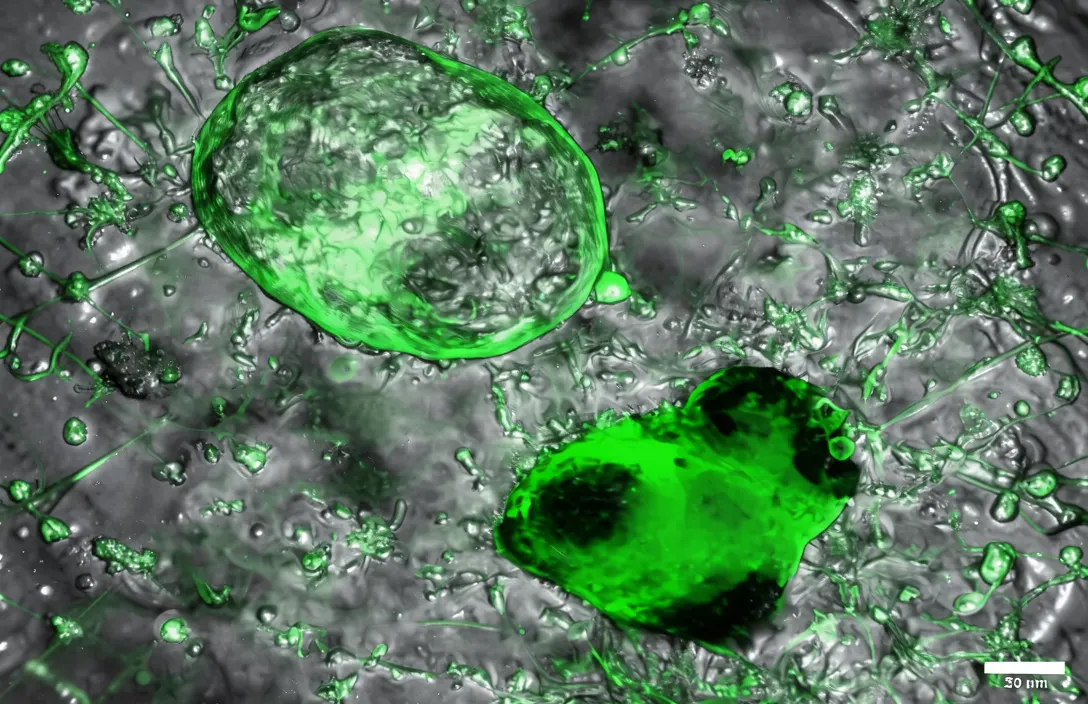

Human colon organoids, often referred to as 'mini-guts,' are three-dimensional tissue models that replicate some features of the intestinal lining. Traditionally, growing these organoids in the laboratory requires the addition of growth factors to the culture medium to maintain stem-cell function and support tissue renewal. However, in the body, intestinal stem cells receive essential signals from neighboring cells within a specialized environment known as the stem-cell niche. The study, led by Dr. Michal Shoshkes-Carmel and colleagues from the Institute for Medical Research Israel-Canada and The Organoid Center at Hadassah-Hebrew University Medical Organization, aimed to bring an expandable cellular component of this niche into the laboratory (Medical Xpress, 2026). [1]
Telocytes, a type of support cell that forms a network beneath the intestinal lining and is an important component of the intestinal stem-cell niche, are particularly difficult to study outside the body. These cells are present in low numbers, sensitive to isolation from tissue, and have limited capacity to multiply under standard laboratory conditions. To overcome these challenges, the researchers established an 'immortalized' telocyte line—cells modified to continue multiplying in culture. This created an expandable source of niche cells while preserving important telocyte characteristics, including long cellular extensions and interconnected networks (Medical Xpress, 2026). [1]
The researchers tested whether the immortalized telocytes could provide the support normally supplied through growth-factor supplements. Intestinal organoids grown without added supporting factors died within 48 hours. When grown alongside the immortalized telocytes, however, the organoids survived and grew without those supplements. At later time points, their size was comparable to that of organoids maintained in growth-factor-supplemented medium. The telocyte line also supported human colon organoids, which did not persist in basic medium alone but survived and grew when telocytes were present over the short period examined (Medical Xpress, 2026). [1]
The new cell line does not reproduce every feature of telocytes in the living intestine. Although the cells retained important structural and molecular characteristics, they lost their location-specific specializations when grown alone. This suggests that maintaining these distinct identities may require reciprocal signals from the intestinal lining. Their gene activity also shifted toward patterns associated with tissue injury and development. These differences help define the model's uses and limitations, offering a practical system for investigating communication between intestinal stem cells and their supporting niche rather than a complete reconstruction of the living gut (Medical Xpress, 2026). [1]
Advertisement
Human colon organoids, often referred to as 'mini-guts,' are three-dimensional tissue models that replicate some features of the intestinal lining. Telocytes, a type of support cell that forms a network beneath the intestinal lining and is an important component of the intestinal stem-cell niche, are particularly difficult to study outside the body. The researchers tested whether the immortalized telocytes could provide the support normally supplied through growth-factor supplements (Source ID: 1). [1]
The new cell line does not reproduce every feature of telocytes in the living intestine. Although the cells retained important structural and molecular characteristics, they lost their location-specific specializations when grown alone. This suggests that maintaining these distinct identities may require reciprocal signals from the intestinal lining (Source ID: 1). [1]
The telocyte line also supported human colon organoids. These organoids did not persist in basic medium alone but survived and grew when telocytes were present over the short period examined. This finding highlights the potential of the new cell line as a practical tool for investigating how these cells help sustain the intestinal lining (Source ID: 1). [1]
Living niche cells shape organoid development. Rather than supplying growth factors only through the culture medium, the co-culture system places organoids alongside living niche cells. This may better reflect an important aspect of the situation in the body, where intestinal stem cells depend on signals from their surrounding cellular environment (Source ID: 1). [1]
Advertisement
The Cali Reporter newsletter
The stories worth your time.
California, the country, and what comes next. Join our free newsletter for reporting that keeps you informed.
More in Health & Medicine
- Understanding Fascia and the Evidence Behind Fascia Release
Fascia is a connective tissue that plays a structural role in the human body, but evidence supporting specific exercises or tools for 'fascia release' remains limited.
- Antidepressant Effectiveness and Long-Term Use
A new review suggests that some antidepressants may be more effective than others in helping people manage depression symptoms over the long term, according to a study published in The Lancet Psychiatry.
- Experimental Weight-Loss Drug Shows Promise for Knee Osteoarthritis Pain
A new study suggests that an experimental weight-loss drug, retatrutide, may significantly reduce knee pain in people with osteoarthritis and obesity.