

La Verne Battery Fire Forces Mass Evacuations: Why Your Neighborhood's Energy Future Might Be a Hazard
Fire crews battle chemical reaction in a small city as the state races toward 100 percent clean energy goals, leaving residents wondering about safety.

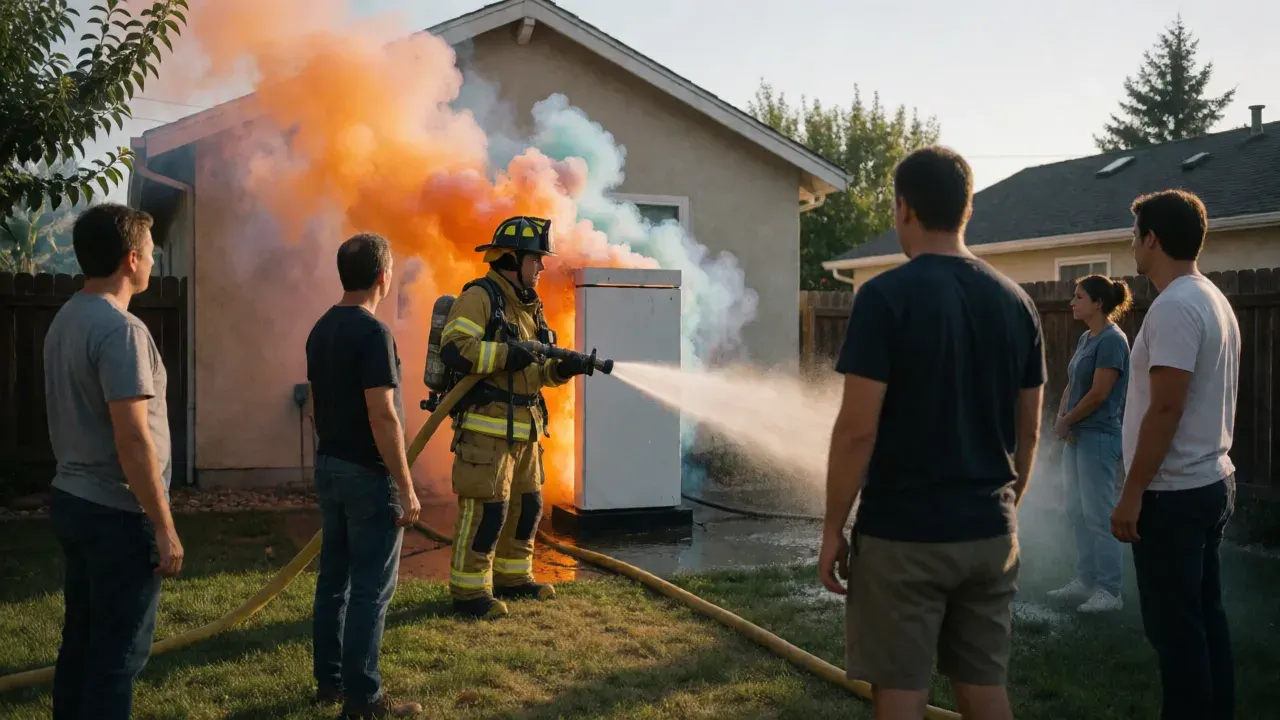
You know how folks in the Valley talk about the water or the crops, but lately that talk has shifted to fire. Just three days ago, the routine life in La Verne was upended by a crisis that nobody saw coming. Fire crews have been working overtime to contain a lithium-ion battery fire that forced hundreds of residents out of their homes and shut down schools. It is a stark reminder that while the state pushes hard for a clean energy future, the road there is littered with potential hazards that can burn down a neighborhood in a heartbeat.
This incident at the Metropolitan Water District facility on Wheeler Avenue is a perfect case study in how ambitious goals can sometimes clash with local realities. The blaze started shortly before noon on Tuesday inside one of four 250-kilowatt battery containers. As crews managed to stabilize the first box, the adjacent container began to overheat. It is a classic example of the difficulties facing first responders when dealing with modern energy storage. The facility, which only came online in June, stores energy captured by the solar farm at the water treatment plant. While this system is not the giant utility scale facility that worries state planners, it has a very real impact on the people living next door.
The science behind these fires is as complicated as it is dangerous. When a battery is damaged, a self-sustaining chemical reaction known as thermal runaway can begin. Once it starts, it can easily spread to neighboring batteries. The process can last for days, releasing toxic gases like hydrogen fluoride, hydrogen chloride and carbon monoxide. In La Verne, the air quality monitoring has not yet picked up hazardous emissions, which is good news for the neighborhood. However, the potential for those fumes has kept evacuations in place and caused officials to treat the scene with extreme caution. Battalion Chief Mark Savage mentioned that the hope is to de-energize the batteries soon so investigators can figure out exactly what went wrong.

This is not the first time the Central Coast and surrounding areas have dealt with this kind of situation. The massive fire at Moss Landing in January 2025 serves as a grim comparison. That incident forced about 1,500 residents from their homes and deposited heavy metals into a nearby estuary. About 55,000 batteries were damaged in that event, a number that gives you an idea of the scale. The La Verne fire is much smaller, but the anxiety is the same. You have people who have to leave their homes and deal with the closure of schools because they do not know if the building is safe or if a toxic cloud is on the way. Assemblymember Dawn Addis from Morro Bay put it plainly when she said it is disheartening that schoolchildren are being put at risk like this over and over again.
Clearly, something needs to be done to ensure that the transition to clean energy does not come at the cost of community safety. The state has already invested a lot of money into this direction to meet its goal of 100 percent clean energy usage by 2045. In response to the chaos at Moss Landing, the state legislature has been moving pieces of legislation. Senate Bill 283, which was authored by Senator John Laird of Santa Cruz, was signed into law in October. The law requires battery storage developers to talk to local fire authorities and get an inspection before going on line. It also demands that they follow safety standards set by the National Fire Protection Association.
There were other ideas floating around the Capitol that could have changed the game for residents. Assembly Bill 303 would have required local authorities to be part of the permitting process and established a 3,200-foot setback requirement from sensitive areas like schools, homes and hospitals. The bill author, Addis, was disappointed that it never received a committee hearing. She plans to bring it back in the next cycle. She argued that while we need to transition away from oil and gas, we cannot keep making the same mistakes while treating people with disrespect.
Regulatory changes have also been happening outside of the legislature. The California Public Utilities Commission, Cal Fire and the California Energy Commission have been busy tightening the rules around battery sites. Technology itself has improved since Moss Landing began construction in 2020. New large-scale facilities are starting to use more stable lithium-iron-phosphate batteries. They are also stored in outdoor containers designed to limit the spread of a fire. These units are subject to more robust testing and emergency response requirements.
However, the conversation needs to expand beyond just the giant utility-scale sites. Dustin Mulvaney, a professor of environmental studies at San Jose State, pointed out that the safety discussion has been focused on the big stuff. The fact that La Verne required an evacuation and an emergency response makes him wonder if there needs to be more attention paid to smaller battery sites. The La Verne facility is smaller and stores energy for internal use rather than feeding it into the broader grid. It highlights a gap in how we are preparing for the energy transition. As California keeps pushing these projects, the focus must shift to keeping the small towns safe while we power the future.
First reported by LA Times: California.
More in California
- UC Berkeley Lab Proposes New Civic Framework for California’s Next Governor
A research-driven agenda calls for institutionalizing 'co-governance' to address low public trust and lack of resident influence in state decision-making.
- Five Tax Measures on California’s Ballot Aim to Reshape State Finances
Propositions 3, 40–43 would alter income, wealth and local taxation rules—marking the highest number of tax measures on a general election ballot since 1994.
- Catalina Helicopter Crash Highlights Risks of Island Medevac Flights
A medical evacuation chopper carrying Catalina Romero, pilot, and nurse Jessica Devries crashed into the ocean shortly after takeoff, killing all three; federal investigators are assessing causes including night flying, spatial disorientation, and the island’s challenging Pebbly Beach heliport.