Improved Blood Test for Alzheimer's Disease Matches Accuracy of Cerebrospinal Fluid Tests
A new study from Lund University in Sweden demonstrates that an improved blood test for Alzheimer's disease is as accurate as cerebrospinal fluid tests, offering a less invasive diagnostic option.

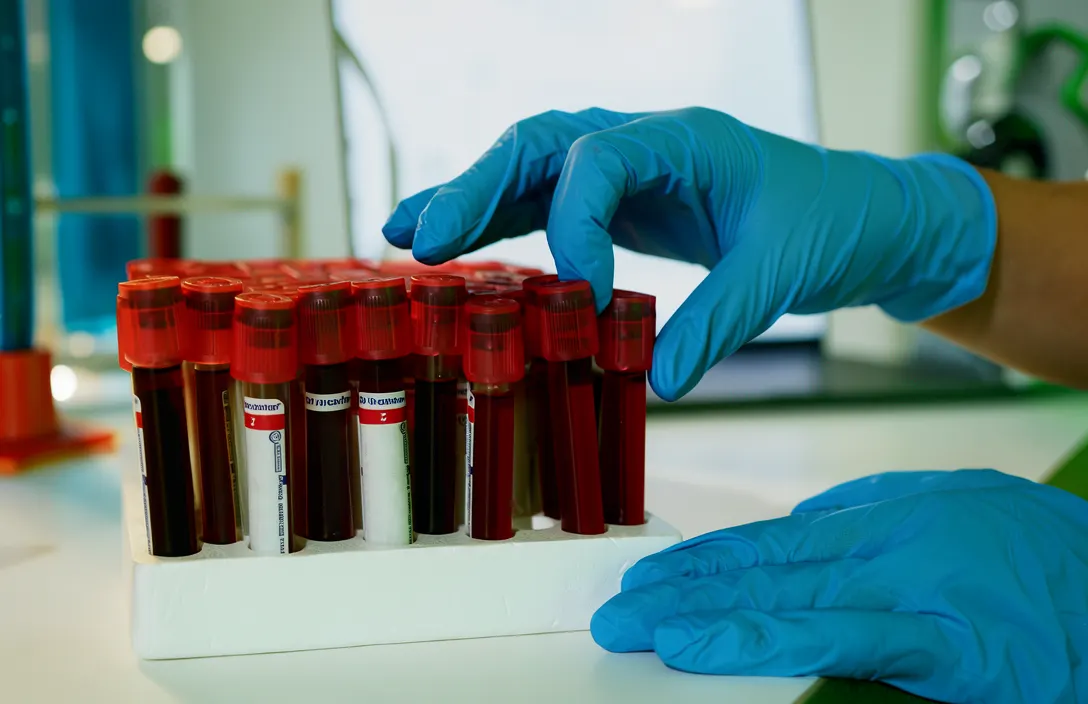

A new study published in Nature Aging shows that an improved blood test for Alzheimer's disease can now be used with accuracy similar to that of cerebrospinal fluid tests, which have long been the standard in healthcare. The blood test has been approved for use in Europe, the U.S., and Japan, among other places. The researchers aim to gradually increase its use in clinical settings, potentially allowing patients to avoid more invasive cerebrospinal fluid tests. The study was supported by evidence from Medical Xpress (ID: 1). [1]
The research team, led by Noëlle Warmenhoven, a doctoral student at Lund University, used PET imaging to verify the accuracy of the blood tests. This approach confirms the presence of Alzheimer's-related changes in the brain. The study found that the blood test, which detects Alzheimer's pathology with at least 90% accuracy, performs equally well in an American research cohort, a Swedish memory clinic cohort, and a Swedish primary care cohort. This was corroborated by evidence from Medical Xpress (ID: 1). [1]
The blood test measures the protein p-tau217, a biomarker specific to Alzheimer's disease. While the U.S. blood test also measures p-tau217 in combination with the protein Aβ42, the Lund researchers found that this combination does not necessarily perform better than measuring p-tau217 alone. The study used regulator-approved, predefined cutoff values to determine the test result, ensuring broader applicability in clinical practice. This was confirmed by evidence from Medical Xpress (ID: 1). [1]
The study was conducted at Lund University in Sweden and involved multiple cohorts, including an American research group, a Swedish memory clinic cohort, and a Swedish primary care cohort. These locations were chosen to evaluate the test's performance across different healthcare settings. The research was published in *Nature Aging* in 2026 and is cited with the DOI: 10.1038/s43587-026-01259-z. The project's scope extended beyond Sweden, as the blood test is approved for clinical use in Europe, the U.S., and Japan, reflecting a global effort to improve Alzheimer's diagnostics. [1]
Advertisement
The history of the blood test includes prior FDA approval and CE marking for clinical use, indicating its regulatory acceptance before the 2026 study. The test measures the protein p-tau217, a biomarker specific to Alzheimer's disease. In the U.S., the test also measures p-tau217 in combination with Aβ42, but the study found that measuring p-tau217 alone may be as effective as the combination. The use of predefined cutoff values, approved by regulatory authorities, ensures consistency in clinical practice, unlike previous studies that used study-specific cutoffs, which could lead to variability in results. [1]
The documented limits of the test include the requirement for patients to have cognitive symptoms before the test can be administered. Additionally, the blood test may return inconclusive results, necessitating further investigation with methods like PET scans or cerebrospinal fluid tests. At present, the test is recommended only for use in memory clinics and other specialist healthcare units, not in primary care settings. The researchers are currently exploring the potential for future implementation in primary care and even population-wide screening if drug treatments become effective in early stages. [1]
The study was conducted at Lund University in Sweden and involved multiple cohorts, including an American research group, a Swedish memory clinic cohort, and a Swedish primary care cohort. These locations reflect the international scope of the research and its potential for global application. The project scope included validating the accuracy of the blood test against established diagnostic methods like cerebrospinal fluid tests and PET imaging, which are considered the gold standard for Alzheimer's disease pathology detection. The blood test was specifically designed to measure the protein p-tau217, a biomarker unique to Alzheimer's disease, and has been approved for clinical use in Europe, the U.S., and Japan, among other regions. This approval indicates a broad acceptance of the test's reliability and clinical utility across different healthcare systems. [1]
The history of the blood test development includes prior research that established its initial accuracy and safety, leading to its FDA approval and CE marking for clinical use. The current study, published in Nature Aging, is the first to demonstrate that the blood test's accuracy is comparable to that of cerebrospinal fluid tests, which have long been the standard in diagnosing Alzheimer's disease. The research team used predefined cutoff values, which are approved by regulatory authorities, rather than study-specific cutoffs used in previous research. This change in methodology ensures that the test's performance can be consistently evaluated across different populations and clinical settings, addressing a key limitation of earlier studies. [1]
Advertisement
The documented limits of the blood test include its current recommendation for use only in memory clinics and other specialist healthcare units, rather than in primary care settings. While the test can provide a positive, negative, or inconclusive result, an inconclusive result may necessitate further investigation using a PET scan or cerebrospinal fluid test for a more definitive diagnosis. Additionally, the test is only applicable to patients who already exhibit cognitive symptoms, which means it cannot be used for screening asymptomatic individuals. The study also highlights that the blood test, while accurate, is not a substitute for the reference standards like PET scans or cerebrospinal fluid tests, which remain essential for confirming the presence of Alzheimer's-related changes in the brain. [1]
Sources
Prepared with AI assistance from the cited sources.
The Cali Reporter newsletter
The stories worth your time.
California, the country, and what comes next. Join our free newsletter for reporting that keeps you informed.
More in Health & Medicine
- Understanding Fascia and the Evidence Behind Fascia Release
Fascia is a connective tissue that plays a structural role in the human body, but evidence supporting specific exercises or tools for 'fascia release' remains limited.
- Antidepressant Effectiveness and Long-Term Use
A new review suggests that some antidepressants may be more effective than others in helping people manage depression symptoms over the long term, according to a study published in The Lancet Psychiatry.
- Experimental Weight-Loss Drug Shows Promise for Knee Osteoarthritis Pain
A new study suggests that an experimental weight-loss drug, retatrutide, may significantly reduce knee pain in people with osteoarthritis and obesity.