Idempotency as a Product Behavior
Idempotency is crucial for ensuring predictable behavior in distributed systems, especially when network failures or retries occur. It ensures that repeated requests do not lead to unintended consequences such as…

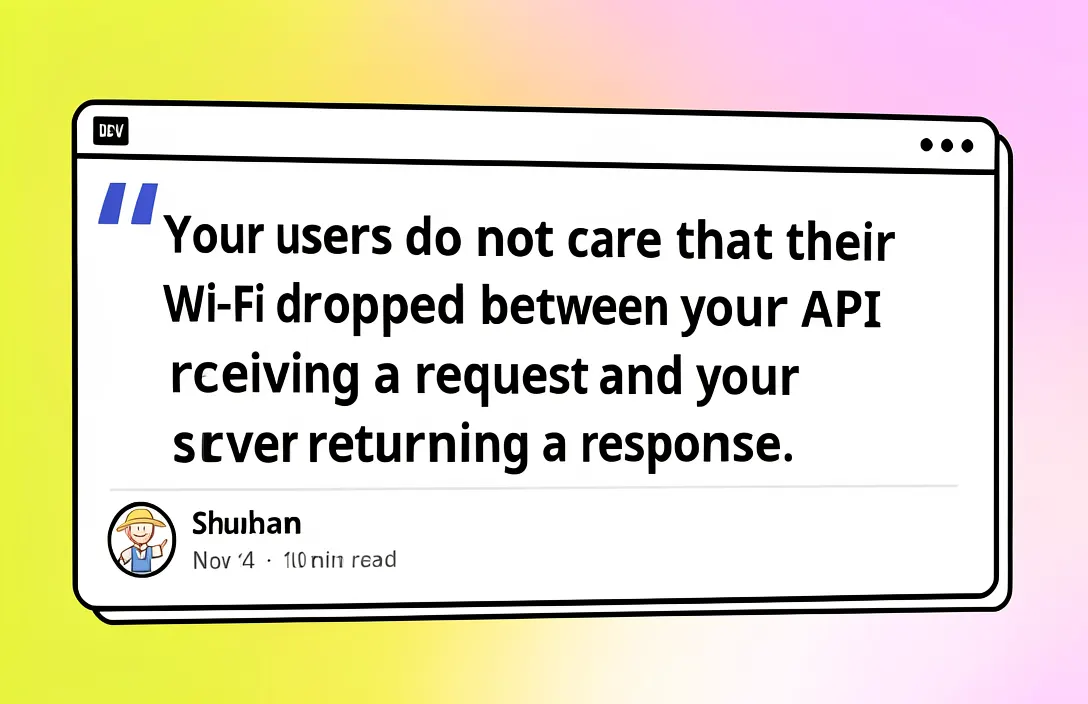

Idempotency is not merely a technical concern but a fundamental aspect of product behavior. Users care about the outcome of their actions, such as paying once without being charged twice or creating an order without duplicates. When network issues occur, systems must ensure that retries do not lead to unintended consequences. Stripe and AWS both require an Idempotency-Key or ClientToken to manage these scenarios, ensuring that operations remain consistent even when requests are repeated (Evidence ID: 1). [1]
Without idempotency, retrying a request after a network failure can lead to multiple charges, duplicate orders, or other side effects. For example, if a payment request is lost during a network timeout, the user may retry, leading to a second charge. With idempotency, the system recognizes the same intent and ensures that the outcome remains consistent, avoiding duplicate charges and providing a reliable user experience (Evidence ID: 1). [1]
Idempotency extends beyond payment systems and is essential in various operations such as account creation, infrastructure provisioning, and notification systems. For instance, retrying an account creation without idempotency may result in duplicate accounts, while idempotency ensures that the same key is used, preventing such issues. The client must generate an explicit idempotency key, ensuring that retries belong to the same logical action (Evidence ID: 1). [1]
The article discusses idempotency as a critical feature in product design, particularly in scenarios where network failures or retries can lead to unintended side effects. It highlights that idempotency ensures predictable behavior when the same intent arrives multiple times, preventing issues like duplicate charges, orders, or notifications. The focus is not only on payment systems, where Stripe and AWS require Idempotency-Key or ClientToken, but also on broader product behavior, such as account creation, infrastructure provisioning, and notification services. Idempotency is described as a contract that ensures retries do not produce additional side effects, making systems more resilient to network imperfections. [1]
Advertisement
A practical implementation of idempotency is outlined, emphasizing the importance of generating unique keys on the client side to distinguish between intentional and retry actions. The article provides a detailed SQL schema for an `idempotency_keys` table, which stores operation keys, request hashes, statuses, and outcomes. This table is used to track the state of each operation, ensuring that retries do not lead to duplicate results. The schema includes fields for tenant ID, key, request hash, status, response, resource ID, and expiration time. An index is also created for efficient cleanup of expired records. [1]
The article describes a database transaction pattern that ensures atomic idempotency and writes. It includes a PostgreSQL example where an idempotency key is inserted atomically, and if it already exists, the system returns the stored result. This approach prevents race conditions and ensures that retries do not lead to duplicate data creation. Additionally, the Outbox Pattern is introduced for handling external side effects like email notifications or Kafka events. This pattern guarantees that messages are processed exactly once, even in the event of crashes or retries, by using a durable outbox table that tracks events and their processing status. [1]
The article also emphasizes that idempotency is not just a technical feature but a product behavior that impacts user experience. For example, in a checkout flow, without idempotency, a user who experiences a network timeout and retries a payment might end up being charged twice. With idempotency, the system ensures that the same intent results in the same outcome, even after retries. This leads to a more predictable and trustworthy product experience. The article also notes that support teams benefit from operation IDs, as they allow support staff to trace and resolve issues more efficiently by searching for a single identifier rather than asking for more information. [1]
The article concludes by highlighting the importance of measuring idempotency health through metrics such as idempotency key reuse, duplicate requests prevented, parameter mismatch rate, and stuck processing operations. It suggests using a dashboard that tracks these metrics over time to identify potential issues and improve system reliability. The article also provides a checklist for ensuring that every write endpoint is idempotent, asking questions about logical intent, key generation, scope, key lifetime, and user feedback during uncertain states. These questions help teams ensure that their systems are robust and user-friendly, even in the face of network failures or retries. [1]
Advertisement
The Cali Reporter newsletter
The stories worth your time.
California, the country, and what comes next. Join our free newsletter for reporting that keeps you informed.
More in Technology
- Modern Web Guidance 1.0 and Browser Compatibility
Modern Web Guidance 1.0, announced by Chrome for Developers on November 10, introduces browser compatibility data to assist coding agents in building web features. The initiative emphasizes the importance of fallback…
- Apache mod_http2 Vulnerability Detection with Nmap
A new Nmap scripting module has been developed to detect the Apache mod_http2 vulnerability (CVE-2026-119618), addressing the challenges of identifying affected systems accurately.
- Securing Remote Vendor Access in Industrial Networks
Best practices for managing remote vendor access in operational technology (OT) networks emphasize controlled access points, multifactor authentication, and time-bound sessions to reduce cybersecurity risks.