

How A $42 Bracket Jumps To $87 Plus Tariffs And Fed Hikes Are Crushing Small Town Manufacturing
Three economic forces are rewriting the survival rules for American industry.

The American economy is currently undergoing a three-way squeeze. It is a collision of tariffs imposed under previous trade policies, surging fuel costs driven by geopolitical tension, and rising interest rates. For businesses across manufacturing, transportation, and retail, these forces are not abstract concepts. They are daily calculations on a profit and loss statement. To understand the current market flow, one must first define the mechanics at work.
The first force is tariffs. A tariff is essentially a tax on imported goods. When the government places a tax on foreign products, the cost of those products rises when they enter the domestic market. This tax is intended to level the playing field but instead often raises the floor for all competitors. The second force is fuel costs. Prices for diesel and gasoline have surged. These are the lifeblood of logistics. When the cost of energy goes up, the cost of moving anything from a factory floor to a customer’s doorstep increases immediately. The third force is interest rates. An interest rate is the price of borrowing money. When the central bank raises rates, it becomes more expensive for companies to take out loans for inventory, equipment, or expansion. When borrowing is expensive, growth slows.
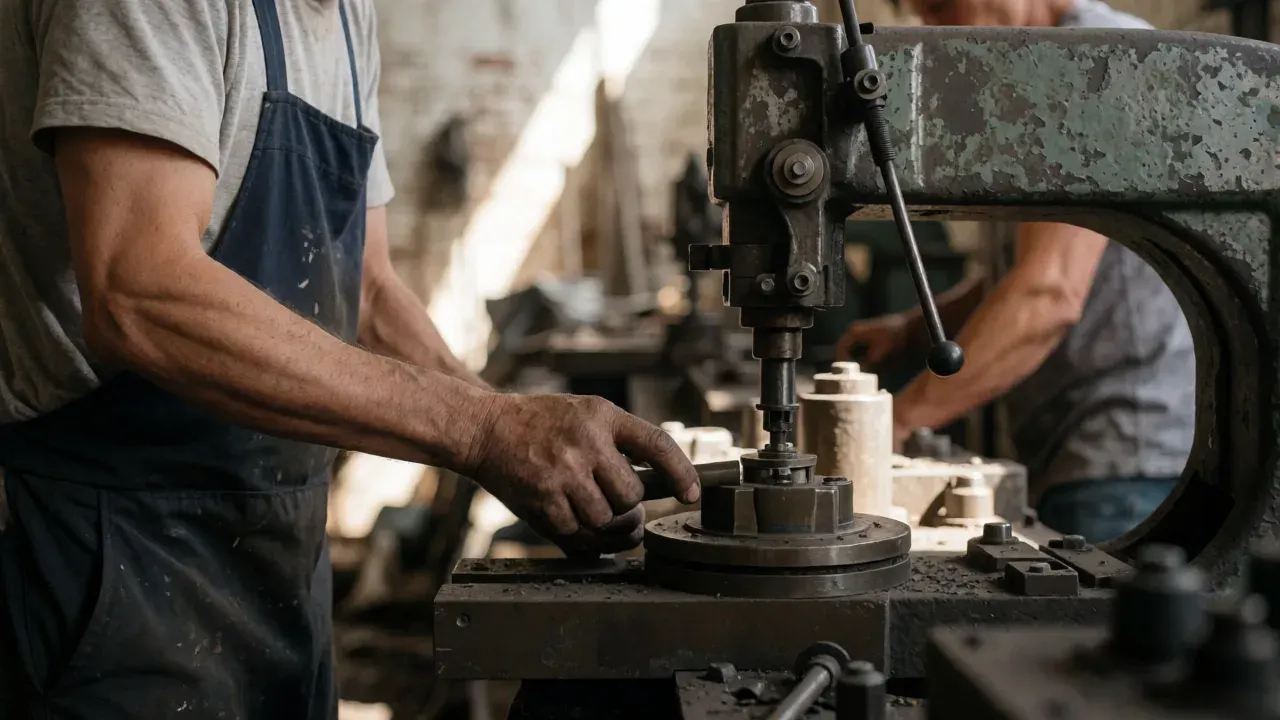
The intersection of these three forces creates a specific market condition that is uniquely painful for middle-market manufacturers. Take the case of Allen Eden and his company Original Saw Co. in Britt, Iowa. Eden runs a 25-person operation that produces industrial power saws for wood and metalwork. The company makes tools that require precision components. A recent transaction in his supply chain illustrates the squeeze perfectly. Eden bought a small bracket used for saw motors. In the summer, the price of this item more than doubled. It jumped from $42 to $87 per unit.

This is not a rounding error. This is a 107 percent price increase for a tiny piece of metal. Why did it happen? The answer involves both tariffs and global commodity prices. Eden described the situation as
First reported by CNBC: Finance.
More in Business
- IMF Chief Warns of Economic Divergence and Debt Risks Amid Artificial Intelligence Boom
Kristalina Georgieva suggests that while AI could significantly boost global growth, it simultaneously threatens to widen inequality and exacerbate inflationary pressures and public debt burdens.
- California Limits Utility Profits and Expands Home Energy Role
Gov. Gavin Newsom signed laws capping utility returns on lower-risk projects and accelerating virtual power plant development.
- Lyft to Pay $272.5 Million in Record California Wage-Theft Settlement
Largest such settlement in state history resolves claims that Lyft misclassified drivers as independent contractors from 2016 to 2020, denying them core wage protections.