

$1 Trillion Hyperscaler AI Spending Projection: JPMorgan CEO Quantifies The Tech Economy's Next Phase
AI spending soars from $300B to $700B and could hit $1T next year according to Dimon.
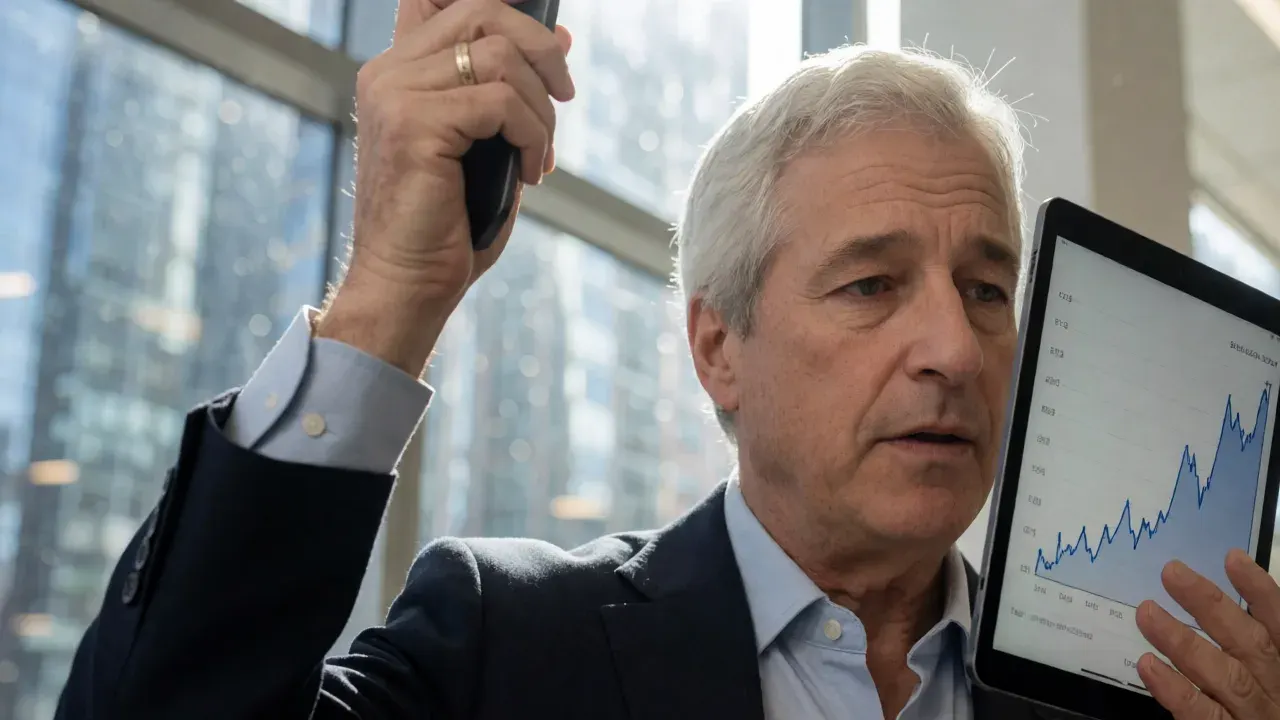
When Jamie Dimon stood at the ribbon-cutting ceremony for JPMorgan Chase & Co.’s new headquarters at 270 Park Avenue in New York City, the conversation quickly shifted from real estate to the velocity of capital. The artificial intelligence spending boom is showing little sign of slowing, with investment across the hyperscaler ecosystem potentially reaching $1 trillion next year according to the chairman and chief executive officer. This projection represents a significant acceleration in capital allocation, moving from earlier estimates to a massive yearly outlay that fundamentally alters the economic landscape. Dimon noted that the market is currently witnessing a dramatic shift in how capital is deployed.
The data supporting this forecast is stark and quantitative. Spending across the hyperscaler ecosystem has more than doubled from about $300 billion last year to around $700 billion this year. This surge in capital is not merely a line item in a corporate spreadsheet but a kinetic force driving economic growth. Dimon told CNBC-TV18 on the sidelines of the 11th annual JPMorgan India Conference that this investment is boosting GDP by approximately 1 percent each year. For an economist focused on the mechanics of trade and flow, this represents a substantial injection of demand into the global system. JPMorgan Chase remains a central player in observing these capital flows.
However, physics and economics dictate that energy and labor have a price. Dimon said this spending "may add a little bit to inflation" as companies hire workers to build factories and power plants. The process involves buying equipment and materials, creating a ripple effect through the supply chain. This inflationary pressure is a tradeoff for the growth generated by these massive infrastructure projects. While the initial capital outlay is staggering, the long-term impact of the technology remains subject to debate. Dimon called it an "unbelievable technology" whose rapid expansion "looks like it's going to continue."

The tension between inflation and deflation is a central theme in the current economic cycle. Over the longer term, Dimon said AI could have a deflationary effect on the economy. As companies become more efficient and deploy the technology, unit costs often fall. Yet, the immediate future appears weighted toward cost inflation. The returns on AI spending are also complex to calculate. Dimon said investments would not always come down to a straightforward calculation of financial returns. Sometimes it is "just table stakes" to remain competitive in the market.
He pointed to improvements in customer experience as one benefit that can be difficult to quantify, and said companies could become more efficient in how they deploy AI over time. Looking back at the history of innovation, Dimon said it was too early to pick winners from the AI boom. He used the internet bubble as a cautionary example, where many familiar names failed while previously little-known companies emerged as major winners. This comparison highlights the volatility inherent in high-growth sectors.
Beyond the technological metrics, the broader economy faces headwinds. Dimon said heavy demand for capital from infrastructure, remilitarization, and ongoing government deficits may be pushing interest rates higher. He also said there "may be a market correction" but was unsure if AI would be the specific cause. The inflation outlook remains cautious, with Dimon hoping price pressure would ease despite the risk that it might not or even go up a little bit.
Geopolitical factors also influence these capital flows. Ahead of the summit between U.S. President Donald Trump and Chinese President Xi Jinping, Dimon said the two sides appeared to be making progress and should "fully engage" on issues including trade, AI, and security. He said he hoped the two countries would use the talks to address their differences, calling the discussions "important for the whole free world." Turning to India-U.S. relations, Dimon said the two countries should return to the negotiating table to complete a trade agreement. The global trade dynamics are shifting, and Dimon emphasized that India's role in this equation is critical.
Dimon also addressed specific market dynamics regarding energy and security. He understood concerns in the U.S. about purchases of Russian oil, but said Washington should take into account India's refining needs and avoid "punishing India and the world oil markets." More broadly, Dimon said India's economy could grow to three times its current size over the next decade. He added that JPMorgan would continue expanding in the country, stating "We're going to keep on building."
First reported by CNBC: Finance.
More in Business
- IMF Chief Warns of Economic Divergence and Debt Risks Amid Artificial Intelligence Boom
Kristalina Georgieva suggests that while AI could significantly boost global growth, it simultaneously threatens to widen inequality and exacerbate inflationary pressures and public debt burdens.
- California Limits Utility Profits and Expands Home Energy Role
Gov. Gavin Newsom signed laws capping utility returns on lower-risk projects and accelerating virtual power plant development.
- Lyft to Pay $272.5 Million in Record California Wage-Theft Settlement
Largest such settlement in state history resolves claims that Lyft misclassified drivers as independent contractors from 2016 to 2020, denying them core wage protections.