Home-Based Auricular Vagus Nerve Stimulation Shows Early Promise for Kids and Teens with Migraines
A recent study explored the use of transcutaneous auricular vagus nerve stimulation (taVNS) as a non-invasive treatment for acute migraine in children and adolescents.

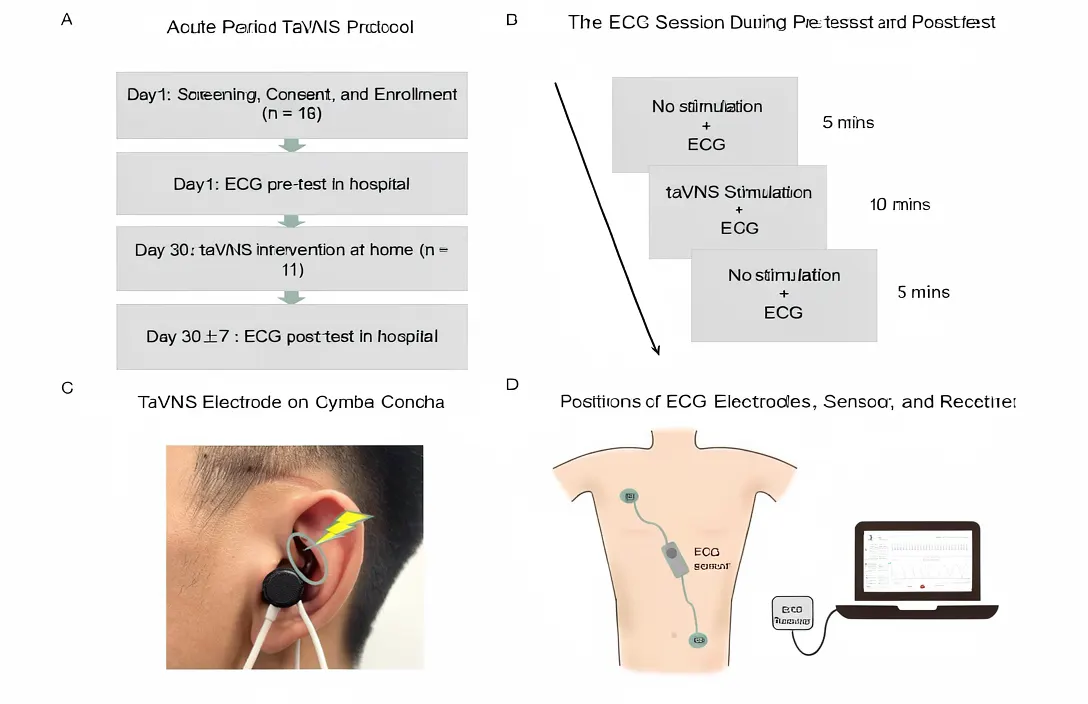

A recent study explored the use of transcutaneous auricular vagus nerve stimulation (taVNS) as a non-invasive treatment for acute migraine in children and adolescents. The research, conducted by a team at Nanfang Hospital and collaborating institutes, evaluated 11 pediatric and adolescent patients aged 7 to 18 who self-administered 30-minute taVNS sessions at home over a 4-week period, tracking a total of 72 treated attacks (source ID: 1). The study protocol included a 5-minute resting baseline, 10-minute active taVNS, and a 5-minute recovery period, with the taVNS electrode placed on the left cymba concha of the external ear (source ID: 1). [1]
The approach was found to be highly feasible and well-tolerated, with only two mild, transient local skin reactions reported at the stimulation site, and no serious adverse events observed (source ID: 1). Visual analog scale (VAS) pain scores showed a consistent downward trajectory within attacks, and medication-free 2-hour pain freedom was observed in 36.11% of the treated episodes (source ID: 1). [1]
The study also noted reductions in average attack duration and monthly migraine days when comparing the 4-week intervention period to retrospective baseline data (source ID: 1). However, the researchers caution that the open-label, single-arm trial without a control group limits the ability to definitively attribute the observed pain relief or longitudinal changes solely to the taVNS intervention (source ID: 1). [1]
A recent study explored the use of transcutaneous auricular vagus nerve stimulation (taVNS) as a non-invasive treatment for acute migraine in children and adolescents. The approach was found to be highly feasible and well-tolerated, with only two mild, transient local skin reactions reported at the stimulation site, and no serious adverse events observed (source ID: 1). This study aimed to address the lack of non-pharmacological, child-friendly treatment options for migraine, which often place a significant burden on young patients. [1]
Advertisement
The study involved 11 pediatric and adolescent patients (ages 7 to 18) who self-administered 30-minute taVNS sessions at home over a 4-week period, tracking a total of 72 treated attacks. Visual analog scale (VAS) pain scores showed a consistent downward trajectory within attacks, and medication-free 2-hour pain freedom was observed in 36.11% of the treated episodes (source ID: 1). This suggests that taVNS may offer a viable alternative for managing acute migraine episodes in this population. [1]
The research team emphasized the importance of interpreting the findings with caution due to the study's open-label, single-arm design without a control group. This design limits the ability to definitively attribute the observed pain relief or longitudinal changes solely to the taVNS intervention (source ID: 1). Despite these limitations, the study demonstrated that home-based neuromodulation can be safely administered by children and families in a real-world setting. [1]
A recent study explored the use of transcutaneous auricular vagus nerve stimulation (taVNS) as a non-invasive treatment for acute migraine in children and adolescents. The approach was found to be highly feasible and well-tolerated, with only two mild, transient local skin reactions reported at the stimulation site, and no serious adverse events observed (source ID: 1). The study involved 11 pediatric and adolescent patients (ages 7 to 18) who self-administered 30-minute taVNS sessions at home over a 4-week period, tracking a total of 72 treated attacks. [1]
The research team emphasized the importance of interpreting the findings with caution due to the study's open-label, single-arm design without a control group (source ID: 1). The study also noted reductions in average attack duration and monthly migraine days when comparing the 4-week intervention period to retrospective baseline data. [1]
Advertisement
Despite these limitations, the findings provide a vital stepping stone by demonstrating that home-based neuromodulation can be safely administered by children and families in a real-world setting (source ID: 1). The study also highlighted the need to establish a solid operational framework for future trials, including an adequately powered, sham-controlled randomized trial. [1]
A recent study explored the use of transcutaneous auricular vagus nerve stimulation (taVNS) as a non-invasive treatment for acute migraine in children and adolescents. The approach was found to be highly feasible and well-tolerated, with only two mild, transient local skin reactions reported at the stimulation site, and no serious adverse events observed (source ID: 1). The study involved 11 pediatric and adolescent patients (ages 7 to 18) who self-administered 30-minute taVNS sessions at home over a 4-week period, tracking a total of 72 treated attacks (source ID: 1). [1]
The research team emphasized the importance of interpreting the findings with caution due to the study's open-label, single-arm design without a control group (source ID: 1). The study noted reductions in average attack duration and monthly migraine days when comparing the 4-week intervention period to retrospective baseline data (source ID: 1). [1]
Despite these limitations, the findings provide a vital stepping stone by demonstrating that home-based neuromodulation can be safely administered by children and families in a real-world setting (source ID: 1). The research team highlighted the need for further controlled trials to validate the observed pain relief and longitudinal changes (source ID: 1). [1]
Advertisement
The Cali Reporter newsletter
The stories worth your time.
California, the country, and what comes next. Join our free newsletter for reporting that keeps you informed.
More in Health & Medicine
- Understanding Fascia and the Evidence Behind Fascia Release
Fascia is a connective tissue that plays a structural role in the human body, but evidence supporting specific exercises or tools for 'fascia release' remains limited.
- Antidepressant Effectiveness and Long-Term Use
A new review suggests that some antidepressants may be more effective than others in helping people manage depression symptoms over the long term, according to a study published in The Lancet Psychiatry.
- Experimental Weight-Loss Drug Shows Promise for Knee Osteoarthritis Pain
A new study suggests that an experimental weight-loss drug, retatrutide, may significantly reduce knee pain in people with osteoarthritis and obesity.