Gut Bacterium Sugar Linked to Visceral Fat Reduction
A sugar produced by the gut bacterium Clostridium immunis may help the body burn visceral fat, offering a potential new approach to tackling obesity.

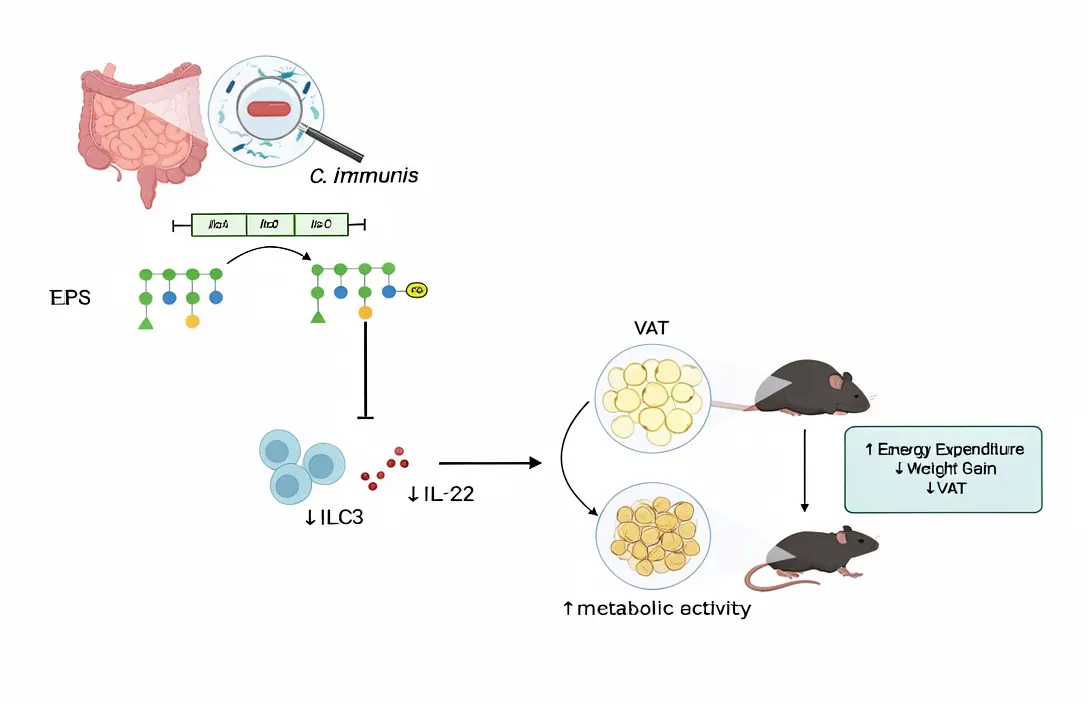

Scientists have discovered that a sugar produced by a gut bacterium can increase energy burning in visceral fat—the harmful fat that accumulates around internal organs—while reducing weight gain and improving metabolic health. Their findings come as concerns over rising obesity rates continue to grow, with half of the world's population expected to be overweight or obese by 2035. In Singapore, over 12% of the country's population is living with obesity (source ID: 1). [1]
In the study, published in Cell Host & Microbe, researchers from Duke-NUS Medical School and Duke University School of Medicine identified a bacterium, Clostridium immunis (C. immunis), which lives in the gut. The team discovered that C. immunis produces a sugar molecule known as an exopolysaccharide (EPS). This sugar requires a small chemical group called phosphocholine for activity. This phosphocholine-modified sugar—like an 'on switch'—catalyzes the reduction of weight gain and visceral fat, which is closely linked to metabolic diseases such as type 2 diabetes and cardiovascular disease (source ID: 1). [1]
The team also established the critical role that phosphocholine-modified molecules play by examining existing metagenomic data in 4,145 people globally. They found that people with obesity had fewer copies of a gene that adds phosphocholine as compared to those with a BMI below 25 (typically defined in international standards as within the healthy or normal weight range) (source ID: 1). [1]
Scientists have discovered that a sugar produced by a gut bacterium can increase energy burning in visceral fat—the harmful fat that accumulates around internal organs—while reducing weight gain and improving metabolic health (Source ID: 1). In the study, published in Cell Host & Microbe, researchers from Duke-NUS Medical School and Duke University School of Medicine identified a bacterium, Clostridium immunis (C. immunis), which lives in the gut. The team discovered that C. immunis produces a sugar molecule known as an exopolysaccharide (EPS). This sugar requires a small chemical group called phosphocholine for activity. [1]
Advertisement
The phosphocholine-modified sugar—like an "on switch"—catalyzes the reduction of weight gain and visceral fat, which is closely linked to metabolic diseases such as type 2 diabetes and cardiovascular disease (Source ID: 1). The team also established the critical role that phosphocholine-modified molecules play by examining existing metagenomic data in 4,145 people globally. They found that people with obesity had fewer copies of a gene that adds phosphocholine as compared to those with a BMI below 25 (typically defined in international standards as within the healthy or normal weight range). [1]
Further investigation revealed that phosphocholine-modified EPS reduced levels of a protein (IL-22), which helps the immune system communicate with tissues in the small intestine and visceral fat. This, in turn, increased the number of cells containing the UCP1 protein, which helps fat cells release energy in the form of heat (Source ID: 1). The higher the level of UCP1, the greater the amount of energy burned in visceral fat. [1]
Scientists have discovered that a sugar produced by a gut bacterium can increase energy burning in visceral fat—the harmful fat that accumulates around internal organs—while reducing weight gain and improving metabolic health (Source ID: 1). The phosphocholine-modified sugar—like an "on switch"—catalyzes the reduction of weight gain and visceral fat, which is closely linked to metabolic diseases such as type 2 diabetes and cardiovascular disease (Source ID: 1). [1]
Further investigation revealed that phosphocholine-modified EPS reduced levels of a protein (IL-22), which helps the immune system communicate with tissues in the small intestine and visceral fat. This, in turn, increased the number of cells containing the UCP1 protein, which helps fat cells release energy in the form of heat (Source ID: 1). [1]
Advertisement
The researchers have filed a patent on their discovery of C. immunis and the sugar it produces. They are now planning clinical trials in the U.S. to evaluate whether targeting this gut bacterium could be an effective approach to treating obesity, with the longer-term goal of translating these findings into a potential new therapy (Source ID: 1). [1]
Scientists have discovered that a sugar produced by a gut bacterium can increase energy burning in visceral fat—the harmful fat that accumulates around internal organs—while reducing weight gain and improving metabolic health (Source ID: 1). This finding, published in Cell Host & Microbe, highlights the potential of targeting gut bacteria to address obesity and related metabolic diseases. The study, led by researchers from Duke-NUS Medical School and Duke University School of Medicine, identified Clostridium immunis (C. immunis) as the bacterium responsible for producing a phosphocholine-modified exopolysaccharide (EPS) that plays a key role in this process. [1]
The phosphocholine-modified sugar—like an "on switch"—catalyzes the reduction of weight gain and visceral fat, which is closely linked to metabolic diseases such as type 2 diabetes and cardiovascular disease (Source ID: 1). The researchers examined existing metagenomic data from 4,145 people globally and found that individuals with obesity had fewer copies of a gene responsible for adding phosphocholine to the sugar molecule compared to those with a healthy BMI. This discovery suggests a potential link between the chemical modification of the sugar and metabolic health. [1]
Further investigation revealed that phosphocholine-modified EPS reduced levels of a protein (IL-22), which helps the immune system communicate with tissues in the small intestine and visceral fat. This, in turn, increased the number of cells containing the UCP1 protein, which helps fat cells release energy in the form of heat (Source ID: 1). The researchers have filed a patent on their discovery of C. immunis and the sugar it produces, and are now planning clinical trials to evaluate its potential as a treatment for obesity. [1]
Advertisement
The Cali Reporter newsletter
The stories worth your time.
California, the country, and what comes next. Join our free newsletter for reporting that keeps you informed.
More in Health & Medicine
- Understanding Fascia and the Evidence Behind Fascia Release
Fascia is a connective tissue that plays a structural role in the human body, but evidence supporting specific exercises or tools for 'fascia release' remains limited.
- Antidepressant Effectiveness and Long-Term Use
A new review suggests that some antidepressants may be more effective than others in helping people manage depression symptoms over the long term, according to a study published in The Lancet Psychiatry.
- Experimental Weight-Loss Drug Shows Promise for Knee Osteoarthritis Pain
A new study suggests that an experimental weight-loss drug, retatrutide, may significantly reduce knee pain in people with osteoarthritis and obesity.