Grip Strength as a Predictor of Health Outcomes
Research indicates that grip strength can be a reliable indicator of overall health and longevity, with studies linking it to various diseases and mortality risks.

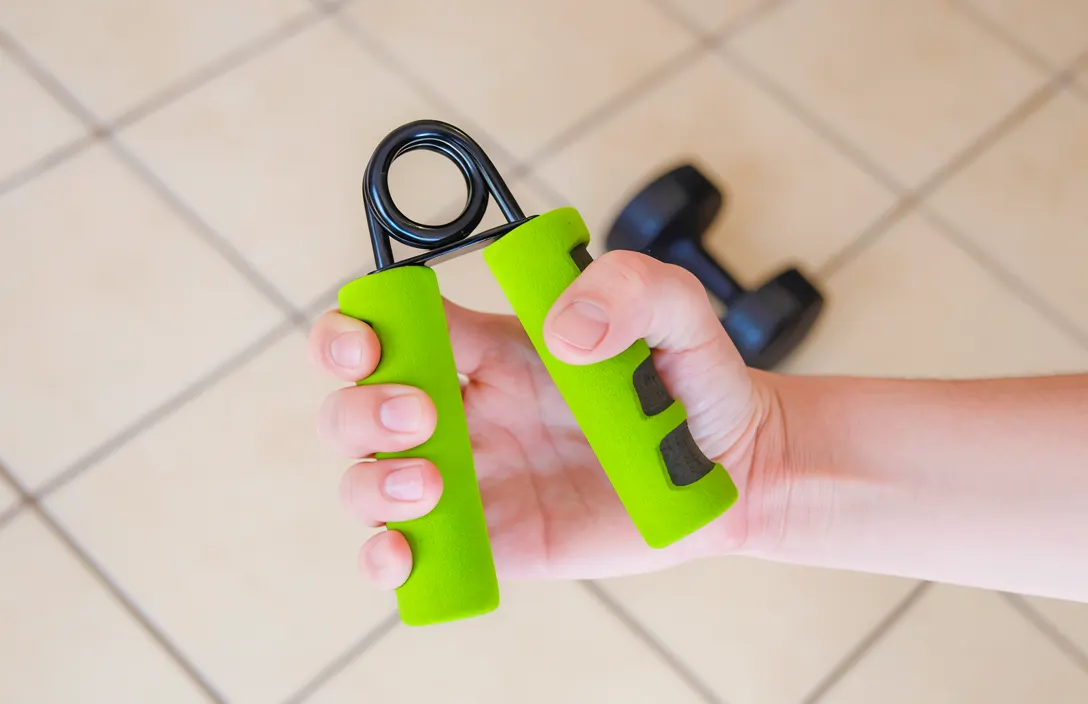

Grip strength, measured using a handgrip dynamometer, has been identified as a proxy for total-body strength and a key factor in healthy aging (Medical Xpress, 2026). The force generated during a grip test can predict the development of diseases such as type 2 diabetes, heart disease, and cancer. Additionally, it has been associated with the risk of dementia, Alzheimer's disease, and depression. Studies have shown that grip strength can also be an indicator of premature death from any cause, highlighting its significance in assessing overall health. [1]
A study involving over a million Swedish army recruits found that high muscular strength in adolescence, assessed by knee extension and handgrip tests, is linked to a 20%–35% lower risk of premature mortality due to any cause (Medical Xpress, 2026). This association remains significant even when accounting for factors such as body mass index (BMI) or blood pressure. These findings suggest that grip strength can be as strong a health risk factor as poor BMI or high blood pressure. [1]
Research also indicates that every 5-kilogram (11-pound) decrease in grip strength is associated with a 17% increase in both cardiovascular and noncardiovascular mortality (Medical Xpress, 2026). The relationship between grip strength and overall health is one of correlation, not causation. A weaker grip may not directly cause disease, but it can be an indicator of increased risk, potentially reflecting broader health issues such as poor nutrition or a weakened immune system. [1]
Grip strength, measured using a handgrip dynamometer, has been identified as a proxy for total-body strength and a key factor in healthy aging (Medical Xpress, 2026). The force generated during a grip test can provide insights into an individual's overall physical health and future risk of disease. This measurement is particularly useful in predicting the development of conditions such as type 2 diabetes, heart disease, and cancer, as well as cognitive decline associated with dementia and Alzheimer's disease (Medical Xpress, 2026). [1]
Advertisement
A study involving over a million Swedish army recruits found that high muscular strength in adolescence, assessed by knee extension and handgrip tests, is linked to a 20%–35% lower risk of premature mortality due to any cause (Medical Xpress, 2026). These results were independent of subjects' body mass index (BMI) or blood pressure, highlighting the significance of grip strength as a health indicator that is not influenced by traditional measures of body composition or cardiovascular health (Medical Xpress, 2026). [1]
Research also indicates that every 5-kilogram (11-pound) decrease in grip strength is associated with a 17% increase in both cardiovascular and noncardiovascular mortality (Medical Xpress, 2026). This correlation underscores the importance of maintaining grip strength as a means of reducing the risk of premature death, regardless of the cause. However, it is important to note that the relationship between grip strength and overall health is one of correlation, not causation, and that grip strength may serve as an indicator of underlying health conditions rather than a direct cause of them (Medical Xpress, 2026). [1]
Grip strength, measured using a handgrip dynamometer, has been identified as a proxy for total-body strength and a key factor in healthy aging (Medical Xpress, 2026). This method of measurement provides a score in kilograms or pounds that reflects isometric hand and forearm force, which can indicate overall body strength. Preserving muscle strength is essential for performing daily tasks and maintaining functional independence and quality of life (Medical Xpress, 2026). [1]
A study involving over a million Swedish army recruits found that high muscular strength in adolescence, assessed by knee extension and handgrip tests, is linked to a 20%–35% lower risk of premature mortality due to any cause (Medical Xpress, 2026). These results were independent of subjects' body mass index (BMI) or blood pressure, indicating that grip strength is a significant health risk factor comparable to poor BMI and high blood pressure (Medical Xpress, 2026). [1]
Advertisement
Research also indicates that every 5-kilogram (11-pound) decrease in grip strength is associated with a 17% increase in both cardiovascular and noncardiovascular mortality (Medical Xpress, 2026). This correlation suggests that grip strength is not only a marker for physical health but also for the risk of developing chronic diseases such as type 2 diabetes, heart disease, and cancer (Medical Xpress, 2026). [1]
Grip strength, measured using a handgrip dynamometer, has been identified as a proxy for total-body strength and a key factor in healthy aging (Medical Xpress, 2026). This method of measurement provides a score in kilograms or pounds that reflects isometric hand and forearm force, which is used to infer overall physical health. The ability to maintain grip strength is crucial for performing daily tasks such as getting up from a chair, opening doors, and walking up stairs. Furthermore, it may predict the development of various diseases, including type 2 diabetes, heart disease, and cancer (Medical Xpress, 2026). [1]
A study involving over a million Swedish army recruits found that high muscular strength in adolescence, assessed by knee extension and handgrip tests, is linked to a 20%–35% lower risk of premature mortality due to any cause (Medical Xpress, 2026). These results were independent of subjects' body mass index (BMI) or blood pressure. Additionally, grip strength was shown to be just as strong a health risk factor as poor BMI and high blood pressure, indicating its importance in assessing overall health (Medical Xpress, 2026). [1]
Research also indicates that every 5-kilogram (11-pound) decrease in grip strength is associated with a 17% increase in both cardiovascular and noncardiovascular mortality (Medical Xpress, 2026). This correlation suggests that grip strength is a significant predictor of mortality risk, although the relationship is one of correlation rather than causation. Tracking grip strength over time could help identify declines in physical performance, which may signal the onset of a downward health spiral (Medical Xpress, 2026). [1]
Advertisement
The Cali Reporter newsletter
The stories worth your time.
California, the country, and what comes next. Join our free newsletter for reporting that keeps you informed.
More in Health & Medicine
- Understanding Fascia and the Evidence Behind Fascia Release
Fascia is a connective tissue that plays a structural role in the human body, but evidence supporting specific exercises or tools for 'fascia release' remains limited.
- Antidepressant Effectiveness and Long-Term Use
A new review suggests that some antidepressants may be more effective than others in helping people manage depression symptoms over the long term, according to a study published in The Lancet Psychiatry.
- Experimental Weight-Loss Drug Shows Promise for Knee Osteoarthritis Pain
A new study suggests that an experimental weight-loss drug, retatrutide, may significantly reduce knee pain in people with osteoarthritis and obesity.