Google Maps Alerts Drivers About Low-Emission Zones with 'Z' Icon
Google Maps has introduced a 'Z' icon to alert drivers about low-emission zones (LEZ) in Europe, a feature aimed at preventing fines and encouraging compliance with environmental regulations.

Google Maps has introduced a 'Z' icon to alert drivers about low-emission zones (LEZ) in Europe, a feature aimed at preventing fines and encouraging compliance with environmental regulations. The icon appears in route details when a journey passes through an LEZ, such as the center of Amsterdam. This alert was added to the app in 2021 and covers low-emission zones in several European countries, including Germany, the Netherlands, France, Spain, and the UK (Engadget, 1). [1]
The 'Z' symbol indicates that vehicles not meeting specific emission standards may be fined. Google Maps does not store information about a user's vehicle emissions class but provides a link to the city's official page for more details on requirements (Engadget, 1). This feature helps drivers check if their car qualifies for entry into an LEZ or if they need to take alternative routes or use public transit. [1]
In 2025, Google plans to expand these alerts to cover more than 1,000 low-emission and low-traffic zones across Europe, including Italy, Sweden, and Austria (Engadget, 1). The rules for LEZs vary by city, and drivers are advised to check in advance if they will be traveling through such zones and to obtain the necessary stickers or plan alternative routes accordingly. [1]
Google Maps has introduced a 'Z' icon to alert drivers about low-emission zones (LEZ) in Europe, a feature aimed at preventing fines and encouraging compliance with environmental regulations. The 'Z' symbol indicates that vehicles not meeting specific emission standards may be fined (Engadget, 1). This icon appears in route details, warning drivers that their planned route may pass through an LEZ where older, more polluting vehicles are restricted in some way (Engadget, 1). [1]
Advertisement
The 'Z' icon was first introduced in 2021 and initially used a circled lowercase 'i' before being changed to a capital 'Z'. It currently covers low-emission zones in Germany, the Netherlands, France, Spain, and the UK on both Android and iOS platforms (Engadget, 1). Google plans to expand these alerts to cover more than 1,000 low-emission and low-traffic zones across Europe, including Italy, Sweden, and Austria, by 2025 (Engadget, 1). [1]
A low-emission zone is typically an area, such as a city center, where older and more polluting vehicles are restricted. This could include bans on certain diesel cars, special charges on high-pollution vehicles, or requirements to display specific stickers on windshields indicating a vehicle's emissions class (Engadget, 1). Google Maps does not know a user's vehicle's emissions class but provides a link to the city's official page for more information (Engadget, 1). [1]
Google Maps has introduced a 'Z' icon to notify drivers about low-emission zones (LEZ) in Europe, a feature designed to prevent fines and promote compliance with environmental regulations. The 'Z' symbol appears in route details and indicates that vehicles not meeting specific emission standards may be fined (Engadget, 1). This alert helps drivers plan their trips accordingly, avoiding areas where older and more polluting vehicles are restricted (Engadget, 1). [1]
The 'Z' icon was first introduced in 2021 and initially used a circled lowercase 'i' before being changed to a capital 'Z'. A low-emission zone is typically an area, such as a city center, where older and more polluting vehicles are restricted. These restrictions may include bans on certain diesel cars, special charges on vehicles above a certain pollution level, or requirements to display a specific sticker on the windshield (Engadget, 1). [1]
Advertisement
In 2025, Google plans to expand these alerts to cover more than 1,000 low-emission and low-traffic zones across Europe, including Italy, Sweden, and Austria. The feature was initially available in Germany, the Netherlands, France, Spain, and the UK on both Android and iOS platforms (Engadget, 1). The city's official page linked from Google Maps provides specific information about the requirements for vehicles entering a low-emission zone (Engadget, 1). [1]
Google Maps has introduced a 'Z' icon to alert drivers about low-emission zones (LEZ) in Europe, a feature aimed at preventing fines and encouraging compliance with environmental regulations. The 'Z' symbol indicates that vehicles not meeting specific emission standards may be fined (Engadget, 1). This icon was first introduced in 2021 and initially used a circled lowercase 'i' before being changed to a capital 'Z'. A low-emission zone is typically an area, such as a city center, where older and more polluting vehicles are restricted (Engadget, 1). [1]
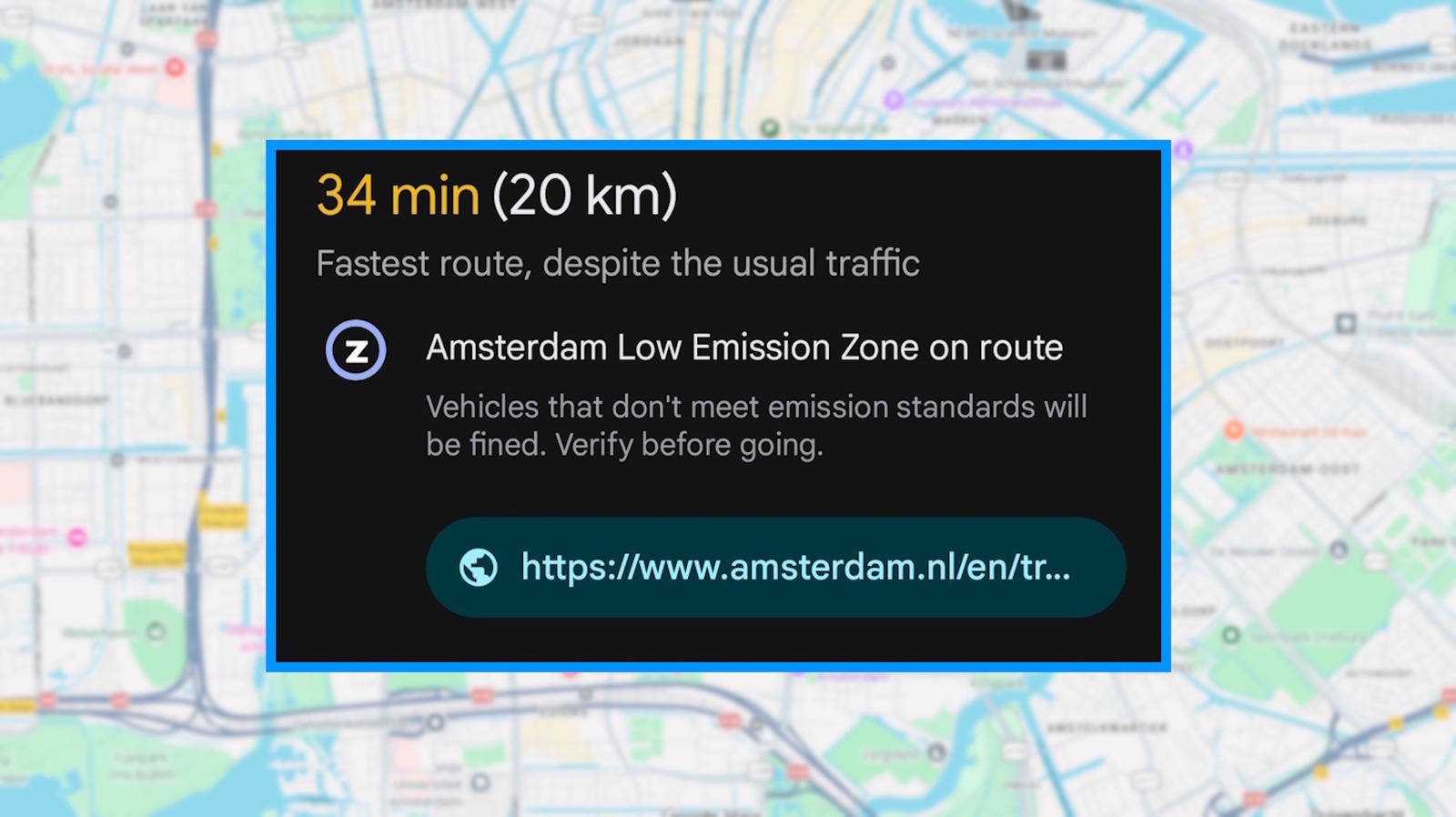
The 'Z' icon on Google Maps appears in route details to warn drivers that their planned route includes a low-emission zone. For example, when planning a drive into the center of Amsterdam, the icon appears under the trip time, right next to the line "Amsterdam Low Emission Zone on route." The app warns that vehicles that don't meet the emission standards will be fined, tells drivers to check if their car meets those standards and adds a link to the city's official page (Engadget, 1). [1]
In 2025, Google plans to expand these alerts to cover more than 1,000 low-emission and low-traffic zones across Europe, including Italy, Sweden, and Austria. The expansion is part of an ongoing effort to help drivers navigate increasingly complex environmental regulations. Google Maps does not know a user's car's emissions class, so it directs drivers to consult the city's official page for specific requirements (Engadget, 1). [1]
Advertisement
The Cali Reporter newsletter
The stories worth your time.
California, the country, and what comes next. Join our free newsletter for reporting that keeps you informed.
More in Technology
- Modern Web Guidance 1.0 and Browser Compatibility
Modern Web Guidance 1.0, announced by Chrome for Developers on November 10, introduces browser compatibility data to assist coding agents in building web features. The initiative emphasizes the importance of fallback…
- Apache mod_http2 Vulnerability Detection with Nmap
A new Nmap scripting module has been developed to detect the Apache mod_http2 vulnerability (CVE-2026-119618), addressing the challenges of identifying affected systems accurately.
- Securing Remote Vendor Access in Industrial Networks
Best practices for managing remote vendor access in operational technology (OT) networks emphasize controlled access points, multifactor authentication, and time-bound sessions to reduce cybersecurity risks.