Genome Sequencing Reveals Genetic Clues in Recurrent Miscarriage
A new study has identified genetic variants that may contribute to unexplained recurrent miscarriages, offering hope for couples facing repeated pregnancy losses.

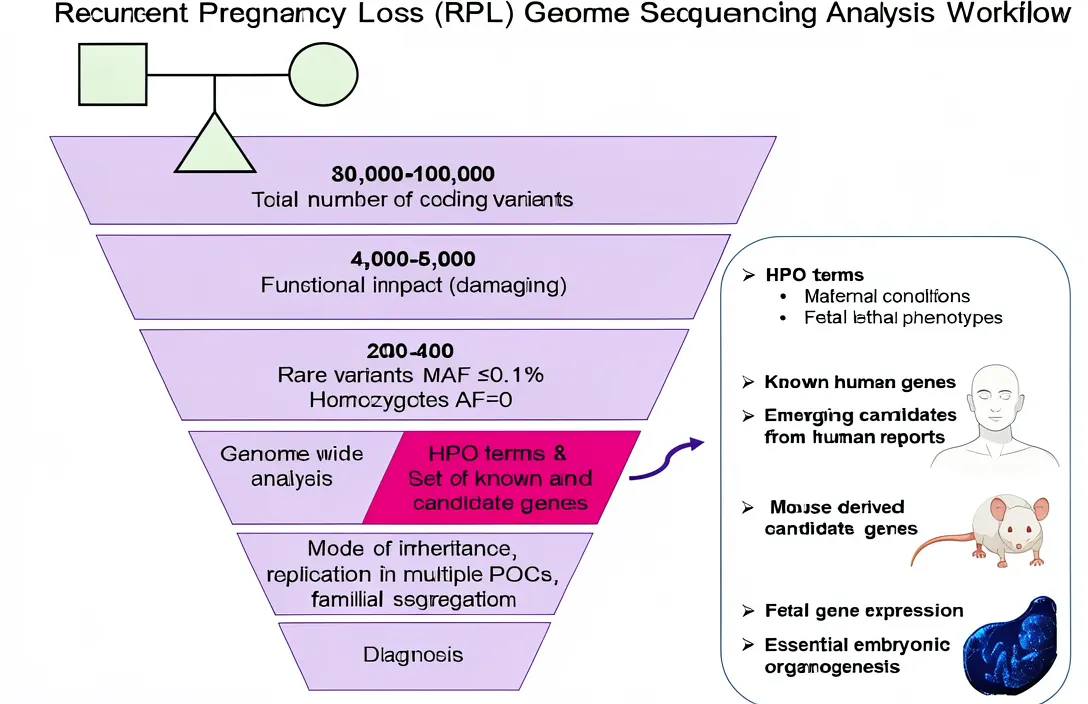

A study published in the journal Genome Medicine has identified genetic variants that may contribute to unexplained recurrent miscarriages. Researchers from Stanford Medicine analyzed the genomes of parents and miscarried pregnancies in 118 families, finding that 15.3% had variations in genes involved in early human development that were likely to affect the gene's function (known as pathogenic, or likely pathogenic, variants) (source ID: 1). This study is significant as it addresses a gap in understanding recurrent pregnancy loss, which affects about 5% of couples, with roughly 70% of cases being chromosomally normal (source ID: 1). [1]
The study found that in 24 of the 30 families with genetic variants, at least one parent carried the variant, usually without experiencing symptoms themselves. This suggests that the genetic risk may be inherited and could help explain why some couples experience repeated miscarriages (source ID: 1). The researchers also noted that some of the identified genes are linked to lethal conditions in stillborn babies and newborns, or that are linked to prenatal death in mice (source ID: 1). [1]
In some cases, variations in genes located on the X chromosome were inherited by male embryos, which have only one X chromosome and so have no backup healthy copy. In other families, a parent carried a variant in only some of their cells, a condition called mosaicism (source ID: 1). The findings suggest that genetic testing of parents and miscarried pregnancies could one day supplement standard chromosome tests, potentially helping doctors counsel couples about their chances of another loss (source ID: 1). [1]
The study involved 176 families enrolled across five academic centers between 2022 and 2024. After excluding cases with chromosomal abnormalities or poor-quality DNA, 118 families were included in the final analysis. Most of the miscarriages occurred during the first trimester, with 79% of losses happening before the 12th week of pregnancy. Approximately 95% of the pregnancies showed no structural abnormalities on prenatal ultrasound, highlighting the challenge of identifying causes in these cases. The geographic scope of the study was not explicitly detailed, but the involvement of multiple academic centers suggests a broad, multi-institutional collaboration. [1]
Advertisement
The project scope focused on analyzing genetic variants in both parents and miscarried embryos to distinguish inherited changes from de novo mutations. Researchers prioritized genes known to cause lethal conditions in stillborn infants or linked to prenatal death in mice. They also examined whether these genes were active during the time of pregnancy loss, based on published data. The study identified variants in 28 genes, with 13 previously linked to fetal or newborn death and 15 never before associated with pregnancy loss. The research also noted that most variants were inherited, with 24 out of 30 families showing at least one parent carrying the variant. [1]
The documented limits of the study include the inability to establish a definitive cause in many cases. In 12 families, variants of uncertain significance were found, meaning the evidence was suggestive but not conclusive. Additionally, not every miscarriage in a family carried the identified variant, suggesting other factors may contribute to pregnancy loss. The study also highlights the challenge of diagnosing genetic causes in early pregnancy loss due to the absence of visible birth defects or phenotypes. The researchers caution that variants of uncertain significance and newly proposed genes should not be used to guide medical decisions until more evidence is available. [1]
The study's findings suggest that genetic testing of parents and miscarried pregnancies could potentially supplement standard chromosome tests in the future. However, the researchers emphasize the need for further validation through additional family enrollments. They also propose that preconception carrier screening for genetic variants linked to pregnancy loss may become a viable strategy, similar to current practices for severe childhood diseases. The team is currently enrolling more families to confirm the role of the identified genes in causing pregnancy loss and to refine their understanding of the genetic mechanisms involved. [1]
Sources
Prepared with AI assistance from the cited sources.
The Cali Reporter newsletter
The stories worth your time.
California, the country, and what comes next. Join our free newsletter for reporting that keeps you informed.
More in Health & Medicine
- Understanding Fascia and the Evidence Behind Fascia Release
Fascia is a connective tissue that plays a structural role in the human body, but evidence supporting specific exercises or tools for 'fascia release' remains limited.
- Antidepressant Effectiveness and Long-Term Use
A new review suggests that some antidepressants may be more effective than others in helping people manage depression symptoms over the long term, according to a study published in The Lancet Psychiatry.
- Experimental Weight-Loss Drug Shows Promise for Knee Osteoarthritis Pain
A new study suggests that an experimental weight-loss drug, retatrutide, may significantly reduce knee pain in people with osteoarthritis and obesity.