Genetic Factors Influence Alzheimer's Onset by Up to a Decade
A study led by the Sant Pau Research Institute has found that genetic variations can significantly affect the age at which Alzheimer's disease begins, even among individuals with the same genetic alteration.

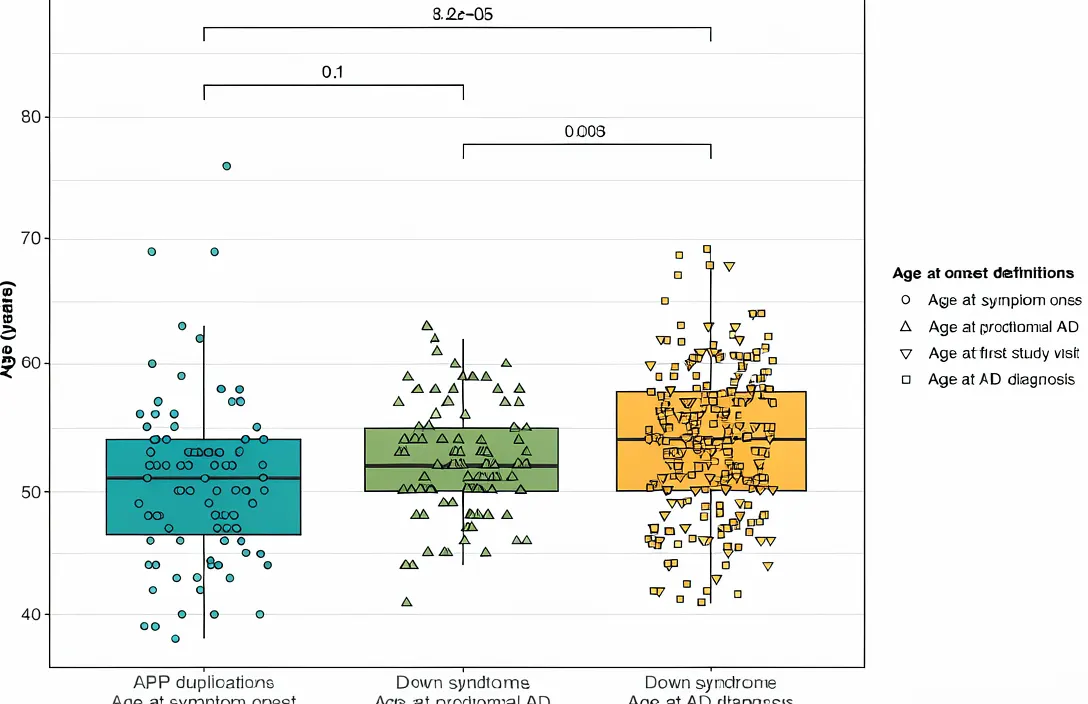

An international study co-led by the Sant Pau Research Institute has identified genetic factors that explain differences in the age of Alzheimer's onset among individuals with an extra copy of the APP gene (Medical Xpress, 2026). The research analyzed clinical and genetic data from 1,057 individuals, including 957 with Down syndrome and 100 with a specific duplication of the APP gene. The findings show that the combination of certain genetic variants can result in a difference of up to a decade in the age of Alzheimer's onset in these individuals. The APP gene is responsible for producing amyloid precursor protein, a key component in Alzheimer's pathology. Having an extra copy of this gene increases amyloid production and promotes earlier disease development. However, the age at which symptoms appear varies considerably, typically between 40 and 65 years of age. This variability has not been fully understood until now. [1]
The study's authors analyzed the effect of the APOE gene, along with 77 other genetic variants associated with Alzheimer's disease, to understand the variability in onset age. The APOE ε2 allele was found to be associated with a later onset of Alzheimer's disease, while APOE ε4 and a higher burden of genetic risk variants were linked to earlier onset. These associations were observed in both groups studied, highlighting the role of genetic risk factors in modifying the course of the disease. The researchers combined this information into a genetic risk score, which enabled them to estimate the cumulative effect of multiple genetic variants on Alzheimer's onset. The results indicated that the median age of onset could vary by approximately 10 years between individuals with the lowest-risk and highest-risk genetic profiles (Medical Xpress, 2026). [1]
The study also examined biological mechanisms associated with these genetic variants. It found that pathways involved in beta-amyloid metabolism and angiogenesis were particularly relevant to the timing of Alzheimer's onset. In individuals with Down syndrome, an association was also identified with endocytosis, a process by which cells take up substances from their surroundings. These findings suggest that processes related to amyloid metabolism and vascular biology may play a crucial role in determining when the disease manifests. The researchers emphasized that further studies are needed before these findings can be translated into clinical practice, including determining whether the identified variants influence when Alzheimer's biomarkers begin to change (Medical Xpress, 2026). [1]
A study co-led by the Sant Pau Research Institute has identified that genetic factors explain differences in the age of Alzheimer's onset among individuals with an extra copy of the APP gene (Medical Xpress, 2026). The study analyzed clinical and genetic data from 1,057 individuals, including 957 with Down syndrome and 100 with a specific duplication of the APP gene. These individuals typically experience the first signs of Alzheimer's between the ages of 40 and 65, but the age of onset varies significantly (Medical Xpress, 2026). [1]
Advertisement
The research team examined the effect of the APOE gene and 77 other genetic variants associated with Alzheimer's disease. They found that the APOE ε2 allele is linked to a later onset of the disease, while APOE ε4 and a higher genetic risk score are associated with an earlier onset. These effects were observed in both individuals with Down syndrome and those with an APP gene duplication (Medical Xpress, 2026). [1]
Using a genetic risk score, the researchers estimated that the median age of Alzheimer's onset could vary by approximately 10 years between individuals with the lowest-risk and highest-risk genetic profiles. Among individuals with an APP gene duplication, the estimated median age of onset was 49.4 years for the highest-risk profile and 58.8 years for the lowest-risk profile (Medical Xpress, 2026). [1]
The study also highlighted biological mechanisms associated with these genetic variants, including pathways involved in beta-amyloid metabolism and angiogenesis. These findings suggest that processes related to amyloid metabolism and vascular biology may play a significant role in determining when the disease manifests (Medical Xpress, 2026). [1]
An international study co-led by the Sant Pau Research Institute has identified that genetic factors explain differences in the age of Alzheimer's onset among individuals with an extra copy of the APP gene (Medical Xpress, 2026). The research team examined the effect of the APOE gene and 77 other genetic variants associated with Alzheimer's disease. Using a genetic risk score, the researchers estimated that the median age of Alzheimer's onset could vary by approximately 10 years between individuals with the lowest-risk and highest-risk genetic profiles. This finding highlights the significant role that genetic variations beyond the APP duplication play in determining the age at which Alzheimer's symptoms first appear. [1]
Advertisement
The study analyzed clinical and genetic data from 1,057 individuals, including 957 with Down syndrome and 100 with a specific duplication of the APP gene. The researchers found that the APOE ε2 allele is associated with a later onset of Alzheimer's disease, whereas APOE ε4 and a higher burden of genetic risk variants are associated with earlier onset. These effects were observed across all participants, with similar patterns in both groups studied. The findings suggest that other genetic variants, which also influence sporadic Alzheimer's disease, help explain these differences in the age of onset. [1]
The study also examined biological mechanisms associated with these variants, particularly highlighting pathways involved in beta-amyloid metabolism and angiogenesis. In individuals with Down syndrome, an association was also identified with endocytosis. These findings suggest that processes related to amyloid metabolism and vascular biology may play a particularly important role in determining when the disease manifests. However, the analysis found no significant association between the age of Alzheimer's onset and either the size of the APP gene duplication or the presence of other duplicated genes on chromosome 21 examined in the study. [1]
An international study co-led by the Sant Pau Research Institute has identified that genetic factors explain differences in the age of Alzheimer's onset among individuals with an extra copy of the APP gene (Medical Xpress, 2026). The research team analyzed the effect of the APOE gene and 77 other genetic variants associated with Alzheimer's disease. Using a genetic risk score, the researchers estimated that the median age of Alzheimer's onset could vary by approximately 10 years between individuals with the lowest-risk and highest-risk genetic profiles. This finding highlights the significant role of genetic variation in determining the timing of Alzheimer's disease onset in individuals with an extra copy of the APP gene. [1]
The study analyzed clinical and genetic data from 1,057 individuals, including 957 with Down syndrome and 100 with a specific duplication of the APP gene (Medical Xpress, 2026). The findings showed that individuals with Down syndrome, who typically have three copies of chromosome 21, and those with a specific duplication of the APP gene without Down syndrome both experience a wide range of ages at which Alzheimer's symptoms first appear. The median age of onset for the highest-risk genetic profile was estimated to be 49.4 years for individuals with an APP gene duplication and 50.1 years for those with Down syndrome, while the lowest-risk profiles showed a median onset of 58.8 and 60.1 years, respectively. [1]
Advertisement
The researchers also examined biological mechanisms associated with these genetic variants, particularly highlighting pathways involved in beta-amyloid metabolism and angiogenesis (Medical Xpress, 2026). These findings suggest that processes related to amyloid metabolism and vascular biology may play a particularly important role in determining when the disease manifests. Additionally, the study found no significant association between the age of Alzheimer's onset and either the size of the APP gene duplication or the presence of other duplicated genes on chromosome 21 examined in the study. [1]
Sources
Prepared with AI assistance from the cited sources.
The Cali Reporter newsletter
The stories worth your time.
California, the country, and what comes next. Join our free newsletter for reporting that keeps you informed.
More in Health & Medicine
- Understanding Fascia and the Evidence Behind Fascia Release
Fascia is a connective tissue that plays a structural role in the human body, but evidence supporting specific exercises or tools for 'fascia release' remains limited.
- Antidepressant Effectiveness and Long-Term Use
A new review suggests that some antidepressants may be more effective than others in helping people manage depression symptoms over the long term, according to a study published in The Lancet Psychiatry.
- Experimental Weight-Loss Drug Shows Promise for Knee Osteoarthritis Pain
A new study suggests that an experimental weight-loss drug, retatrutide, may significantly reduce knee pain in people with osteoarthritis and obesity.