Genetic Brake Regulates Brain Size and Cell Production
A study published in Science Advances reveals how the PTEN gene functions as a molecular brake during brain development, influencing the production of neurons and astrocytes.

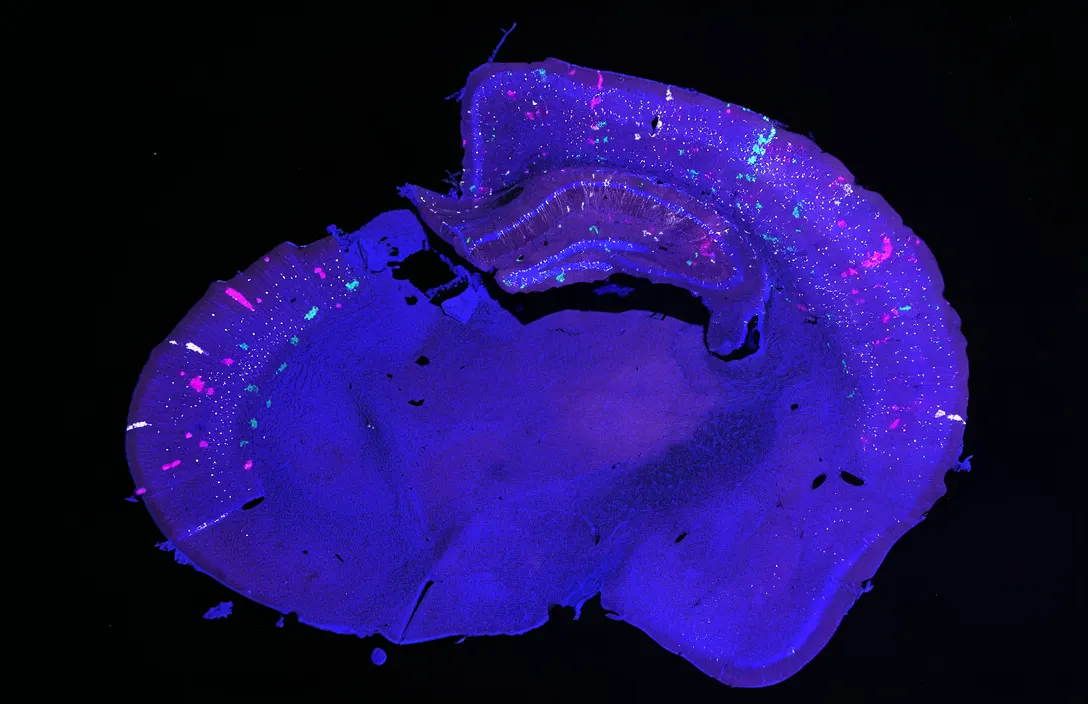

The gene PTEN acts like a molecular brake, helping maintain balance during brain development by ensuring progenitor cells are present in the right time, place, and numbers (Medical Xpress, 2026). The Hippenmeyer group at the Institute of Science and Technology Austria (ISTA) found that when this brake is missing in even individual progenitor cells, a domino effect occurs, leading to overproduction of neurons and astrocytes. This excess cell production is likely a driver of megalencephaly, a condition characterized by an unusually large brain. [1]
Using MADM technology, researchers selectively switched off the PTEN gene in a tiny fraction of radial glial cells, labeling them with fluorescent markers to track their development. This method, known as lineage tracing, revealed that individual radial glial cells lacking PTEN produce around 25% more neurons than under normal conditions. They also generate substantially more astrocytes, which are enlarged, contributing to the increased brain size observed in megalencephaly (Medical Xpress, 2026). [1]
The study also identified alternative signaling pathways involved in PTEN-related developmental processes. In the absence of PTEN, signaling shifted from the usual EGFR communication route to the MAPK pathway. This finding suggests that the MAPK signaling pathway could be a potential therapeutic target for treating gliomas, brain tumors made up of astrocytes and other glial cells, particularly in cases where patients develop resistance to EGFR inhibitors (Medical Xpress, 2026). [1]
The gene PTEN acts like a molecular brake, helping maintain balance during brain development by ensuring progenitor cells are present in the right time, place, and numbers (Medical Xpress, 2026). The Hippenmeyer group at the Institute of Science and Technology Austria (ISTA), in collaboration with researchers at Sorbonne Université in Paris, Yale School of Medicine in the United States, and Vetmeduni Vienna, now provides detailed insights into how loss of PTEN affects brain development in mice. The researchers followed individual progenitor cells and their descendants. When PTEN is absent during the development of the cerebral cortex—the outermost layer of the brain—these progenitors produce too many nerve cells (neurons). [1]
Advertisement
Critically, they show, for the first time, that those same progenitors also make more astrocytes—the brain's supporting cells. This excess cell production is likely a driver of megalencephaly. The team also identified molecular signaling pathways through which PTEN influences these developmental processes. Using MADM technology, researchers selectively switched off the PTEN gene in a tiny fraction of radial glial cells, labeling them with fluorescent markers to track their development. This method is known as lineage tracing—in simple terms, it creates a "cellular family tree." [1]
Radial glial cells are progenitor cells of the cerebral cortex. They first multiply and then produce neurons. At a later stage, they can also give rise to glial cells—the brain's supporting cells. Both cell types are essential for the proper development and organization of the cerebral cortex. The analysis showed that individual radial glial cells lacking PTEN produce around 25% more neurons than they do under normal developmental conditions. They also generate substantially more astrocytes—a specific type of glial cell. These neurons and astrocytes are enlarged as well. [1]
The PTEN gene functions as a molecular brake during brain development, ensuring progenitor cells are present in the right time, place, and numbers (Medical Xpress, 2026). Researchers used MADM technology to selectively switch off the PTEN gene in a tiny fraction of radial glial cells, labeling them with fluorescent markers to track their development. This method, known as lineage tracing, enables the creation of a 'cellular family tree' to understand the effects of PTEN mutations on individual cells and their descendants. The study shows that the absence of PTEN leads to the production of more neurons and astrocytes, both of which are enlarged. This increased cell production is likely a driver of megalencephaly, a condition characterized by an unusually large brain. [1]
The study also identified alternative signaling pathways involved in PTEN-related developmental processes. Under normal conditions, radial glial cells rely on signals from the EGFR signaling pathway to produce glial cells, particularly astrocytes. However, in PTEN mutants, signaling shifts toward the MAPK pathway. This finding suggests that the MAPK signaling pathway could be a potential therapeutic target in cases where patients develop resistance to EGFR inhibitors, a common treatment for gliomas—brain tumors made up of astrocytes and other glial cells. The transition from radial glial cells to astrocytes is particularly significant, as it reveals how PTEN mutations can influence not only the number but also the type of cells produced during brain development. [1]
Advertisement
People with mutations in PTEN often have megalencephaly and an increased risk of developing tumors, as well as being more likely to be on the autism spectrum, have intellectual disabilities, or experience epilepsy. These conditions are collectively referred to as PTEN hamartoma tumor syndrome. The Hippenmeyer group at the Institute of Science and Technology Austria (ISTA), in collaboration with researchers at Sorbonne Université in Paris, Yale School of Medicine in the United States, and Vetmeduni Vienna, now provides detailed insights into how loss of PTEN affects brain development in mice. The researchers followed individual progenitor cells and their descendants, revealing that the absence of PTEN leads to increased production of both neurons and astrocytes, contributing to the development of megalencephaly. [1]
The PTEN gene functions as a molecular brake during brain development, ensuring progenitor cells are present in the right time, place, and numbers (Medical Xpress, 2026). Researchers at the Institute of Science and Technology Austria (ISTA) have shown that when PTEN is absent in individual progenitor cells, these cells produce an excessive number of neurons and astrocytes. This overproduction is likely a key driver of megalencephaly, a condition characterized by an abnormally large brain. The study used MADM technology to selectively switch off the PTEN gene in radial glial cells, a type of progenitor cell in the cerebral cortex, and track their development through fluorescent markers. This method allowed the team to create a detailed 'cellular family tree' to observe the effects of PTEN loss in real time (Medical Xpress, 2026). [1]
People with mutations in PTEN often have megalencephaly and an increased risk of developing tumors, as well as being more likely to be on the autism spectrum, have intellectual disabilities, or experience epilepsy (Medical Xpress, 2026). The study also identified alternative signaling pathways involved in PTEN-related developmental processes. Specifically, when PTEN is absent, the brain's progenitor cells no longer rely on the usual EGFR signaling pathway to produce glial cells, particularly astrocytes. Instead, the signaling shifts toward the MAPK pathway. This discovery may have implications for the treatment of gliomas, which are brain tumors made up of astrocytes and other glial cells. Some patients with gliomas develop resistance to EGFR inhibitors, and the findings suggest that the MAPK pathway could be a potential therapeutic target in such cases (Medical Xpress, 2026). [1]
The study also found that individual radial glial cells lacking PTEN produce around 25% more neurons than under normal developmental conditions and generate substantially more astrocytes. These neurons and astrocytes are also larger in size. This combination of more—and larger—brain cells could help explain PTEN-associated megalencephaly. The research provides a detailed understanding of how PTEN mutations affect cellular output, including the quantity and identity of cells produced from stem cells. These insights are crucial for understanding the molecular mechanisms behind PTEN-related developmental disorders and may inform future therapeutic strategies (Medical Xpress, 2026). [1]
Advertisement
The Cali Reporter newsletter
The stories worth your time.
California, the country, and what comes next. Join our free newsletter for reporting that keeps you informed.
More in Health & Medicine
- Understanding Fascia and the Evidence Behind Fascia Release
Fascia is a connective tissue that plays a structural role in the human body, but evidence supporting specific exercises or tools for 'fascia release' remains limited.
- Antidepressant Effectiveness and Long-Term Use
A new review suggests that some antidepressants may be more effective than others in helping people manage depression symptoms over the long term, according to a study published in The Lancet Psychiatry.
- Experimental Weight-Loss Drug Shows Promise for Knee Osteoarthritis Pain
A new study suggests that an experimental weight-loss drug, retatrutide, may significantly reduce knee pain in people with osteoarthritis and obesity.