Fingertip Study Reveals Pain Threshold During Millimeter-Wave Exposure
A study on millimeter-wave exposure has identified the temperature at which pain is first perceived on the fingertip, offering insights for safety guidelines in wireless communication technologies.

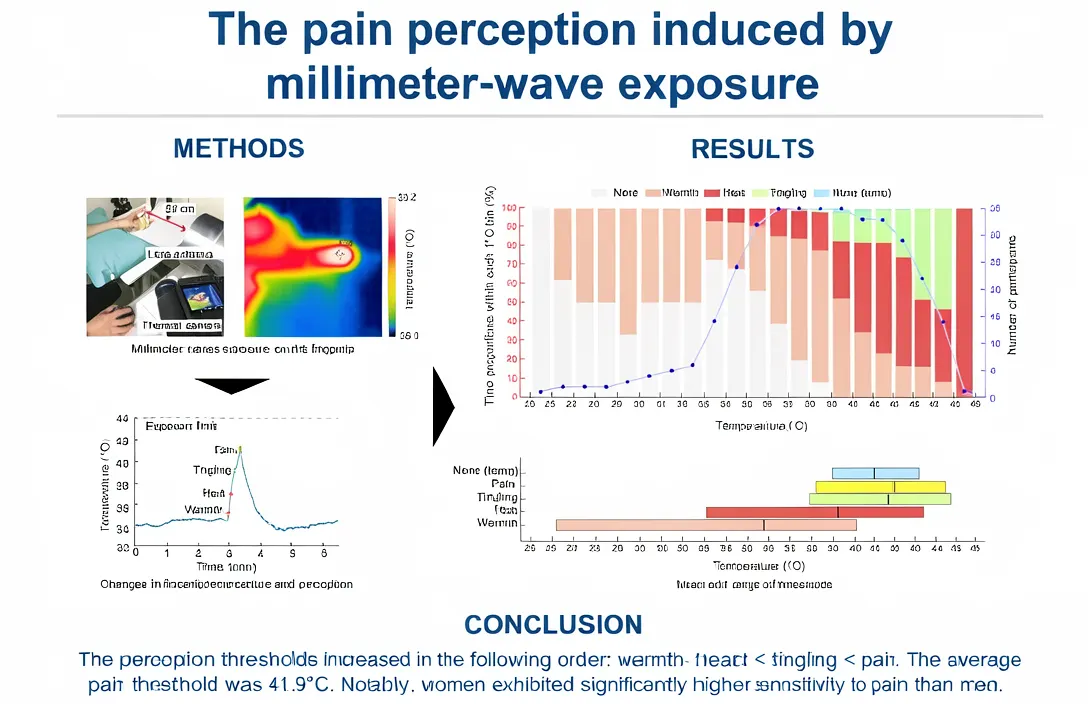

A study conducted by researchers from Fujita Health University School of Medicine and Nagoya Institute of Technology in Japan has identified the pain threshold for human skin exposed to millimeter waves. The research team tracked fingertip temperature and sensations during exposure to 28 GHz millimeter waves on the left middle fingertips of 35 healthy adults. The study found that the average skin temperature at which pain was first perceived was 41.9 °C (107.4°F). The noncontact exposure was carefully controlled, and the session was stopped when pain was reported or when the skin temperature exceeded 44 °C (111°F). The findings were published in the Journal of Neurophysiology on Sept. 1, 2026 (source ID: 1). [1]
The study observed a clear sequence of sensations as skin temperature increased: warmth, followed by heat, then tingling, and finally pain. Eighteen participants reported pain during exposure, while seven participants tolerated the full 10-minute exposure without reporting pain. No adverse events were observed during the study. The researchers also noted a significant difference between sexes, with females being more likely than males to perceive pain, with an odds ratio of 4.80. Further analysis suggested that differences in total body water and finger circumference may partly explain this association (source ID: 1). [1]
The study highlights that tingling may serve as an early warning of impending pain as skin temperature rises. The observed pain threshold was close to the 41.9 °C (107.4°F) local temperature level identified in international exposure guidelines as potentially harmful. This provides experimental evidence from human exposure that supports the rationale for the skin temperature limit recommended by international guidelines. The findings may help strengthen the evidence base for protecting people as millimeter-wave technologies continue to expand (source ID: 1). [1]
The study was conducted in Japan, specifically involving researchers from Fujita Health University School of Medicine and Nagoya Institute of Technology. The experiments took place in controlled laboratory settings, where 35 healthy adult participants were exposed to 28 GHz millimeter waves on their left middle fingertips. The exposure was noncontact and carefully monitored to ensure safety, with sessions ceasing when pain was reported or when the skin temperature exceeded 44 °C (111°F). The research was published in the *Journal of Neurophysiology* on September 1, 2026, and was led by Professor Yohei Otaka from Fujita Health University. The study's location and technical environment were designed to minimize external variables and ensure accurate data collection on the physiological effects of millimeter-wave exposure. [1]
Advertisement
The project scope focused specifically on assessing the pain threshold and sensory progression in response to millimeter-wave exposure on the fingertip, a highly sensitive area of the body. The study aimed to determine the temperature at which pain begins and to identify the sequence of sensations—warmth, heat, tingling, and pain—as skin temperature increases. The research team used continuous skin temperature monitoring and relied on self-reported sensations from participants to gather data. The exposure was limited to a 10-minute duration per session, and the study involved 35 participants, with no adverse events reported. The results were analyzed for statistical significance, including differences between genders, and were compared to international exposure guidelines. [1]
The study's history dates back to the growing interest in millimeter-wave technology for high-speed wireless communication, which has raised concerns about potential health effects. Previous research on pain thresholds has used different heat sources, leading to inconsistent findings. This study aimed to fill a gap by directly measuring the effects of millimeter-wave exposure on human skin. The research team collaborated between Fujita Health University and Nagoya Institute of Technology, with Dr. Akiko Yuasa, Dr. Shintaro Uehara, and Kazuki Ushizawa from Fujita Health University, along with Professor Akimasa Hirata from Nagoya Institute of Technology. The methodology was designed to align with international standards for exposure safety and to provide experimental evidence for setting temperature limits. [1]
Documented limits in the study include a maximum skin temperature threshold of 44 °C (111°F), beyond which exposure was halted for safety. The average pain threshold was found to be 41.9 °C (107.4°F), with a notable gender difference: females were 4.8 times more likely to report pain than males. The study also identified that tingling may serve as an early warning sign of impending pain. These findings align with international guidelines that recommend a skin temperature limit of approximately 42 °C (108°F) to prevent potential harm. The research does not provide evidence of long-term effects or chronic exposure risks, focusing instead on acute sensory responses and immediate safety thresholds. [1]
Researchers from Fujita Health University School of Medicine and Nagoya Institute of Technology in Japan conducted a study to determine the pain threshold for human skin exposed to millimeter waves. The study involved 35 healthy adults who were exposed to 28 GHz millimeter waves on their left middle fingertips. Skin temperature was continuously monitored, and participants reported sensations such as warmth, heat, tingling, and pain as they occurred (source ID: 1). [1]
Advertisement
The study found that pain began at an average skin temperature of 41.9 °C (107.4°F). The sensations progressed in a clear sequence: warmth was followed by heat, then tingling, and finally pain. This sequence provides a framework for understanding when sensations transition from harmless to painful during millimeter-wave exposure (source ID: 1). [1]
The research also noted a significant difference in pain sensitivity between sexes, with females being more likely to perceive pain than males, with an odds ratio of 4.80. The study suggests that differences in total body water and finger circumference may partly explain this variation. These findings highlight the importance of considering individual variability when establishing safety guidelines for millimeter-wave exposure (source ID: 1). [1]
Sources
Prepared with AI assistance from the cited sources.
The Cali Reporter newsletter
The stories worth your time.
California, the country, and what comes next. Join our free newsletter for reporting that keeps you informed.
More in Health & Medicine
- Understanding Fascia and the Evidence Behind Fascia Release
Fascia is a connective tissue that plays a structural role in the human body, but evidence supporting specific exercises or tools for 'fascia release' remains limited.
- Antidepressant Effectiveness and Long-Term Use
A new review suggests that some antidepressants may be more effective than others in helping people manage depression symptoms over the long term, according to a study published in The Lancet Psychiatry.
- Experimental Weight-Loss Drug Shows Promise for Knee Osteoarthritis Pain
A new study suggests that an experimental weight-loss drug, retatrutide, may significantly reduce knee pain in people with osteoarthritis and obesity.