

Facing $1.5B fire alarm bill, CA prisons go with human smoke detectors
California’s prisons can’t afford $1.5 billion to fix broken fire alarms, so the state has assigned inmates to sniff out smoke instead.
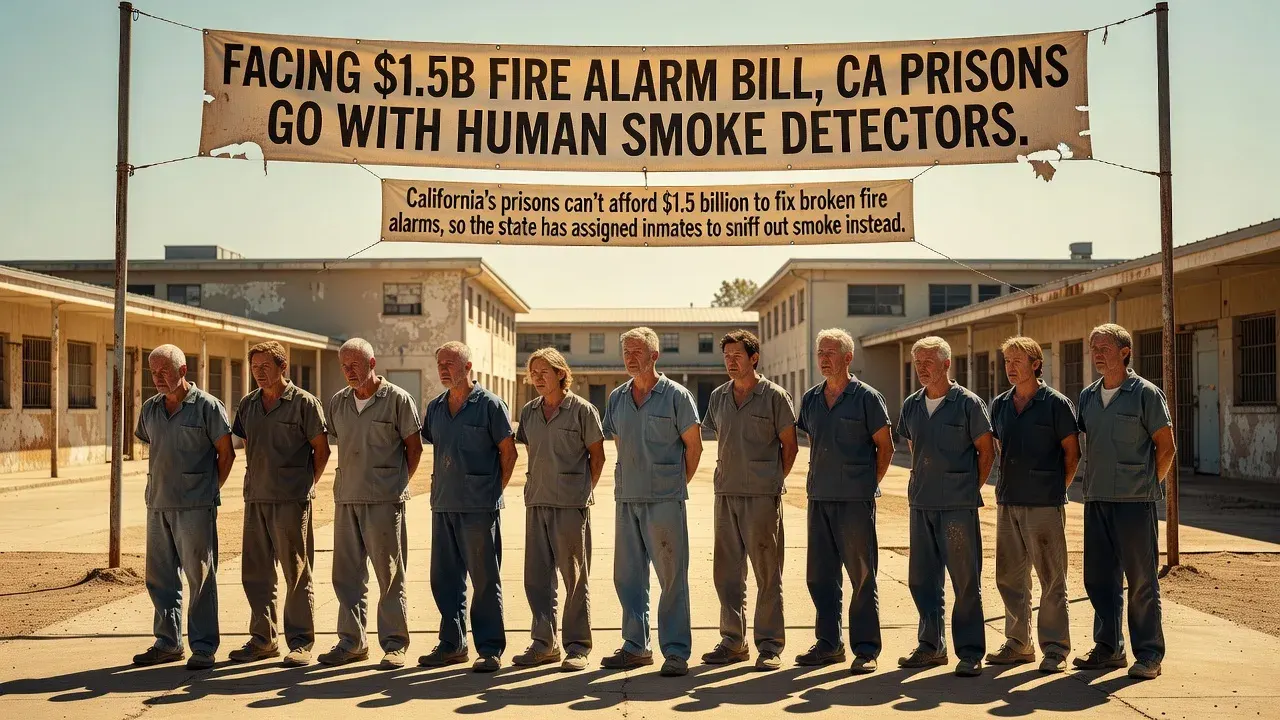
California’s 31 state prisons are relying on human smoke detectors, literally inmates assigned to smell for fire, because their fire alarm systems are outdated, malfunctioning or completely inoperable.
The price tag to replace the detection devices, control panels and network connections across the entire system: $1.5 billion. Rather than spend it, prison officials have chosen to put living, breathing people on fire watch duty.
This workaround didn’t emerge from careful safety planning. It is the direct result of deferred maintenance on aging infrastructure that no one wants to pay to fix. While the Department of Corrections and Rehabilitation acknowledges the systems’ failures, the budget reality has won out over modern electronic detection.

Assigning prisoners to patrol for smoke introduces obvious risks: delayed response times, inconsistent vigilance, and the perverse image of incarcerated people serving as the state’s last line of defense against catastrophe. Yet with a billion-and-a-half-dollar bill on the table, Sacramento has decided the cheaper, lower-tech option is acceptable.
The choice reveals a deeper failure in how California manages its prison infrastructure. When the cost of basic safety upgrades becomes politically or fiscally untenable, the system defaults to makeshift human labor instead of capital investment.
Whether inmates standing watch can actually prevent a deadly blaze better than non-functional alarms remains an open and unsettling question, one that officials appear content not to test until it’s too late.
Original reporting: CalMatters.
More in California
- UC Berkeley Lab Proposes New Civic Framework for California’s Next Governor
A research-driven agenda calls for institutionalizing 'co-governance' to address low public trust and lack of resident influence in state decision-making.
- Five Tax Measures on California’s Ballot Aim to Reshape State Finances
Propositions 3, 40–43 would alter income, wealth and local taxation rules—marking the highest number of tax measures on a general election ballot since 1994.
- Catalina Helicopter Crash Highlights Risks of Island Medevac Flights
A medical evacuation chopper carrying Catalina Romero, pilot, and nurse Jessica Devries crashed into the ocean shortly after takeoff, killing all three; federal investigators are assessing causes including night flying, spatial disorientation, and the island’s challenging Pebbly Beach heliport.