Experimental Treatment Shows Promise for Fragile X Syndrome in Mice
A recent study suggests that an experimental drug may improve cognitive function and gut health in mice with fragile X syndrome.

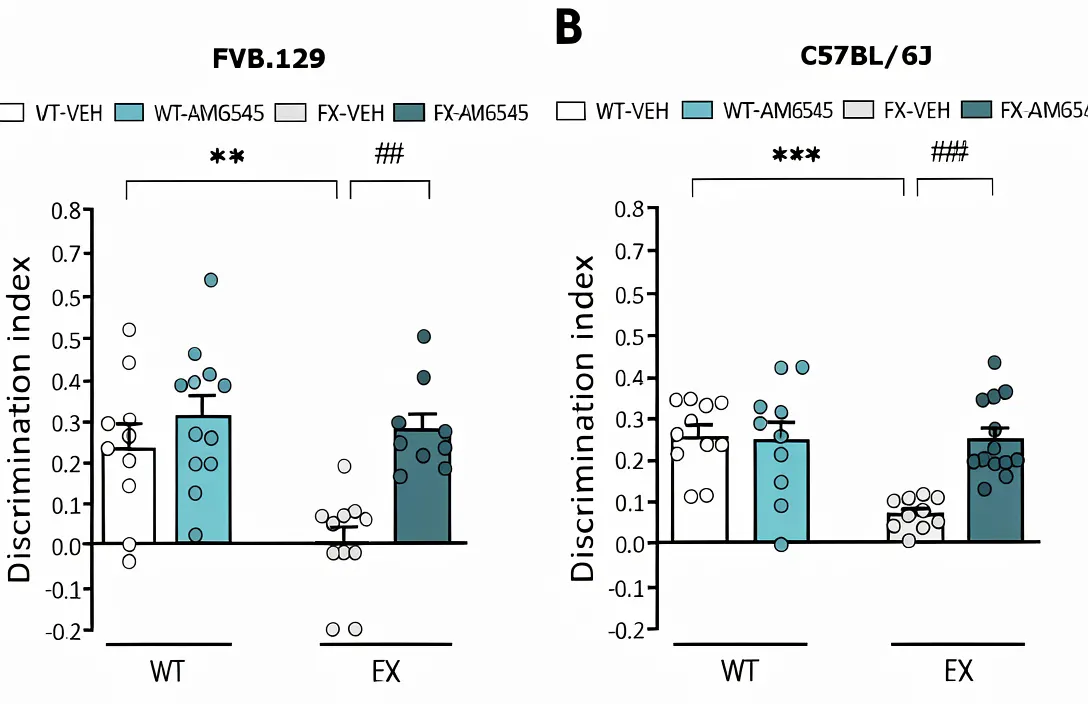

A study published in Translational Psychiatry reveals that a one-week experimental treatment with AM6545, a drug that inhibits the endocannabinoid system peripherally, alleviates cognitive impairment in fragile X syndrome mouse models. This treatment improves memory deficits, reduces synaptic alterations, and restores intestinal barrier integrity markers. The research highlights the potential role of the microbiota–gut–brain axis in intellectual disability and suggests a novel approach to addressing cognitive impairments in fragile X syndrome (Source ID: 1). [1]
The study found that mice with the fragile X mutation had fewer bacteria of the genera Lactobacillus and Akkermansia in their feces and reduced expression of the Muc2 gene, which is essential for maintaining the intestinal mucosa's function as a physical barrier. Peripheral inhibition of type 1 cannabinoid (CB1) receptors was associated with the restoration of the microbiome and increased expression of the Muc2 gene, which improves the intestinal ecosystem (Source ID: 1). [1]
The research indicates that the experimental treatment acts only on peripheral CB1 receptors, unlike other drugs that target the brain. This peripheral treatment enhances memory and increases plasticity in mice with the fragile X mutation, improving neuronal connections in the hippocampus. The findings suggest that the main effects of broad-spectrum drugs may be closely linked to their peripheral action (Source ID: 1). [1]
A study published in Translational Psychiatry reveals that a one-week experimental treatment with AM6545, a drug that inhibits the endocannabinoid system peripherally, alleviates cognitive impairment in fragile X syndrome mouse models. The treatment was found to improve memory deficits, reduce synaptic alterations, and restore intestinal barrier integrity markers in these mice. This experimental approach opens the door to studying a potential therapy to improve the cognitive ability of people with the syndrome and highlights the role of the microbiota–gut–brain axis in intellectual disability (Source ID: 1). [1]
Advertisement
Fragile X syndrome is the most common monogenic cause of inherited intellectual disability and autism spectrum disorder. In Spain, it affects around 10,000 people who experience a range of symptoms, including memory impairment and gastrointestinal dysfunction. To date, there is no treatment for cognitive impairment caused by this syndrome. An estimated 127,000 people in Spain are carriers of the condition (Source ID: 1). [1]
The study found that mice with the fragile X mutation had fewer bacteria of the genera Lactobacillus and Akkermansia in their feces and reduced expression of the Muc2 gene, which is essential for maintaining the intestinal mucosa's function as a physical barrier. The research indicates that the experimental treatment acts only on peripheral CB1 receptors, unlike other drugs that target the brain (Source ID: 1). [1]
A one-week experimental treatment with AM6545, a drug that inhibits the endocannabinoid system peripherally, has been found to alleviate cognitive impairment in fragile X syndrome mouse models (source ID: 1). The treatment was shown to improve memory deficits, reduce synaptic alterations, and restore intestinal barrier integrity markers in these mice. This experimental approach opens the door to studying a potential therapy to improve the cognitive ability of people with the syndrome and highlights the role of the microbiota–gut–brain axis in intellectual disability. [1]
Fragile X syndrome is the most common monogenic cause of inherited intellectual disability and autism spectrum disorder. In Spain, it affects around 10,000 people who experience a range of symptoms, including memory impairment, hyperactivity, and gastrointestinal dysfunction. To date, there is no treatment for cognitive impairment caused by this syndrome, but the study suggests that a one-week experimental treatment in mice improves neuronal connections and cognitive abilities in animals affected by the syndrome (source ID: 1). [1]
Advertisement
The study found that mice with the fragile X mutation had fewer bacteria of the genera Lactobacillus and Akkermansia in their feces and reduced expression of the Muc2 gene, which is essential for maintaining the intestinal mucosa's function as a physical barrier. Peripheral pharmacological treatment was found to help restore the microbiome of mutated mice and increase the expression of the Muc2 gene (source ID: 1). [1]
Sources
Prepared with AI assistance from the cited sources.
The Cali Reporter newsletter
The stories worth your time.
California, the country, and what comes next. Join our free newsletter for reporting that keeps you informed.
More in Health & Medicine
- Understanding Fascia and the Evidence Behind Fascia Release
Fascia is a connective tissue that plays a structural role in the human body, but evidence supporting specific exercises or tools for 'fascia release' remains limited.
- Antidepressant Effectiveness and Long-Term Use
A new review suggests that some antidepressants may be more effective than others in helping people manage depression symptoms over the long term, according to a study published in The Lancet Psychiatry.
- Experimental Weight-Loss Drug Shows Promise for Knee Osteoarthritis Pain
A new study suggests that an experimental weight-loss drug, retatrutide, may significantly reduce knee pain in people with osteoarthritis and obesity.