Experimental Blood Test Detects Four Deadly Diseases in an Hour
A new diagnostic platform developed at the University of Notre Dame can screen for four diseases—colorectal cancer, glioblastoma, pancreatic cancer, and Alzheimer's disease—with high accuracy using just a small amount…

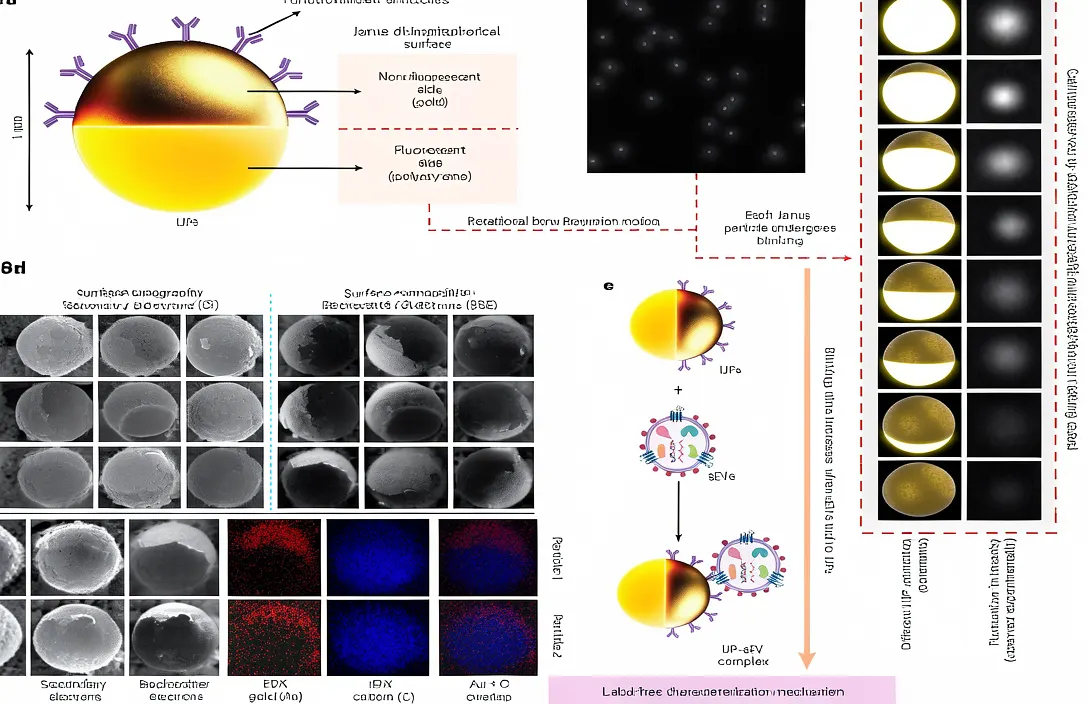

A new diagnostic platform developed by researchers at the University of Notre Dame can identify four deadly diseases—colorectal cancer, glioblastoma, pancreatic cancer, and Alzheimer's disease—from a small blood sample within an hour. The technology, led by Hsueh-Chia Chang, uses immunojanus particles, which are di-hemispherical micrometer-sized particles with one fluorescent side that makes them blink. The platform was tested in a blind study using 87 plasma samples from patients who were either healthy or had one of the four diseases. The results showed that the platform was 90% to 99% accurate in detecting the presence or absence of each disease type (Source ID: 1). [1]
The platform works by detecting exosomes in the blood, which carry proteins that can indicate the early stages of disease. Immunojanus particles have one half covered with antibodies and the other with a fluorescent marker. When mixed with blood, the antibodies on the particles bind to disease-specific proteins on exosomes. The fluorescent side of the particles then signals the presence of these markers. The blood mixture is analyzed under a microscope, where the immunojanus particles appear to blink like stars in the night sky. This blinking is analyzed using Brownian motion to determine if disease markers are present (Source ID: 1). [1]
The diagnostic method is faster and more accurate than current exosome detection technologies, according to Chang. It is also designed to be low-cost, making it accessible for widespread use. The study was published in Nature Biomedical Engineering and was conducted by a team led by Chang, who is the Bayer Corporation professor of engineering at Notre Dame. The research team developed a proprietary computer program to analyze the blinking motion of the particles and identify disease markers (Source ID: 1). [1]
A new diagnostic platform developed by researchers at the University of Notre Dame can identify four deadly diseases—colorectal cancer, glioblastoma, pancreatic cancer, and Alzheimer's disease—from a small blood sample within an hour. The platform works by detecting exosomes in the blood, which carry proteins that can indicate the early stages of disease. The diagnostic method is faster and more accurate than current exosome detection technologies, according to Chang (Evidence 1). [1]
Advertisement
The diagnostic platform was tested in a blind setting using 87 plasma samples from blood draws from patients who were either healthy or had one of the four diseases. The platform was found to be 90% to 99% accurate for detecting the presence or absence of each disease type. The study is published in Nature Biomedical Engineering (Evidence 1). [1]
The disease detection platform works by detecting exosomes found in the blood, which carry proteins that can provide an early indication of disease. To detect these proteins, the Chang Lab created immunojanus particles, or tiny spheres that have two distinct halves. One half is affixed with antibodies and the other is fluorescent (Evidence 1). [1]
Not only is the blood test considered significantly more accurate than the leading exosome detection technology, but the method is also intentionally fast and low-cost. The study is published in Nature Biomedical Engineering (Evidence 1). [1]
A new diagnostic platform developed by researchers at the University of Notre Dame can identify four deadly diseases—colorectal cancer, glioblastoma, pancreatic cancer, and Alzheimer's disease—from a small blood sample within an hour. The platform works by detecting exosomes in the blood, which carry proteins that can indicate the early stages of disease (source ID: 1). [1]
Advertisement
The diagnostic platform was tested in a blind setting using 87 plasma samples from blood draws from patients who were either healthy or had one of the four diseases. The platform was found to be 90% to 99% accurate for detecting the presence or absence of each disease type (source ID: 1). [1]
To run a test, 10 microliters of blood is diluted with a saline solution and mixed with immunojanus particles for 10 to 60 minutes, allowing the immunojanus particles to fully disperse throughout the blood mixture. As the immunojanus particles disperse, the antibodies will lock onto the disease-specific proteins found on the surface of exosomes (source ID: 1). [1]
The blood mixture is then analyzed under a microscope. While the antibodies on the immunojanus particles are essential for capturing markers of disease, the fluorescent half is imperative for signaling to researchers when those markers are present (source ID: 1). [1]
Sources
Prepared with AI assistance from the cited sources.
The Cali Reporter newsletter
The stories worth your time.
California, the country, and what comes next. Join our free newsletter for reporting that keeps you informed.
More in Health & Medicine
- Understanding Fascia and the Evidence Behind Fascia Release
Fascia is a connective tissue that plays a structural role in the human body, but evidence supporting specific exercises or tools for 'fascia release' remains limited.
- Antidepressant Effectiveness and Long-Term Use
A new review suggests that some antidepressants may be more effective than others in helping people manage depression symptoms over the long term, according to a study published in The Lancet Psychiatry.
- Experimental Weight-Loss Drug Shows Promise for Knee Osteoarthritis Pain
A new study suggests that an experimental weight-loss drug, retatrutide, may significantly reduce knee pain in people with osteoarthritis and obesity.