Environmental Activist Jassim al-Asadi Returns to Iraq's Marshes After Kidnapping
Despite being kidnapped, tortured, and accused by an Iran-backed militia of being an Israeli agent, environmentalist Jassim al-Asadi has returned to the marshes of southern Iraq to continue his work.

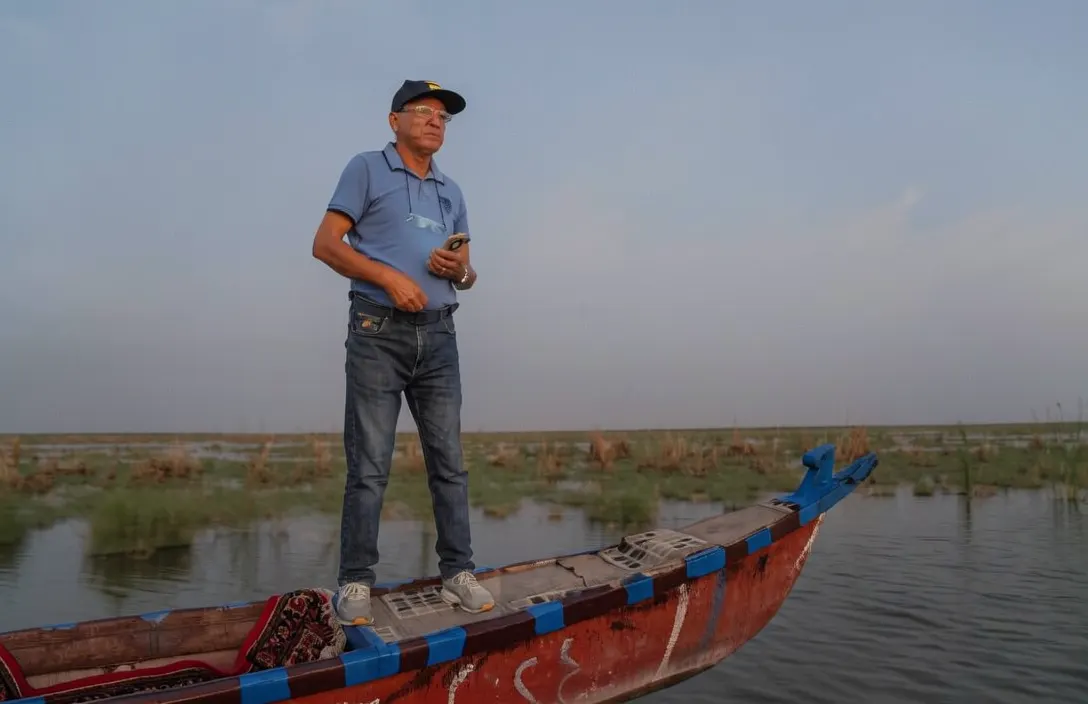

Jassim al-Asadi, an environmentalist in southern Iraq, continues his work monitoring wildlife and water levels in the marshes despite being kidnapped, tortured, and accused by an Iran-backed militia of being an Israeli agent (1). In February 2023, Asadi was kidnapped by an Iran-backed Iraqi militia, which accused him and the journalists he met of being Israeli spies who had fomented anti-government protests that had rocked Iran a few months earlier (1). He was returning from Baghdad to his southern hometown of Chibayish after a meeting with the Iraqi president to discuss help for destitute families in the marshes when gunmen in pickup trucks and SUVs cut off his car on the road south (1). [1]
Asadi was blindfolded and thrown onto the floor of a vehicle, and with their feet on top of him, the kidnappers drove him to what he believed to be farmland. There he was beaten and told to confess to being a spy (1). They showed him a map of the world on a screen and claimed he led a spy network connecting all the countries of the world to Tel Aviv (1). They accused him of ferrying journalists, whom they also accused of being spies, across the marshes into Iran (1). Nature Iraq, like almost all non-governmental organizations, often takes journalists and others on tours in Iraq to raise environmental awareness (1). [1]
Asadi was held for two weeks and subjected to severe torture, including being suffocated with a plastic bag, submerged underwater repeatedly, and receiving electric shocks through his body (1). He was suspended from the ceiling like a sheep being slaughtered and beaten with metal chains (1). After two weeks, his masked captors, dressed in military uniforms and using phrases that Asadi said were uniquely Iranian, told him he could either sign a confession that he ran spy networks and smuggled journalists into Iran, or he could write a will (1). They placed a pen and a piece of paper in front of him and gave him an hour (1). [1]
Instead of killing him, his captors ended up throwing him onto the floor of a vehicle and leaving him by the side of a road in Baghdad near where his family had been told to wait for him (1). Asadi, injured and weak, insisted on returning home to the marshlands the very next day. There, hundreds of marsh residents walked for miles to welcome him back, many waving celebratory posters and Iraqi flags (1). Asadi says he knows the militia that kidnapped him and he believes the government did as well while he was being held (1). [1]
Advertisement
Jassim al-Asadi, an environmentalist in southern Iraq, continues his work monitoring wildlife and water levels in the marshes despite being kidnapped, tortured, and accused by an Iran-backed militia of being an Israeli agent (1). Asadi was blindfolded and thrown onto the floor of a vehicle, and with their feet on top of him, the kidnappers drove him to what he believed to be farmland (1). Asadi was held for two weeks and subjected to severe torture, including being suffocated with a plastic bag, submerged underwater repeatedly, and receiving electric shocks through his body (1). [1]
Instead of killing him, his captors ended up throwing him onto the floor of a vehicle and leaving him by the side of a road in Baghdad near where his family had been told to wait for him (1). Asadi, injured and weak, insisted on returning home to the marshlands the very next day (1). There, hundreds of marsh residents walked for miles to welcome him back, many waving celebratory posters and Iraqi flags (1). [1]
Asadi's cousin, who was driving, had memorized the license plate number of the kidnappers (1). Within two hours they found who owns the car and the name and who he works for (1). The Iraqi government had pledged to secure his release (1). However, in certain areas, some of the Iran-backed militias that flourished in the security vacuum and the subsequent civil war after the U.S. invasion have grown more powerful than Iraqi security forces (1). [1]
In the end, it was Asadi's powerful Bani Asad tribe that won his release after mobilizing hundreds of armed tribal fighters to drive home their demand that he be freed (1). Four hundred members of the Asadi clan — all with guns. They surround the guy's house and say 'Ok, if he dies, you're dead' (1). [1]
Advertisement
Jassim al-Asadi, an environmentalist in southern Iraq, continues his work monitoring wildlife and water levels in the marshes despite being kidnapped, tortured, and accused by an Iran-backed militia of being an Israeli agent (1). Asadi was blindfolded and thrown onto the floor of a vehicle, and with their feet on top of him, the kidnappers drove him to what he believed to be farmland (1). Asadi was held for two weeks and subjected to severe torture, including being suffocated with a plastic bag, submerged underwater repeatedly, and receiving electric shocks through his body (1). [1]
Instead of killing him, his captors ended up throwing him onto the floor of a vehicle and leaving him by the side of a road in Baghdad near where his family had been told to wait for him (1). Asadi's cousin, who was driving, had memorized the license plate number of the kidnappers (1). In the end, it was Asadi's powerful Bani Asad tribe that won his release after mobilizing hundreds of armed tribal fighters to drive home their demand that he be freed (1). [1]
Asadi has been a high-profile figure, working with embassies and government ministries to garner support for the marshes and helping successfully lobby for inclusion as a UNESCO world heritage site in 2016 (1). The inscription recognized the marshlands' biodiversity and their legacy as the site of one of the world's oldest civilizations (1). [1]
Jassim al-Asadi was blindfolded and thrown onto the floor of a vehicle, and with their feet on top of him, the kidnappers drove him to what he believed to be farmland (1). Asadi was held for two weeks and subjected to severe torture, including being suffocated with a plastic bag, submerged underwater repeatedly, and receiving electric shocks through his body (1). Instead of killing him, his captors ended up throwing him onto the floor of a vehicle and leaving him by the side of a road in Baghdad near where his family had been told to wait for him (1). [1]
Advertisement
Asadi's cousin, who was driving, had memorized the license plate number of the kidnappers (1). In the end, it was Asadi's powerful Bani Asad tribe that won his release after mobilizing hundreds of armed tribal fighters to drive home their demand that he be freed (1). Asadi has been a high-profile figure, working with embassies and government ministries to garner support for the marshes and helping successfully lobby for inclusion as a UNESCO world heritage site in 2016 (1). [1]
Nature Iraq, the environmental organization co-founded by Asadi and Azzam Alwash, has faced significant challenges, including accusations of espionage by Iran-backed militias (1). Despite these threats, Asadi continues to monitor the marshes and work with local communities to protect the environment (1). The organization has undertaken various projects, including building floating islands for water buffalo breeders and constructing ponds to naturally clean marsh water contaminated by sewage (1). [1]
Sources
Prepared with AI assistance from the cited sources.
The Cali Reporter newsletter
The stories worth your time.
California, the country, and what comes next. Join our free newsletter for reporting that keeps you informed.
More in San Diego
- Community Condemns ICE Enforcement Near Encinitas School
Residents and school officials in Encinitas are expressing deep concern over an ICE arrest near a local elementary school, highlighting the emotional and psychological impact on families and children.
- San Diego Lawmakers Push Immigration Enforcement Reforms
San Diego's Congressional delegation is advocating for changes to immigration enforcement practices following recent arrests that have raised concerns about the impact on families.
- Tide Pool Etiquette and Environmental Impact During King Tides
As king tides bring more visitors to San Diego's coastline, concerns grow over the impact of human activity on tide pool ecosystems. Educators and conservationists are urging visitors to follow responsible practices to…