El Salvador's Military Expansion in Haiti Amid Gang Violence
El Salvador's President Nayib Bukele has escalated military operations in Haiti, marking a significant shift in the region's approach to combating gang violence. The intervention, which includes the deployment of…

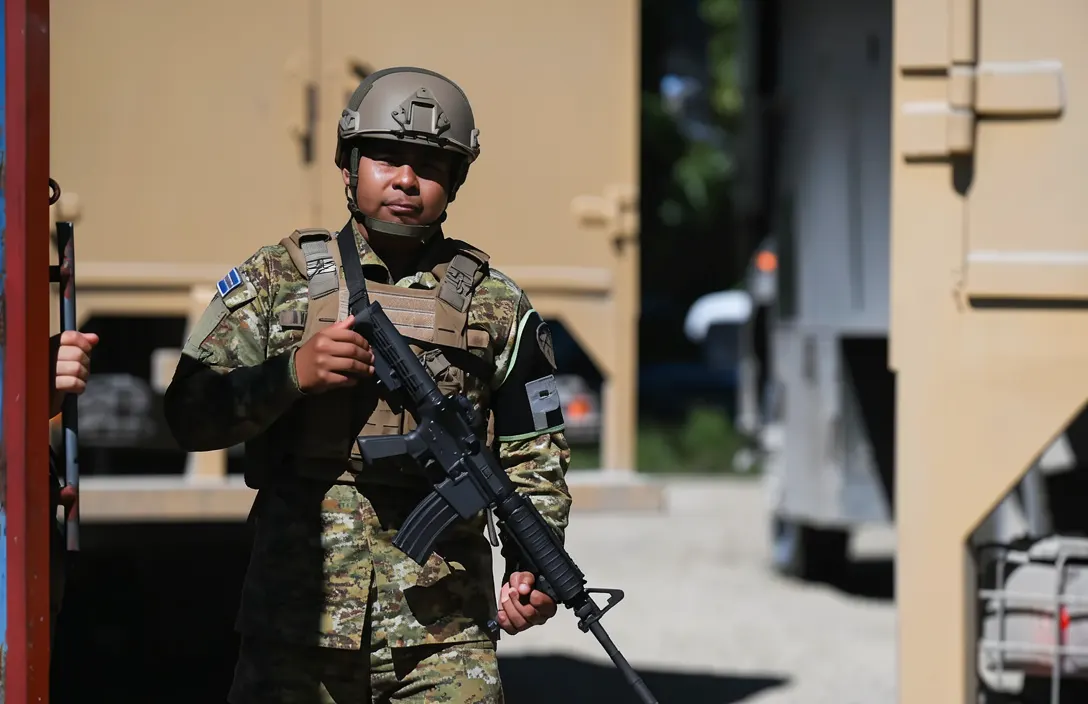
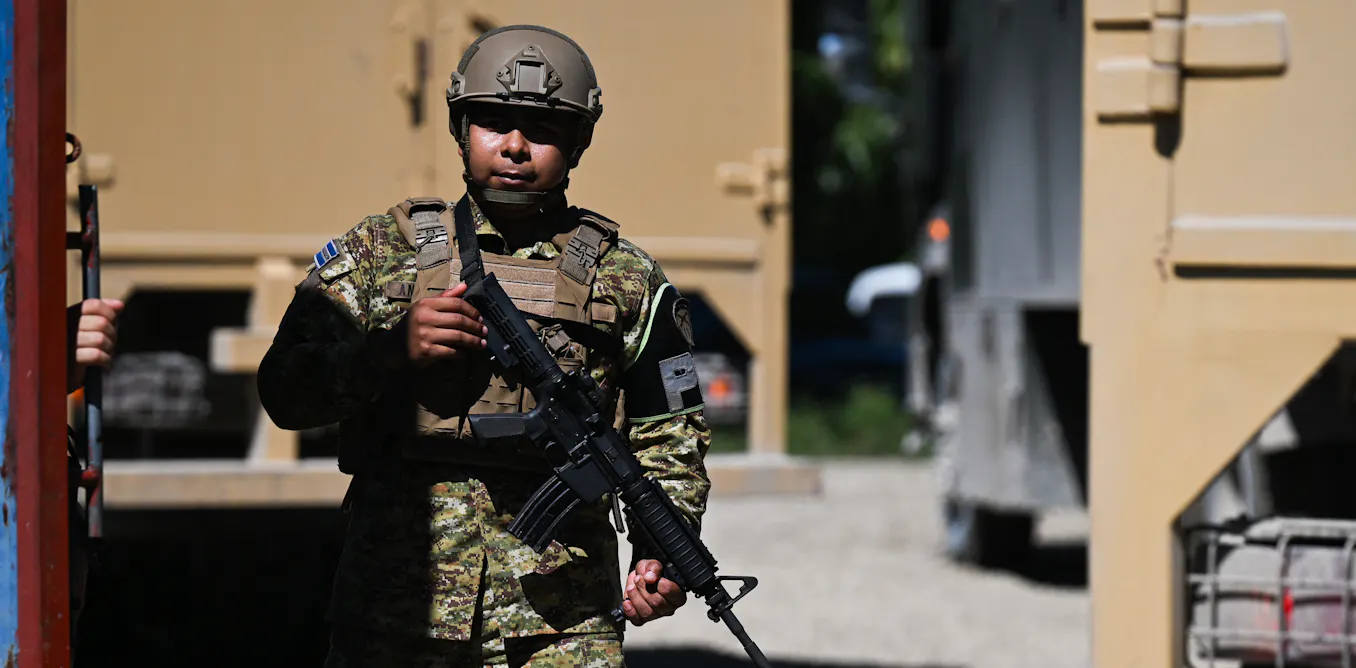
On Nov. 10, 2026, El Salvador President Nayib Bukele posted footage of attack helicopters firing on a compound near Haiti’s capital, Port-au-Prince, as part of an operation targeting Wilson Joseph, leader of the 400 Mawozo gang (Source ID 1). The attack, conducted in collaboration with Haitian police, reportedly destroyed Joseph’s residence and gang headquarters, resulting in the deaths of up to 20 people, though Joseph was not present. This operation follows a series of anti-gang actions in Haiti, including a drone strike on Nov. 6 that killed Mathias Saintil, a prominent gang leader in Cité Soleil, and a statement from Haitian Prime Minister Alix Didier Fils-Aimé celebrating the strike on social media (Source ID 1). [1]
Bukele’s intervention has drawn both regional support and international scrutiny. The operation is part of El Salvador’s expanded military presence in Haiti, which includes the deployment of around 2,500 troops, armored vehicles, and attack helicopters, following the disappearance of four Salvadoran aviation technicians in an Oct. 18 gang ambush (Source ID 1). While Bukele initially framed the mission as a rescue operation, the scale of the deployment suggests a broader military offensive. The United Nations-backed Gang Suppression Force, authorized in 2025, currently has only 2,000 personnel on the ground, and the Salvadoran troops are operating outside its command structure (Source ID 1). [1]
Despite Bukele’s claims of success, concerns remain about the legality and effectiveness of the operations. The International Committee of the Red Cross has warned of the risks to civilians, particularly due to the use of explosive drones and helicopter attacks in residential areas. Between March 2025 and January 2026, 1,243 people were killed in 141 drone operations, including at least 60 individuals unconnected to gangs (Source ID 1). The legal classification of the conflict as a noninternational armed conflict by the Geneva Academy of International Humanitarian Law and Human Rights further complicates the rules of engagement, raising questions about the justification for lethal force (Source ID 1). [1]
On Nov. 10, 2026, El Salvador President Nayib Bukele posted footage of attack helicopters firing on a compound near Haiti’s capital, Port-au-Prince, as part of an operation targeting Wilson Joseph, leader of the 400 Mawozo gang (source ID 1). Bukele claimed the operation, conducted with Haitian police, had demolished Joseph’s residence and gang headquarters, resulting in the deaths of as many as 20 people, although Joseph was reportedly absent. This marks a significant escalation in El Salvador's military involvement in Haiti, which had previously included contributions to the United Nations-backed Gang Suppression Force (GSF). [1]
Advertisement
The intervention in Haiti follows a series of anti-gang operations, including the drone strike that killed Mathias Saintil, head of the “Boston” gang in Cité Soleil, on Nov. 6, 2026 (source ID 1). The operation was conducted by a Haitian special task force, and Prime Minister Alix Didier Fils-Aimé praised the strike on social media. However, the increased use of explosive drones and helicopter attacks in residential areas has raised concerns over civilian casualties. Between March 2025 and January 2026, at least 1,243 people were killed in 141 drone operations, including 60 individuals reportedly unconnected to gangs (source ID 1). [1]
Despite Bukele’s claims of success, concerns remain about the legality and effectiveness of the operations. The Gang Suppression Force was authorized by the U.N. Security Council to deploy up to 5,550 personnel, but currently has only 2,000 on the ground (source ID 1). Most of the Salvadoran troops now in Haiti operate outside its command, and neither government has publicly disclosed the agreement specifying Salvadoran authority, rules of engagement, or the deployment’s duration (source ID 1). This lack of transparency has raised questions about the chain of command and the potential for friendly fire, as warned by U.S. diplomats (source ID 1). [1]
On Nov. 10, 2026, El Salvador President Nayib Bukele posted footage of attack helicopters firing on a compound near Haiti’s capital, Port-au-Prince, as part of an anti-gang operation. Bukele requested the address of Wilson Joseph, leader of the 400 Mawozo gang, via social media, and claimed the attack had demolished Joseph’s residence and gang headquarters, killing as many as 20 people. This operation follows a series of anti-gang actions, including a Nov. 6 drone strike that killed Mathias Saintil, head of the 'Boston' gang in Cité Soleil, and prompted Haitian Prime Minister Alix Didier Fils-Aimé to declare 'one less gang leader' on social media (Evidence 1). [1]
The intervention in Haiti is part of a broader escalation in the fight against organized crime, with El Salvador expanding its military presence from a limited role in the U.N.-backed Gang Suppression Force (GSF) to sending approximately 2,500 troops, armored vehicles, and attack helicopters. Bukele initially described the mission as a 'rescue operation' following the disappearance of four Salvadoran aviation technicians in an Oct. 18 gang ambush. However, the operation is now being conducted outside the formal command structure of the GSF, with unclear rules of engagement and no publicly disclosed agreement specifying Salvadoran authority or deployment duration (Evidence 1). [1]
Advertisement
The legal classification of the conflict in Haiti is a key concern. An independent legal assessment by the Geneva Academy of International Humanitarian Law and Human Rights identifies the fighting as a noninternational armed conflict, which allows for different rules regarding lethal force compared to policing operations. The use of explosive drones and helicopter attacks in residential areas has raised alarms, with at least 1,243 people killed in 141 drone operations between March 2025 and January 2026, including civilians and children. Such tactics have been criticized by the International Committee of the Red Cross for the risks to civilian populations (Evidence 1). [1]
On Nov. 10, 2026, El Salvador President Nayib Bukele posted footage of attack helicopters firing on a compound near Haiti’s capital, Port-au-Prince, as part of an operation targeting Wilson Joseph, leader of the 400 Mawozo gang (Source 1). Bukele claimed the operation, conducted with Haitian police, had demolished Joseph’s residence and gang headquarters, with as many as 20 people killed (Source 1). This follows earlier anti-gang operations, including a Nov. 6 drone strike that killed Mathias Saintil, head of the 'Boston' gang in Cité Soleil, and prompted Haitian Prime Minister Alix Didier Fils-Aimé to declare 'one less gang leader' on X (Source 1). [1]
The intervention in Haiti is part of a broader escalation in the fight against organized crime, with El Salvador expanding its military presence from a limited role in the U.N.-backed Gang Suppression Force (GSF) to sending approximately 2,500 troops, armored vehicles, and attack helicopters (Source 1). Bukele initially described the move as a 'rescue mission' following the disappearance of four Salvadoran aviation technicians in an Oct. 18 gang ambush, though the fate of the technicians remains uncertain (Source 1). The expansion of Salvadoran military involvement has raised concerns over coordination and the rules of engagement, particularly with U.S. officials warning of the risks of friendly fire and civilian casualties (Source 1). [1]
The legal classification of the conflict in Haiti is a key concern, with an independent legal assessment by the Geneva Academy of International Humanitarian Law and Human Rights classifying the fighting between Haitian forces and the Viv Ansanm coalition as a noninternational armed conflict (Source 1). This legal designation affects the rules on lethal force, allowing for the targeting of armed group members even when they pose no immediate threat (Source 1). However, the use of explosive drones and helicopter attacks in residential areas has raised concerns, with at least 1,243 people killed in 141 drone operations between March 2025 and January 2026, including at least 60 people unconnected to gangs (Source 1). [1]
Advertisement
The Cali Reporter newsletter
The stories worth your time.
California, the country, and what comes next. Join our free newsletter for reporting that keeps you informed.
More in Explainers
- Crisis Communication During the 2026 Air Traffic Ground Stop
The Federal Aviation Administration's response to the Nov. 13, 2026, ground stop highlighted critical missteps in public reassurance, according to a crisis communications expert.
- El Niño's Health Risks and Global Impacts
As one of the most powerful El Niño events on record approaches, global health risks are increasing, particularly in regions already vulnerable to extreme weather. Early warnings and preparedness measures are critical…
- State Efforts to Tax the Rich in the 2026 Midterm Elections
Despite the failure of California’s Proposition 40, states across the U.S. have continued to explore and implement various strategies to increase revenue from high-income individuals and wealthy residents.