Echo Rift: A Self-Contained Browser Game with Unique Mechanics
Echo Rift is a browser-based game that utilizes a unique mechanic where players' past actions return as allies in the form of echo turrets. The game is built as a single canvas codebase and is accessible through…

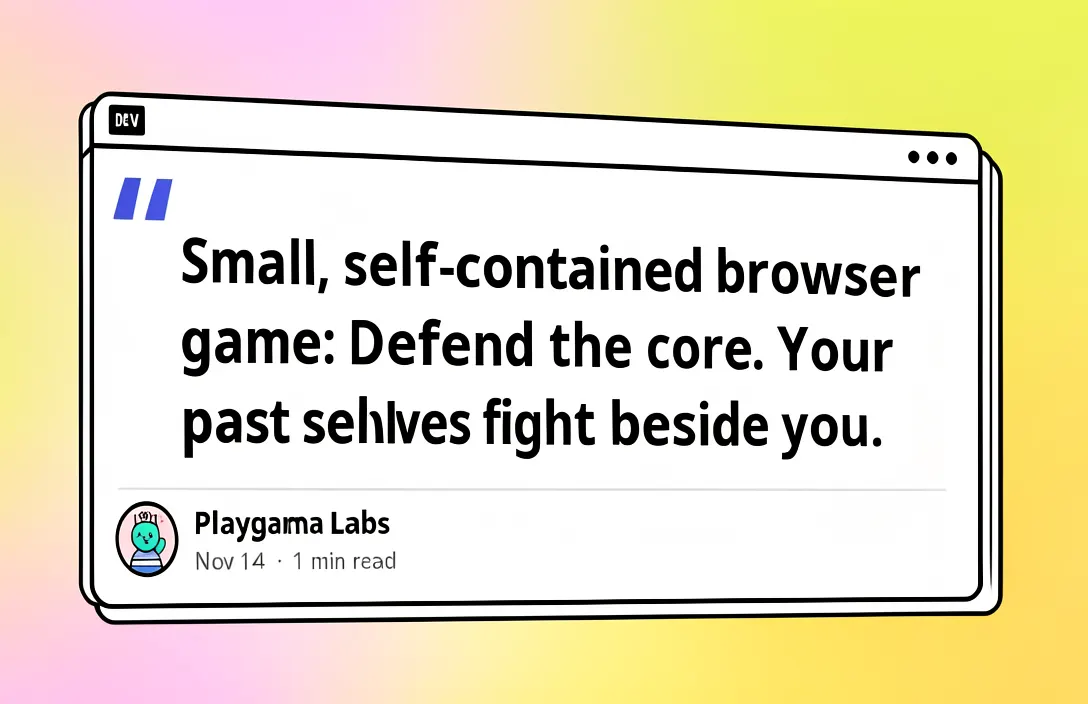

Echo Rift is a small, self-contained browser game that allows players to defend a core while being assisted by their past actions. The game features a neon arena where players' previous shots are transformed into echo turrets that fight alongside them. This unique mechanic means that a good wave of defense is often a formation that the player accidentally builds. The game emphasizes that players do not win alone, as they must assemble an army from their own mistakes and successful shots. The game is described as being written in a single canvas codebase with no engine or significant build step. [1]
The game is distributed through the Playgama Bridge SDK to a dozen portals, with the same zip file used across all platforms. Each portal handles the rules through a thin layer, ensuring consistency in gameplay. The game is accessible directly in the browser, with no requirement for signup or installation. It is compatible with mobile devices and features an interface in 14 languages, making it widely accessible to players around the world. [1]
Players can access Echo Rift through the provided link, which allows them to play the game for free. The game's design focuses on simplicity and ease of access, with the primary goal of holding the core and surviving waves of enemies. As players progress, they can unlock new turret types and evolve them, adding depth to the gameplay experience. The game's mechanics are centered around the idea of using past actions as a strategic advantage in future waves. [1]
Echo Rift is described as a small, self-contained browser game that allows players to defend a core while being assisted by their past actions. The game's unique mechanic involves the rift recording where players aim and turning that version of them into an echo turret on their side. This feature means that a good wave is a formation the player builds by accident, and they do not win alone, as they assemble an army from their own mistakes and clean shots. The game's design emphasizes simplicity and accessibility, with no complex engine or build steps required. This information is supported by the Dev.to article, which provides details about the game's mechanics and development approach. [1]
Advertisement
The game is distributed through the Playgama Bridge SDK to a dozen portals, with the same zip file used across all platforms. This distribution method ensures consistency and ease of access for players, as the rules of each portal are handled by a thin layer that does not affect the core gameplay experience. The Dev.to article highlights that the game is written as a single canvas codebase with no engine, making it lightweight and easy to deploy. Players can access Echo Rift through the provided link, which allows them to play the game for free without the need for a signup or account creation. This accessibility is further supported by the article's mention of the game's compatibility with mobile devices and its interface in 14 languages. [1]
Echo Rift's gameplay involves holding the core, surviving waves of enemies, and unlocking new turret types that can be evolved over time. The game's design encourages experimentation and adaptability, as players can build formations through trial and error. The Dev.to article notes that the game is free to play and works on multiple platforms, making it widely accessible to a global audience. The game's simplicity and innovative approach to gameplay have contributed to its appeal and ease of distribution through various portals. This information is corroborated by the detailed description of the game's features and mechanics in the article. [1]
Echo Rift is described as a neon arena defense game where players defend a core while being assisted by their past actions. The game’s unique feature is that the rift records where players aim and turns those actions into echo turrets that fight alongside the player. This mechanic allows players to assemble an army from their own mistakes and clean shots, creating a dynamic and evolving battlefield. The gameplay involves holding the core, surviving waves of enemies, and unlocking new turret types that can be evolved over time. According to the Dev.to source, the game is designed as a single canvas codebase with no engine and no build step worth mentioning, highlighting its simplicity and efficiency in development. [1]
The game is distributed through the Playgama Bridge SDK to a dozen portals, with the same zip file used across all platforms. This distribution method ensures consistency and ease of access for players regardless of the portal they choose. The game can be played directly in the browser through the provided link, which allows players to access Echo Rift for free without requiring any signup or additional software. The interface is available in 14 languages, making the game accessible to a wide audience. The Dev.to source further notes that the game is designed to work on mobile devices, expanding its reach and usability across different platforms. [1]
Advertisement
The game’s design emphasizes simplicity and immediate accessibility, as it ships through the Playgama Bridge SDK with minimal build steps. This approach allows for quick deployment and consistent gameplay across various portals. The game’s unique mechanic of using past actions as assistive turrets creates an engaging and strategic experience for players. The Dev.to source highlights that the game is written as a single canvas codebase, which contributes to its efficiency and ease of distribution. The game’s free-to-play model and multilingual interface further enhance its appeal to a broad audience. [1]
Echo Rift is a small, self-contained browser game that allows players to defend a core while being assisted by their past actions. The game's design emphasizes simplicity and immediate accessibility, as it ships through the Playgama Bridge SDK with minimal build steps (Dev.to, 2024). [1]
The game is described as a neon arena defense game where players defend a core while being assisted by their past actions. Echo Rift's gameplay involves holding the core, surviving waves of enemies, and unlocking new turret types that can be evolved over time (Dev.to, 2024). [1]
Echo Rift is distributed through the Playgama Bridge SDK to a dozen portals, with the same zip file used across all platforms. Players can access Echo Rift through the provided link, which allows them to play the game for free (Dev.to, 2024). [1]
Advertisement
The Cali Reporter newsletter
The stories worth your time.
California, the country, and what comes next. Join our free newsletter for reporting that keeps you informed.
More in Technology
- Modern Web Guidance 1.0 and Browser Compatibility
Modern Web Guidance 1.0, announced by Chrome for Developers on November 10, introduces browser compatibility data to assist coding agents in building web features. The initiative emphasizes the importance of fallback…
- Apache mod_http2 Vulnerability Detection with Nmap
A new Nmap scripting module has been developed to detect the Apache mod_http2 vulnerability (CVE-2026-119618), addressing the challenges of identifying affected systems accurately.
- Securing Remote Vendor Access in Industrial Networks
Best practices for managing remote vendor access in operational technology (OT) networks emphasize controlled access points, multifactor authentication, and time-bound sessions to reduce cybersecurity risks.