Early Life Stress and Epigenetic Changes in the Brain
Research has found that early life stress can leave a molecular imprint on the brain, increasing vulnerability to future stress. This study, conducted on mice, explores how epigenetic modifications in the nucleus…

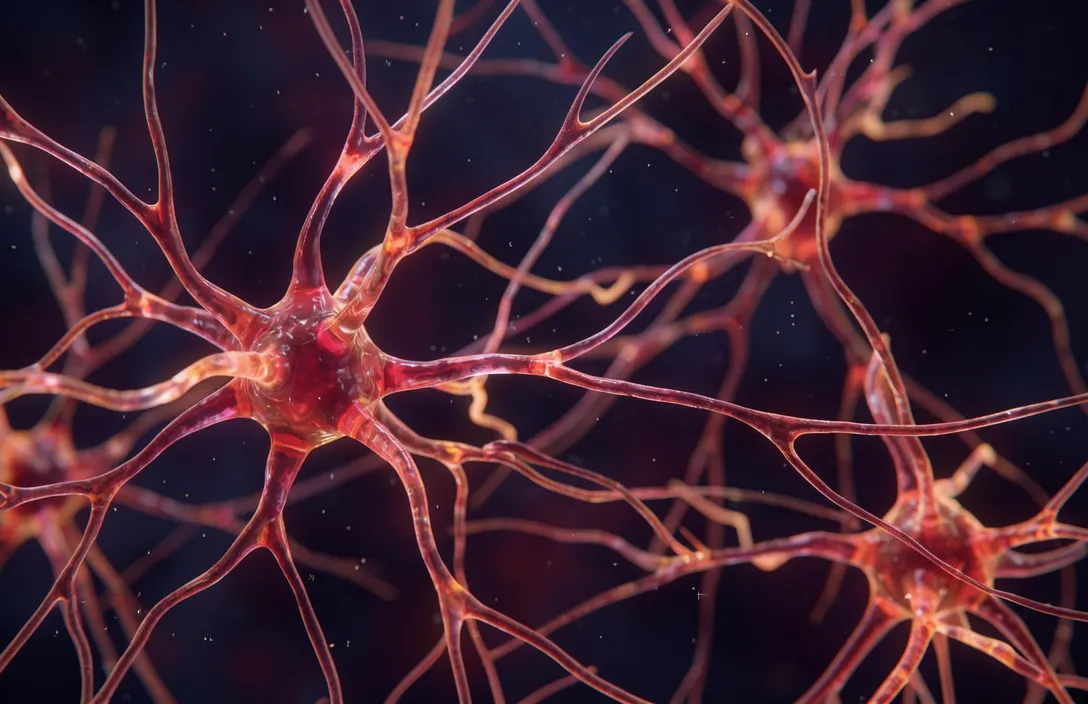

Early life stress can alter how DNA is packaged in the brain, making individuals more vulnerable to adversity later in life. By mimicking these molecular changes in young mice, researchers were able to artificially program a lifelong sensitivity to stressful events. The findings were published in *The Journal of Neuroscience* (Source ID: 1). Epigenetic mechanisms involve chemical tags that attach to DNA or its packaging proteins, called histones. These tags do not change the underlying genetic code. Instead, they dictate whether specific genes are accessible and active at any given time (Source ID: 1). [1]
The nucleus accumbens is a region deep in the brain that helps process rewards, emotions, and responses to stressful events. In this area, a specific epigenetic tag known as H3K4me1 acts as a molecular bookmark. This bookmark keeps certain sections of the chromatin slightly open, priming those genetic regions to be activated quickly in response to future environmental stimuli (Source ID: 1). Researchers Catherine Jensen Peña of Princeton University and Meaghan C. Creed of Washington University in St. Louis led a team to investigate this mechanism. Along with lead authors Rebekah L. Rashford and Lisa Z. Fang, the group wanted to test whether artificially adding this bookmark in young mice causes long-lasting vulnerability to stress (Source ID: 1). [1]
The team first analyzed existing data on the histone proteins in the nucleus accumbens of mice. They compared mice that experienced stressful conditions shortly after birth to those raised in standard environments. The researchers found that early life stress accelerated the accumulation of the H3K4me1 tag as the mice aged. This tag built up without an immediate increase in the markers associated with active gene expression. The pattern suggested the genome was being primed for future activity rather than changing the cellular function in that exact moment (Source ID: 1). [1]
The research was conducted primarily at Princeton University and Washington University in St. Louis, with the study published in *The Journal of Neuroscience*. The project focused on the nucleus accumbens, a brain region involved in processing rewards, emotions, and responses to stress. The study involved young mice, with the experimental procedures beginning shortly after birth. The project aimed to investigate how early life stress alters epigenetic markers, specifically the H3K4me1 tag, and how these changes influence brain function and behavior later in life. The research team included Catherine Jensen Peña of Princeton University and Meaghan C. Creed of Washington University in St. Louis. The study used a modified virus to deliver the enzyme Setd7 into the nucleus accumbens of young mice, which added the H3K4me1 tag to histones. The scope of the study was limited to examining the effects of this enzyme in the nucleus accumbens, focusing on the long-term consequences of early epigenetic modifications. The research was conducted in controlled laboratory environments, with mice divided into groups based on early life conditions and enzyme exposure. The study did not extend to human subjects, and the findings are based solely on observations in mice. The research team mapped chromatin accessibility using sequencing techniques that identify open regions of the genome, and they recorded the electrical activity of neurons in the nucleus accumbens. The study was limited in scale, with small sample sizes in each experimental group. The researchers also noted that the virus used to deliver the enzyme may have affected neighboring brain regions, which could influence the results. The study’s findings are specific to the early developmental window shortly after birth, as adult mice did not show the same heightened stress responses when exposed to the enzyme later in life. The project’s documented limits include the lack of human trials, the limited scope of brain regions examined, and the potential for the virus to affect surrounding areas beyond the nucleus accumbens. The study was led by Rebekah L. Rashford and Lisa Z. Fang, with contributions from other researchers at both institutions. The research was funded through academic and institutional resources, and the findings were published in a peer-reviewed journal. The study’s focus on the nucleus accumbens and its epigenetic mechanisms represents a specific area of neuroscience, with broader implications for understanding the long-term effects of early life stress on the brain. The project’s history includes the initial analysis of histone proteins in mice exposed to early life stress, followed by the experimental manipulation using the Setd7 enzyme. The study’s timeline includes data collection, enzyme delivery, behavioral testing, and analysis of chromatin accessibility and neuronal electrical activity. The researchers also explored the potential for future studies to examine whether temporary alterations in these tags during childhood permanently lock in the epigenetic changes. The study’s documented limits include the use of different stressors for male and female mice in some experiments, which may have influenced the results. The research team emphasized the importance of further studies to determine whether constant enzyme activity is required to maintain the heightened stress sensitivity over a lifespan. The project’s scope was limited to the nucleus accumbens and did not investigate other brain regions or broader behavioral outcomes. The study’s findings contribute to the growing body of evidence on epigenetics and early life stress, but additional research is needed to fully understand the mechanisms at play. The research was conducted in the United States, with the primary locations being Princeton University and Washington University in St. Louis. The study’s documented limits include the use of small sample sizes, the potential for viral spread beyond the nucleus accumbens, and the focus on a specific brain region. The project’s history reflects a progression from initial data analysis to experimental manipulation and behavioral testing, with the results providing a foundation for future research. The study’s documented limits also include the lack of human data and the focus on a specific enzyme and brain region. The research team acknowledged these limitations and emphasized the need for further studies to validate the findings in other contexts. The project’s scope and history provide a detailed account of the research process, from initial data collection to the publication of the results in *The Journal of Neuroscience*. [1]
Advertisement
Early life stress can alter how DNA is packaged in the brain, making individuals more vulnerable to adversity later in life. The nucleus accumbens is a region deep in the brain that helps process rewards, emotions, and responses to stressful events. The team first analyzed existing data on the histone proteins in the nucleus accumbens of mice (source ID: 1). [1]
The study found that early life stress accelerated the accumulation of the H3K4me1 tag as the mice aged. This tag built up without an immediate increase in the markers associated with active gene expression. The pattern suggested the genome was being primed for future activity rather than changing the cellular function in that exact moment (source ID: 1). [1]
To test if this tag alone could drive brain changes, the researchers used a modified virus to deliver an enzyme called Setd7 into the nucleus accumbens of young mice. The Setd7 enzyme specifically adds the H3K4me1 tag to histones. The team then mapped how accessible the DNA remained when these mice reached adulthood (source ID: 1). [1]
The findings indicated that the early epigenetic tag shifted these brain cells toward a more stress-like state that persisted into adulthood. Next, the researchers tested how this biological priming affected actual behavior. They introduced the Setd7 enzyme to young mice and allowed them to grow to adulthood. They then exposed the mice to repeated social stress (source ID: 1). [1]
Advertisement
The Cali Reporter newsletter
The stories worth your time.
California, the country, and what comes next. Join our free newsletter for reporting that keeps you informed.
More in Relationships
- Screen vs. Print: How Executive Functions Influence Word Learning in Preschoolers
A new study explores how preschoolers learn new words from print and digital books, revealing that individual differences in executive functions significantly influence comprehension outcomes.
- Smartphone Use and ADHD-Like Symptoms in Adolescents
A study published in the Journal of Affective Disorders found that problematic smartphone use among adolescents is associated with increased ADHD-like symptoms, particularly in late adolescence.
- Lack of Assertiveness and Hostility Linked to Depression Over 23 Years
A long-term study of Swedish twins found that lack of assertiveness and hostility are both associated with increased depressive symptoms over time, though some links may be influenced by shared genetic factors.