DeepSeek-V3 and Coder-V2: Memory and Performance Challenges in Local LLM Hosting
Deploying large language models like DeepSeek-V3 and DeepSeek-Coder-V2 locally presents unique memory and performance challenges due to their sparse Mixture-of-Experts (MoE) architecture and context management…

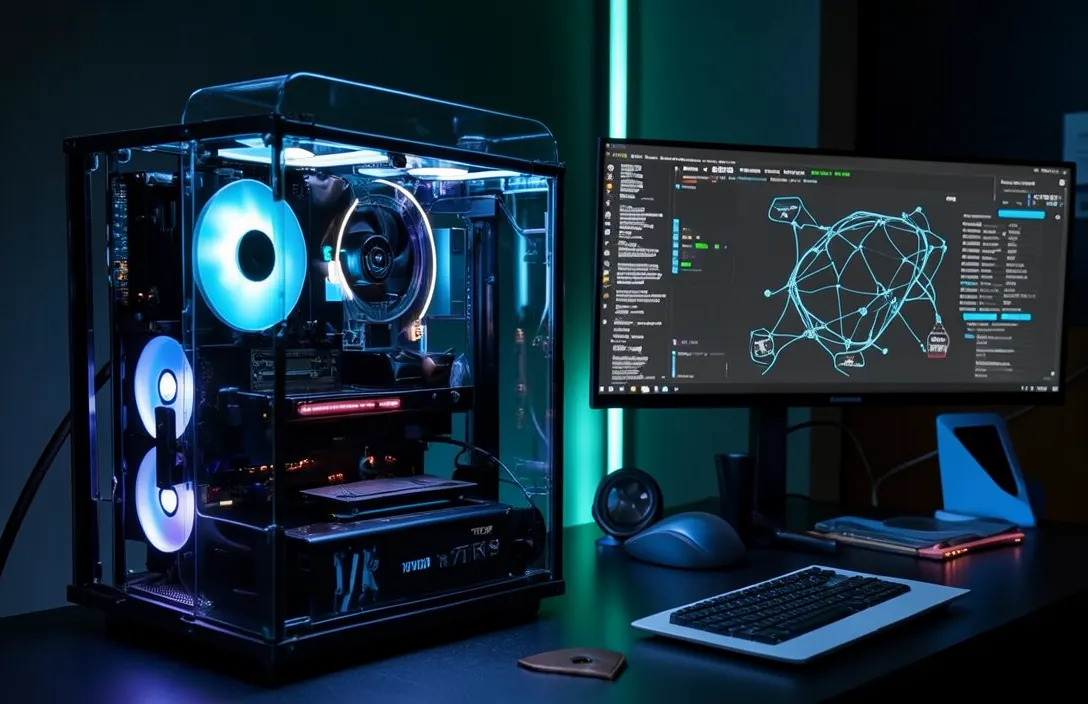

The deployment of DeepSeek-V3 (671B) and DeepSeek-Coder-V2 (236B) locally highlights the architectural challenge of modern large language model (LLM) hosting, where total parameter volume dictates physical storage requirements, but active parameter count determines computational speed. According to the Dev.to article, while DeepSeek-V3 computes only 37B active parameters per token and Coder-V2 computes 21B, the entire parameter weights—ranging from 236B to 671B—must be permanently resident in addressable memory. This is due to the dynamic nature of MoE routing, which prevents prediction of which expert will be required next, necessitating pre-loading of all expert matrices into VRAM or system RAM (Dev.to, 1). [1]
To address context expansion, which is a major VRAM consumer in traditional models, DeepSeek employs Multi-Head Latent Attention (MLA). Instead of caching separate, uncompressed Keys and Values, MLA compresses them into a single latent vector, significantly reducing memory usage. For example, an active 32,768-token context window in DeepSeek-Coder-V2 consumes just ~1.4 GB of VRAM, compared to over 18GB on standard dense models (Dev.to, 1). [1]
Empirical hardware benchmarks reveal performance differences across various configurations. On a single RTX 3060 / 4060 Ti, DeepSeek-Coder-V2-Lite runs at 52-64 tokens/second, ideal for VS Code. However, on dual RTX 3090s with 48GB total VRAM, Coder-V2 236B achieves only 3.2-4.1 tokens/second due to PCIe + RAM bandwidth bottlenecks. In contrast, the Apple Mac Studio Ultra 192G delivers 14.8-18.2 tokens/second with 100% unified memory usage, highlighting the importance of hardware architecture in model performance (Dev.to, 1). [1]
The architectural challenge of hosting modern large language models (LLMs) such as DeepSeek-V3 (671B) and DeepSeek-Coder-V2 (236B) is highlighted by the disparity between total parameter volume and active parameter count. According to Dev.to, while these models only compute a fraction of their total parameters per token (37B for DeepSeek-V3 and 21B for DeepSeek-Coder-V2), all parameters must remain permanently in addressable memory due to the dynamic nature of the Mixture-of-Experts (MoE) routing. This requirement makes the MoE Memory Trap a critical factor in local deployment, as inactive experts cannot be unloaded from memory (source ID: 1). [1]
Advertisement
To mitigate context expansion, a major consumer of VRAM in traditional models, DeepSeek employs Multi-Head Latent Attention (MLA). As described in the Dev.to article, MLA compresses Keys and Values into a single latent vector, significantly reducing VRAM usage. For DeepSeek-Coder-V2 (236B), an active 32,768-token context window consumes just ~1.4 GB of VRAM, compared to over 18GB on standard dense models. This optimization is essential for managing memory in local GPU deployments (source ID: 1). [1]
Empirical hardware benchmarks reveal significant performance differences across various configurations when hosting DeepSeek models. According to the Dev.to article, while a single RTX 3060 or 3060 Ti can run DeepSeek-Coder-V2-Lite (16B) with high token velocity (52–64 tok/s), dual RTX 3090 setups experience a notable slowdown (3.2–4.1 tok/s) due to PCIe bandwidth bottlenecks. Apple Mac Studio Ultra 192G systems, however, perform significantly better (14.8–18.2 tok/s) due to the high-speed unified memory architecture (source ID: 1). [1]
Multi-Head Latent Attention (MLA) is employed by DeepSeek to address the issue of context expansion, which is a major consumer of VRAM in traditional models. Instead of caching separate, uncompressed Keys and Values, MLA low-rank compresses them into a single latent vector. This approach significantly reduces VRAM usage during context expansion (Source ID: 1). [1]
Empirical hardware benchmarks reveal that for DeepSeek-Coder-V2 (236B), an active 32,768-token context window consumes just ~1.4 GB of VRAM, compared to over 18GB on standard dense models. This demonstrates the effectiveness of MLA in reducing VRAM consumption (Source ID: 1). [1]
Advertisement
The practical payoff of MLA is evident in the reduced VRAM requirements for handling large context windows. This makes it feasible to run DeepSeek models on hardware with limited VRAM, such as single-GPU setups, by significantly reducing the VRAM footprint (Source ID: 1). [1]
Sources
Prepared with AI assistance from the cited sources.
The Cali Reporter newsletter
The stories worth your time.
California, the country, and what comes next. Join our free newsletter for reporting that keeps you informed.
More in Technology
- Modern Web Guidance 1.0 and Browser Compatibility
Modern Web Guidance 1.0, announced by Chrome for Developers on November 10, introduces browser compatibility data to assist coding agents in building web features. The initiative emphasizes the importance of fallback…
- Apache mod_http2 Vulnerability Detection with Nmap
A new Nmap scripting module has been developed to detect the Apache mod_http2 vulnerability (CVE-2026-119618), addressing the challenges of identifying affected systems accurately.
- Securing Remote Vendor Access in Industrial Networks
Best practices for managing remote vendor access in operational technology (OT) networks emphasize controlled access points, multifactor authentication, and time-bound sessions to reduce cybersecurity risks.