Curiosity's Continued Exploration of Polygonal Textures on Mars
NASA's Curiosity rover has resumed its ascent up Mount Sharp, encountering polygonal textures that may provide insight into the planet's geological history.

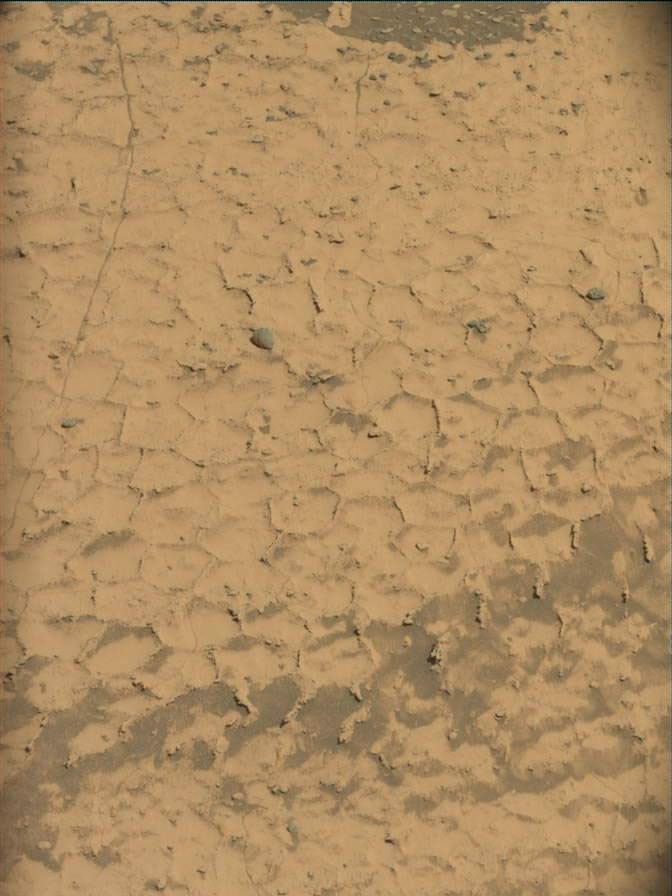
NASA’s Curiosity Mars rover has resumed its ascent up Mount Sharp, focusing on the Yardang unit, as it continues to analyze the chemical and textural properties of the rocks it encounters (source ID 1). The rover recently completed analysis of the 'Basque Lakes' and 'Nazca' samples, which provided significant data on the Martian environment. As Curiosity moves upward, it is utilizing instruments such as APXS, ChemCam, MAHLI, and Mastcam to document changes in the Martian landscape (source ID 1). These instruments are essential for understanding the evolution of Mars' habitability and the geological processes that shaped the terrain. [1]
The polygonal textures observed in the 'Basque Lakes' and 'Nazca' regions are similar to those encountered earlier in the mission, indicating a potential geological pattern across different areas of Mount Sharp (source ID 1). These textures, characterized by small, regular polygons surrounded by raised ridges, have sparked scientific interest due to their potential formation mechanisms, which may include water loss, temperature cycling, or compaction and expansion (source ID 1). Further analysis of the cements forming the raised ridges could provide additional insights into the history of these features and the environmental conditions that shaped them. [1]
Curiosity's journey up Mount Sharp has been carefully planned to explore areas with significant geological interest, such as the Yardang unit (source ID 1). The rover's route has been mapped using orbital data, allowing scientists to anticipate future encounters with similar polygonal textures. As the rover continues its climb, it will provide more data on the composition and structure of the Martian surface, contributing to our understanding of the planet's past and its potential to support life (source ID 1). [1]
NASA’s Curiosity Mars rover has resumed its ascent up Mount Sharp, focusing on the Yardang unit, as it continues to analyze the chemical and textural properties of the rocks it encounters (source ID 1). The rover’s recent activities have involved drilling and analyzing samples from the 'Basque Lakes' and 'Nazca' regions, which have provided valuable insights into the geological history of the area. These analyses are part of a broader effort to understand the environmental changes that have shaped the Martian landscape over time (source ID 1). [1]
Advertisement
The polygonal textures observed in the 'Basque Lakes' and 'Nazca' regions are similar to those encountered earlier in the mission, indicating a potential geological pattern across different areas of Mount Sharp (source ID 1). These textures, characterized by small, regular-sized polygons surrounded by raised ridges, were initially surprising to the science team, prompting extensive discussions about their formation. The data collected from these areas are helping researchers explore various hypotheses, including the role of water loss, temperature cycling, and compaction in the formation of such features (source ID 1). [1]
As Curiosity continues its journey up Mount Sharp, it is using a range of instruments, including APXS, ChemCam, MAHLI, and Mastcam, to document the chemistry and textures of the rocks it encounters (source ID 1). These measurements are essential for understanding the environments that formed the rocks and the processes that altered them over time. The rover’s planned route suggests that similar polygonal textures will be encountered in the coming weeks, potentially offering further insights into the geological evolution of Mars (source ID 1). [1]
NASA’s Curiosity Mars rover has resumed its ascent up Mount Sharp, focusing on the Yardang unit, as it continues to analyze the chemical and textural properties of the rocks it encounters (source ID 1). This phase of the mission follows extensive drilling and analysis of the 'Basque Lakes' and 'Nazca' samples, providing new data on the geological history of the region. The rover is using a range of instruments, including APXS, ChemCam, MAHLI, and Mastcam, to document the chemistry and textures of the rocks it encounters (source ID 1). These measurements are crucial for understanding the environmental conditions that formed and altered the rocks over time. [1]
The polygonal textures observed in the 'Basque Lakes' and 'Nazca' regions are similar to those encountered earlier in the mission, indicating a potential geological pattern across different areas of Mount Sharp (source ID 1). This similarity suggests that the same or similar processes may have influenced the formation of these textures in different parts of the mountain. Scientists are particularly interested in understanding the mechanisms behind these polygonal features, which could include shrinkage due to water loss, temperature cycling, or compaction and expansion after burial and exposure (source ID 1). [1]
Advertisement
As Curiosity continues its journey up Mount Sharp, it is expected to encounter more of these polygonal textures, which may become more dramatic and expansive with each drive (source ID 1). The data collected from these observations will provide further insights into the evolution of Mars' habitability. The rover's instruments are designed to collect detailed chemical and mineralogical data, which will help scientists interpret the geological history of the region and assess the potential for past microbial life (source ID 1). [1]
NASA’s Curiosity Mars rover has resumed its ascent up Mount Sharp, focusing on the Yardang unit, as it continues to analyze the chemical and textural properties of the rocks it encounters (source ID 1). The polygonal textures observed in the 'Basque Lakes' and 'Nazca' regions are similar to those encountered earlier in the mission, indicating a potential geological pattern across different areas of Mount Sharp (source ID 1). These observations are part of a broader effort to understand the geological history of the region and the processes that shaped it over time (source ID 1). [1]
As Curiosity continues its journey up Mount Sharp, it is using a range of instruments, including APXS, ChemCam, MAHLI, and Mastcam, to document the chemistry and textures of the rocks it encounters (source ID 1). These measurements allow scientists to document changes in the environments that formed the rocks and that altered them over time (source ID 1). The data collected from these instruments are crucial for understanding the composition of the cements that form the raised ridges around the polygons (source ID 1). [1]
The rover's journey up Mount Sharp has been carefully planned to explore areas with significant geological interest, such as the Yardang unit (source ID 1). In the orbital view of the future route, it is evident that the layers to be reached next will have textures similar to those where the polygons were first observed (source ID 1). It is expected that Curiosity will encounter more of these polygonal textures, which may become more dramatic and expansive with each drive (source ID 1). [1]
Advertisement
Sources
Prepared with AI assistance from the cited sources.
The Cali Reporter newsletter
The stories worth your time.
California, the country, and what comes next. Join our free newsletter for reporting that keeps you informed.
More in Science
- Volcanic Eruption Reshapes Iwo Jima’s Coastline
A recent volcanic eruption near Iwo Jima has temporarily extended the island's black sand beaches, though the longevity of the new land remains uncertain.
- Galaxies in the NGC 7771 Group Engage in Cosmic Merger
Astronomers have observed a group of galaxies in the NGC 7771 Group, which is located approximately 200 million light-years away in the constellation Pegasus. These galaxies are in the process of merging, a phenomenon…
- NASA Awards Contract for NOAA’s Near Earth Orbit Network Program
NASA has awarded a contract to Northrop Grumman Systems Corporation for the Sounder for Microwave-Based Applications (SMBA) instruments on NOAA’s Near Earth Orbit Network (NEON) satellites. The contract includes a…