Cooking Emissions Now Outpace Traffic in London's Air Pollution
New analysis reveals that cooking emissions have become the dominant source of particulate matter pollution in London during mealtimes, surpassing traffic and other sources.

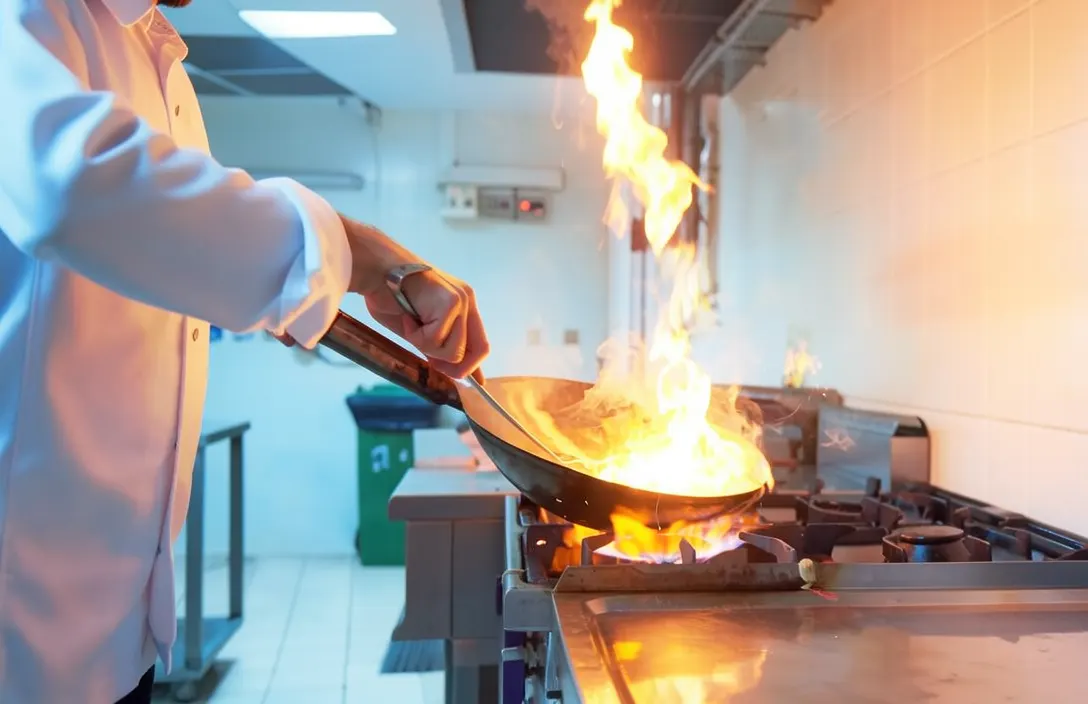

Emissions from cooking now dominate the air pollution signal in London at mealtimes, according to a new analysis. Pollution from commercial kitchens is the dominant source of particulate matter pollution in London at midday and in the early evening, with cooking emissions contributing up to 83 per cent of midday emissions and 87 per cent in the early evening (Source ID: 1). This shift is attributed to stricter pollution rules that have significantly reduced emissions from traffic and power generation over the past decades. [1]
The researchers used a technique called aerosol mass spectrometry to measure the chemical composition of air pollution particles in real time, allowing them to identify the specific sources of fine particulate matter, known as PM1 (Source ID: 1). The data was collected in London during summer and winter in 2021, revealing that cooking emissions, particularly from shallow and deep-frying cooking oil in commercial kitchens, are the main contributors to PM1 pollution during mealtimes. [1]
Similar patterns were observed in Beijing, where cooking emissions contributed up to 61 per cent of midday emissions and 76 per cent of early-evening emissions (Source ID: 1). However, scientists are still investigating whether the source of particulate emissions affects the potential harm to public health, as the study only considers primary sources of emissions produced within the city itself. [1]
Emissions from cooking now dominate the air pollution signal in London at mealtimes, according to a new analysis. The researchers used a technique called aerosol mass spectrometry to measure the chemical composition of air pollution particles in real time, allowing them to identify the specific sources of fine particulate matter, known as PM1 (Source ID: 1). This method enabled the team to determine that cooking emissions contribute up to 83 per cent of midday emissions and 87 per cent in the early evening, surpassing traffic and other sources of pollution. [1]
Advertisement
Similar patterns were observed in Beijing, where cooking emissions contributed up to 61 per cent of midday emissions and 76 per cent of early-evening emissions (Source ID: 1). The study was based on data collected in London during summer and winter in 2021 and in Beijing during winter 2016 and summer 2017. The researchers attribute these high levels of PM1 emissions during mealtimes to the use of shallow and deep-frying cooking oil in commercial kitchens. [1]
Scientists are still working to understand whether the source of particulate emissions determines the potential harm to public health. It may be, for example, that PM1 caused by cooking emissions is less harmful to humans than PM1 caused by traffic or coal burning (Source ID: 1). The study, however, only looks at primary sources of emissions, which is the pollution being produced in the city itself. [1]
The study indicates that cooking emissions may have different health impacts compared to emissions from traffic or coal burning, though scientists are still working to determine the extent of these differences (Source ID: 1). Researchers used aerosol mass spectrometry to identify the chemical composition of PM1 particles and found that cooking emissions contribute significantly to air pollution during mealtimes in London. However, the health effects of these emissions are not yet fully understood, and further research is needed to assess their potential harm to public health (Source ID: 1). [1]
The research focuses on primary sources of emissions, which are those produced directly within the city. However, the air pollution residents are exposed to may include particulate matter that has traveled from other areas, such as the suburbs or beyond (Source ID: 1). This means that the health risks associated with air pollution may be influenced by factors beyond local emissions, including the transport of pollutants from other regions (Source ID: 1). [1]
Advertisement
The study was conducted in a central location in London, which is home to many commercial restaurants but few domestic residences. This may have influenced the results, as factors such as wood burning, which are more common in suburban areas, were not included in the analysis (Source ID: 1). Therefore, the findings may not fully represent the air quality and health risks faced by residents in other parts of the city (Source ID: 1). [1]
Scientists are still working to understand whether the source of particulate emissions determines the potential harm to public health (Source ID: 1). The study indicates that cooking emissions may have different health impacts compared to emissions from traffic or coal burning, though scientists are still working to determine the extent of these differences (Source ID: 1). The research focuses on primary sources of emissions, which are those produced directly within the city (Source ID: 1). [1]
The study was conducted in a central location in London, which is home to many commercial restaurants but few domestic residences (Source ID: 1). This location may not fully represent the range of emissions sources found in other areas of the city, such as residential neighborhoods where domestic cooking and wood burning are more common (Source ID: 1). [1]
Research from Imperial College London suggests that 17 per cent of fine particle pollution in London comes from wood-burning stoves (Source ID: 1). However, the study does not account for particulate pollution that may have drifted in from outside the city or from different neighborhoods within London (Source ID: 1). [1]
Advertisement
The Cali Reporter newsletter
The stories worth your time.
California, the country, and what comes next. Join our free newsletter for reporting that keeps you informed.
More in Health & Medicine
- Understanding Fascia and the Evidence Behind Fascia Release
Fascia is a connective tissue that plays a structural role in the human body, but evidence supporting specific exercises or tools for 'fascia release' remains limited.
- Antidepressant Effectiveness and Long-Term Use
A new review suggests that some antidepressants may be more effective than others in helping people manage depression symptoms over the long term, according to a study published in The Lancet Psychiatry.
- Experimental Weight-Loss Drug Shows Promise for Knee Osteoarthritis Pain
A new study suggests that an experimental weight-loss drug, retatrutide, may significantly reduce knee pain in people with osteoarthritis and obesity.