

Chavez Ravine was once home to thousands of Mexican Americans. A new digital archive tells their story
A digital archive can't undo the bulldozers that erased a Mexican American community from Chavez Ravine, but it forces Los Angeles to remember what it destroyed.
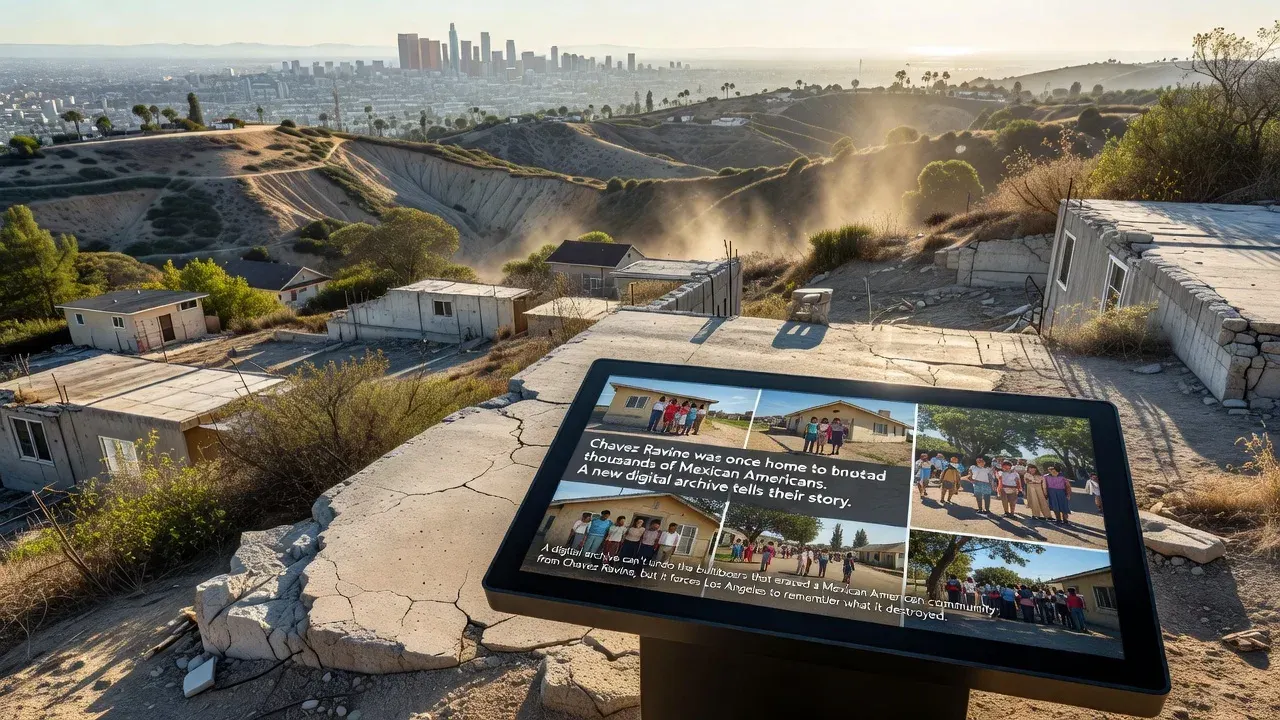
Los Angeles gathered its ghosts last week. Former residents and their descendants stood at an event to launch "Chavez Ravine: An Unfinished Story," a digital archive created by Loyola Marymount University that finally puts the displaced families' records, photographs, and testimonies online.
The project doesn't soften the fact that thousands of Mexican Americans once called Chavez Ravine home before city officials labeled the hillside a slum, cleared it with eminent domain, and handed the land to the Dodgers for a stadium that still sits there today. What was sold as urban renewal became cultural erasure.
By digitizing oral histories, property records, and personal artifacts, the archive makes visible the human cost that official city narratives long minimized. Descendants can now point to specific homes, streets, and lives that vanished under the bulldozers rather than abstract statistics about "blight."

Yet the timing feels late. The evictions happened in the 1950s; Dodger Stadium opened in 1962. For three generations, the story of Chavez Ravine has lived mostly in family kitchens and activist pamphlets. Turning it into a searchable database changes the accessibility, not the underlying loss.
The archive's title is telling: "An Unfinished Story." The land was never returned. The community was never rebuilt. Digitization may preserve memory, but it cannot restore what city planners and baseball executives decided did not matter.
Los Angeles prefers its origin myths polished. This project, however modest, insists on keeping the fracture lines visible. The next test is whether anyone in power treats the archive as more than a polite historical footnote.
Original reporting: LA Times.
Original reporting: LA Times, California.
More in California
- UC Berkeley Lab Proposes New Civic Framework for California’s Next Governor
A research-driven agenda calls for institutionalizing 'co-governance' to address low public trust and lack of resident influence in state decision-making.
- Five Tax Measures on California’s Ballot Aim to Reshape State Finances
Propositions 3, 40–43 would alter income, wealth and local taxation rules—marking the highest number of tax measures on a general election ballot since 1994.
- Catalina Helicopter Crash Highlights Risks of Island Medevac Flights
A medical evacuation chopper carrying Catalina Romero, pilot, and nurse Jessica Devries crashed into the ocean shortly after takeoff, killing all three; federal investigators are assessing causes including night flying, spatial disorientation, and the island’s challenging Pebbly Beach heliport.