Chameleon Game Mechanics and Development Approach
A puzzle game featuring a chameleon navigating a colored tile board has unique mechanics and a streamlined development process.

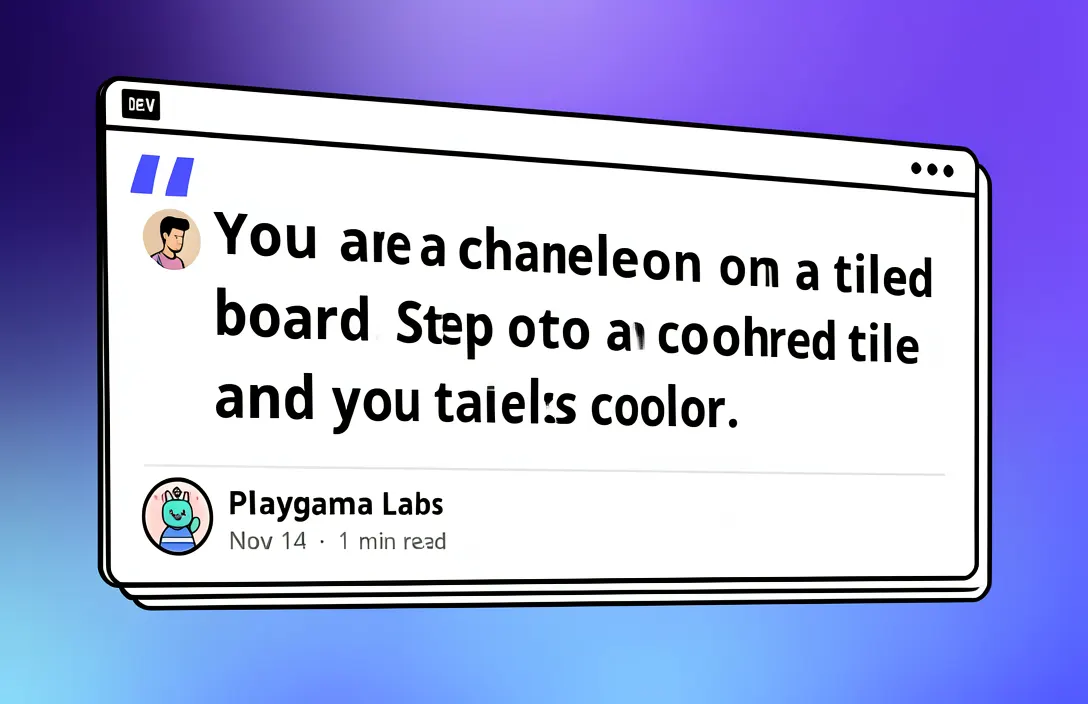

The game involves a chameleon moving across a tiled board, where each colored tile changes the chameleon's color. This color is essential for eating flies, which can only be consumed when the chameleon matches the fly's color. The game also emphasizes efficiency, as the number of moves taken affects the star rating received. These mechanics are detailed in the game's description on Dev.to, which outlines the gameplay structure and objectives. [1]
The game consists of 999 levels divided into meadows of ten levels each, with additional features such as daily challenges and an endless run. Later levels introduce complications like slippery ice, crumbling tiles, portals, and a bird that follows the player's route. These elements are also described in the Dev.to article, which highlights the increasing difficulty and variety of gameplay scenarios as the player progresses. [1]
The game is developed using a plain 2D canvas without an external engine, relying on a single game.js file and a folder of sound files. It is distributed through the Playgama Bridge SDK, allowing for progress tracking and ad integration via the platform's system. The Dev.to article explains that the game is self-contained and can be run on multiple platforms without requiring changes to the code, ensuring a consistent experience across devices. [1]
The game features a chameleon navigating a tiled board, where each colored tile changes the chameleon's color. The objective involves eating flies, which can only be consumed when the chameleon matches the color of the tile. The game is structured into 999 levels, organized into meadows of ten levels each, with additional features such as daily challenges and an endless run (Dev.to, 2023). [1]
Advertisement
The game is developed using a plain 2D canvas without an external engine, relying on a single game.js file and a folder of sound files. This approach allows the game to be self-contained, with no external requests, making it easier for platforms to cache and audit the content (Dev.to, 2023). [1]
The game is distributed through the Playgama Bridge SDK, ensuring that progress is stored in bridge.storage and that ads are managed through the platform's own calls. The same zip file runs on the portal and on the Playgama sandbox without requiring any changes to the game code (Dev.to, 2023). [1]
The game mechanics involve a chameleon moving across a tiled board, where each colored tile changes the chameleon's color (Dev.to, 2023). This color change is essential for eating flies, which can only be consumed when the chameleon's color matches the fly's color. The game is structured into 999 levels, organized into meadows of ten levels each, and includes additional features such as daily challenges and an endless run (Dev.to, 2023). [1]
The game is developed using a plain 2D canvas without an external engine, relying on a single game.js file and a folder of sound files (Dev.to, 2023). This approach ensures that the game is self-contained and can be easily cached and audited by the platform. The game is distributed through the Playgama Bridge SDK, which manages progress storage in bridge.storage and handles ad integration through the platform's own calls (Dev.to, 2023). [1]
Advertisement
The game is designed to be platform-agnostic, with the same zip file running on the portal and on the Playgama sandbox without requiring any changes to the game code (Dev.to, 2023). It is accessible through a direct link and is available in 14 languages, with no requirement for user registration or payment (Dev.to, 2023). [1]
The game features a chameleon moving across a tiled board, where each colored tile changes the chameleon's color (Dev.to, 2023). The game consists of 999 levels divided into meadows of ten levels each, with additional features such as daily challenges and an endless run (Dev.to, 2023). [1]
The game is developed using a plain 2D canvas without an external engine, relying on a single game.js file and a folder of sound files (Dev.to, 2023). This approach ensures that the game is self-contained and does not require external requests for functionality (Dev.to, 2023). [1]
The game is distributed through the Playgama Bridge SDK, ensuring that progress is stored in bridge.storage and that ads are managed through the platform's own calls (Dev.to, 2023). The same zip file runs on the portal and on the Playgama sandbox without requiring any changes to the game code (Dev.to, 2023). [1]
Advertisement
The Cali Reporter newsletter
The stories worth your time.
California, the country, and what comes next. Join our free newsletter for reporting that keeps you informed.
More in Technology
- Modern Web Guidance 1.0 and Browser Compatibility
Modern Web Guidance 1.0, announced by Chrome for Developers on November 10, introduces browser compatibility data to assist coding agents in building web features. The initiative emphasizes the importance of fallback…
- Apache mod_http2 Vulnerability Detection with Nmap
A new Nmap scripting module has been developed to detect the Apache mod_http2 vulnerability (CVE-2026-119618), addressing the challenges of identifying affected systems accurately.
- Securing Remote Vendor Access in Industrial Networks
Best practices for managing remote vendor access in operational technology (OT) networks emphasize controlled access points, multifactor authentication, and time-bound sessions to reduce cybersecurity risks.