

CA’s privatized public defense leads to caseloads 3x the most basic standards, report finds
California’s experiment with privatized public defense has exploded defender caseloads to triple the accepted maximum, leaving poor defendants with lawyers who have no time to defend them.
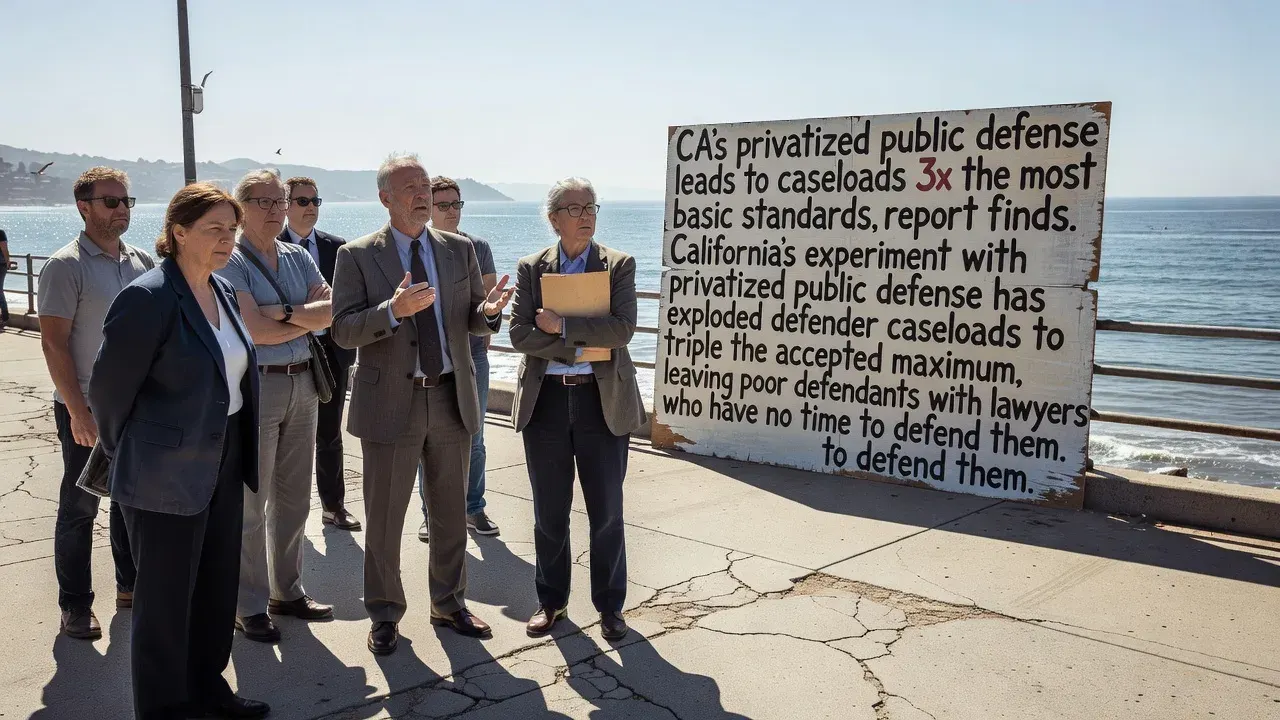
California’s push to outsource public defense has produced a system where attorneys juggle more than three times the recommended number of cases, according to a new report that confirms what indigent defendants already feel in court: their lawyer is nowhere to be found.
The findings land as a direct sequel to CalMatters’ own investigation into the pitfalls of handing defense work to private contractors and nonprofits. That earlier reporting laid bare how counties, desperate to cut costs or meet court mandates, have steadily shifted away from traditional public defender offices. The result is a patchwork of under-resourced providers who cannot possibly meet even the most basic national standards for caseloads.
Those standards, set decades ago by the National Advisory Commission on Criminal Justice Standards and Goals, call for no more than a certain number of cases per attorney per year. In California’s privatized model, that ceiling is routinely shattered. The report documents average caseloads reaching triple the recommended limit, meaning lawyers are forced to triage rather than investigate, negotiate or prepare for trial.

This is not an abstract numbers game. When a single attorney carries caseloads three times higher than professional norms allow, plea deals replace motions, clients sit in jail longer, and wrongful convictions become harder to catch. The very purpose of the Sixth Amendment guarantee of counsel is undermined when “counsel” has time only to process bodies through the system.
Counties defended the shift to privatization as a flexible way to handle surging demand after realignment and other criminal justice reforms. Yet the data now shows flexibility came at the expense of quality. The report’s numbers echo what defense attorneys and judges have complained about for years in counties that embraced the model most aggressively.
California created this crisis by treating public defense as a procurement problem instead of a constitutional obligation. Until lawmakers confront the math, the promise of equal justice under law will remain a slogan posted outside courtrooms where overworked lawyers rush through another stack of files.
Original reporting: CalMatters.
More in California
- UC Berkeley Lab Proposes New Civic Framework for California’s Next Governor
A research-driven agenda calls for institutionalizing 'co-governance' to address low public trust and lack of resident influence in state decision-making.
- Five Tax Measures on California’s Ballot Aim to Reshape State Finances
Propositions 3, 40–43 would alter income, wealth and local taxation rules—marking the highest number of tax measures on a general election ballot since 1994.
- Catalina Helicopter Crash Highlights Risks of Island Medevac Flights
A medical evacuation chopper carrying Catalina Romero, pilot, and nurse Jessica Devries crashed into the ocean shortly after takeoff, killing all three; federal investigators are assessing causes including night flying, spatial disorientation, and the island’s challenging Pebbly Beach heliport.