CAR T Cell Therapy Linked to Severe Gastrointestinal Toxicity
A study published in Nature Medicine reveals that a specific form of CAR T cell therapy, cilta-cel, can lead to severe gastrointestinal toxicity known as immune-effector-cell-associated enterocolitis (IEC-EC), with…

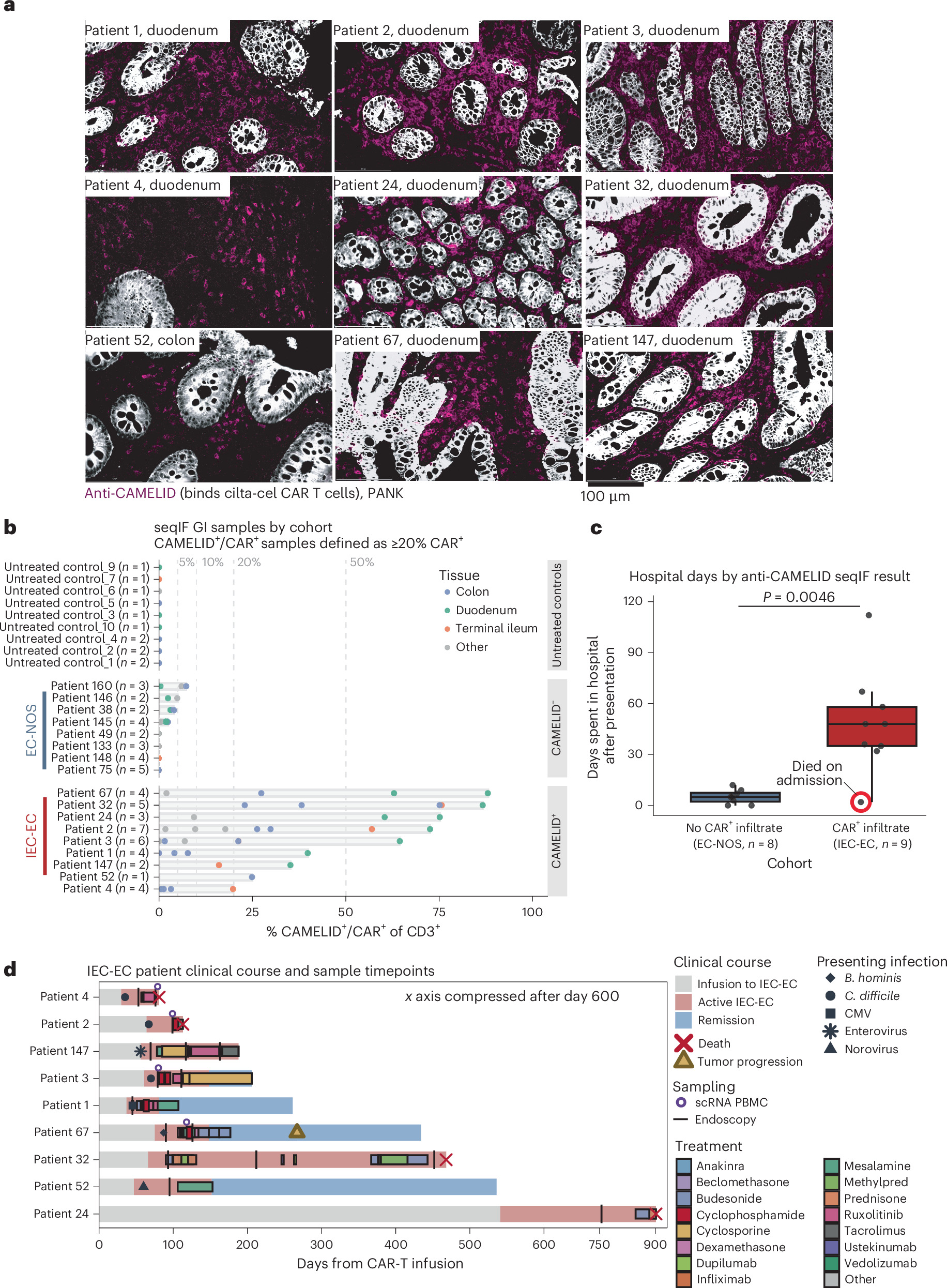
A study published in Nature Medicine found that the CAR T cell therapy cilta-cel can lead to immune-effector-cell-associated enterocolitis (IEC-EC), a severe gastrointestinal toxicity. This condition was identified in nine out of 17 patients who experienced clinically relevant gastrointestinal toxicity after receiving cilta-cel, with the affected patients showing dense infiltration of CAR+ T cells in their gastrointestinal biopsies (id:1). [1]
The study analyzed 17 patients who had received cilta-cel and experienced gastrointestinal toxicity, with nine of them exhibiting a high infiltration of CAR+ T cells. These patients had significantly worse clinical outcomes, requiring a median of 48 hospital days compared to 5 days for those without CAR+ infiltration (id:1). [1]
Patients with CAR+ enterocolitis had a higher incidence of infections and required more extensive medical interventions, including total parenteral nutrition. Mortality was observed in four out of the nine patients with CAR+ enterocolitis, compared to none in the group without CAR+ infiltration (id:1). [1]
The study also found that IEC-EC is associated with persistent CAR T cells in the peripheral blood, with patients exhibiting IEC-EC having significantly higher CAR T cell persistence than those without the condition. This persistence was linked to the development of IEC-EC, although not all patients with persistent CAR T cells developed the condition (id:1). [1]
Advertisement
A study published in Nature Medicine found that the CAR T cell therapy cilta-cel can lead to immune-effector-cell-associated enterocolitis (IEC-EC), a severe gastrointestinal toxicity (Source ID: 1). The study analyzed 17 patients who had received cilta-cel and experienced gastrointestinal toxicity, with nine of them exhibiting a high infiltration of CAR+ T cells. Patients with CAR+ enterocolitis had a higher incidence of infections and required more extensive medical interventions, including total parenteral nutrition. This study underscores the potential for serious complications associated with this treatment. [1]
The study also found that IEC-EC is associated with persistent CAR T cells in the peripheral blood, with patients exhibiting IEC-EC having a higher incidence of prolonged hospital stays and a higher mortality rate compared to those without CAR+ infiltration (Source ID: 1). The median hospital stay for patients with CAR+ enterocolitis was 48 days, compared to 5 days for those without. Additionally, four out of nine patients with CAR+ enterocolitis died, highlighting the severity of this condition and the need for improved management strategies. [1]
The research further demonstrated that the duodenum is the primary site of IEC-EC CAR+ infiltration, with significantly higher CAR+ infiltration observed in this area compared to other parts of the gastrointestinal tract (Source ID: 1). This finding is critical for understanding the pathophysiology of IEC-EC and may inform future treatment approaches. The study also noted that CAR+ T cells in IEC-EC patients exhibited an exhausted cytotoxic phenotype, characterized by increased expression of PD1 and GZMB, which may contribute to the severity of the condition. [1]
A study published in Nature Medicine found that the CAR T cell therapy cilta-cel can lead to immune-effector-cell-associated enterocolitis (IEC-EC), a severe gastrointestinal toxicity (Source ID: 1). The study analyzed 17 patients who had received cilta-cel and experienced gastrointestinal toxicity, with nine of them exhibiting a high infiltration of CAR+ T cells. Patients with CAR+ enterocolitis had a higher incidence of infections and required more extensive medical interventions, including total parenteral nutrition. [1]
Advertisement
The study also found that IEC-EC is associated with persistent CAR T cells in the peripheral blood, with patients exhibiting IEC-EC having a higher incidence of prolonged hospital stays and a higher mortality rate compared to those without CAR+ infiltration (Source ID: 1). The research further demonstrated that the duodenum is the primary site of IEC-EC CAR+ infiltration, with significantly higher CAR+ infiltration observed in this area compared to other gastrointestinal sites. [1]
Patients with IEC-EC required a median of 48 hospital days compared to 5 hospital days for those without CAR+ infiltration. Additionally, four of the nine patients with CAR+ enterocolitis required total parenteral nutrition (TPN) during their treatment course, compared to zero of the eight patients without CAR+ infiltration. The mortality rate in the CAR+ population was 44.4%, with four of nine patients dying, compared to zero of eight patients in the CAR− group. [1]
A study published in Nature Medicine found that the CAR T cell therapy cilta-cel can lead to immune-effector-cell-associated enterocolitis (IEC-EC), a severe gastrointestinal toxicity (Source ID: 1). The study analyzed 17 patients who had received cilta-cel and experienced gastrointestinal toxicity, with nine of them exhibiting a high infiltration of CAR+ T cells. Patients with CAR+ enterocolitis had a higher incidence of infections and required more extensive medical interventions, including total parenteral nutrition. The study also found that IEC-EC is associated with persistent CAR T cells in the peripheral blood, with patients exhibiting IEC-EC having a higher incidence of prolonged hospital stays and a higher mortality rate compared to those without CAR+ infiltration (Source ID: 1). [1]
The research further demonstrated that the duodenum is the primary site of IEC-EC CAR+ infiltration, with significantly higher CAR+ infiltration observed in this area compared to other gastrointestinal sites (Source ID: 1). Patients with IEC-EC required a median of 48 hospital days compared to 5 hospital days for those without CAR+ infiltration. The study also found that the clinical outcomes for patients with IEC-EC were significantly worse, with four of nine patients in the CAR+ group dying compared to zero of eight patients in the CAR− group (Source ID: 1). [1]
Advertisement
The study further analyzed the CD4/CD8 ratio of CAR+ T cells and found that CAR+ T cells demonstrated aberrant CD4/CD8 expression, with a preponderance of CD4+ CAR+ infiltrates (Source ID: 1). Additionally, CAR+ T cell infiltrates were found to have an exhausted cytotoxic phenotype, characterized by increased expression of PD1 and GZMB, and were associated with the loss of resident GI CD103+ T cells (Source ID: 1). These findings highlight the complex pathophysiology of IEC-EC and the need for further research into potential mechanisms and treatment strategies. [1]
The study also noted that IEC-EC is associated with persistent CAR T cells in the peripheral blood, which may contribute to the development of this severe toxicity (Source ID: 1). The findings suggest that IEC-EC is a frequent cause of non-relapse mortality, with four of ten non-relapse deaths in the study population attributed to this condition (Source ID: 1). The study's results emphasize the importance of monitoring for IEC-EC in patients receiving cilta-cel therapy and the need for further research into potential interventions to reduce the risk of this serious complication. [1]
Sources
Prepared with AI assistance from the cited sources.
The Cali Reporter newsletter
The stories worth your time.
California, the country, and what comes next. Join our free newsletter for reporting that keeps you informed.
More in Health & Medicine
- Understanding Fascia and the Evidence Behind Fascia Release
Fascia is a connective tissue that plays a structural role in the human body, but evidence supporting specific exercises or tools for 'fascia release' remains limited.
- Antidepressant Effectiveness and Long-Term Use
A new review suggests that some antidepressants may be more effective than others in helping people manage depression symptoms over the long term, according to a study published in The Lancet Psychiatry.
- Experimental Weight-Loss Drug Shows Promise for Knee Osteoarthritis Pain
A new study suggests that an experimental weight-loss drug, retatrutide, may significantly reduce knee pain in people with osteoarthritis and obesity.