

California's vote count was painfully slow. Can this proposal speed it up for November?
A nonprofit report quietly admits California’s signature-curing rules turned the 2024 count into a multi-week slog, yet the fixes it proposes still leave most of the delay baked in.
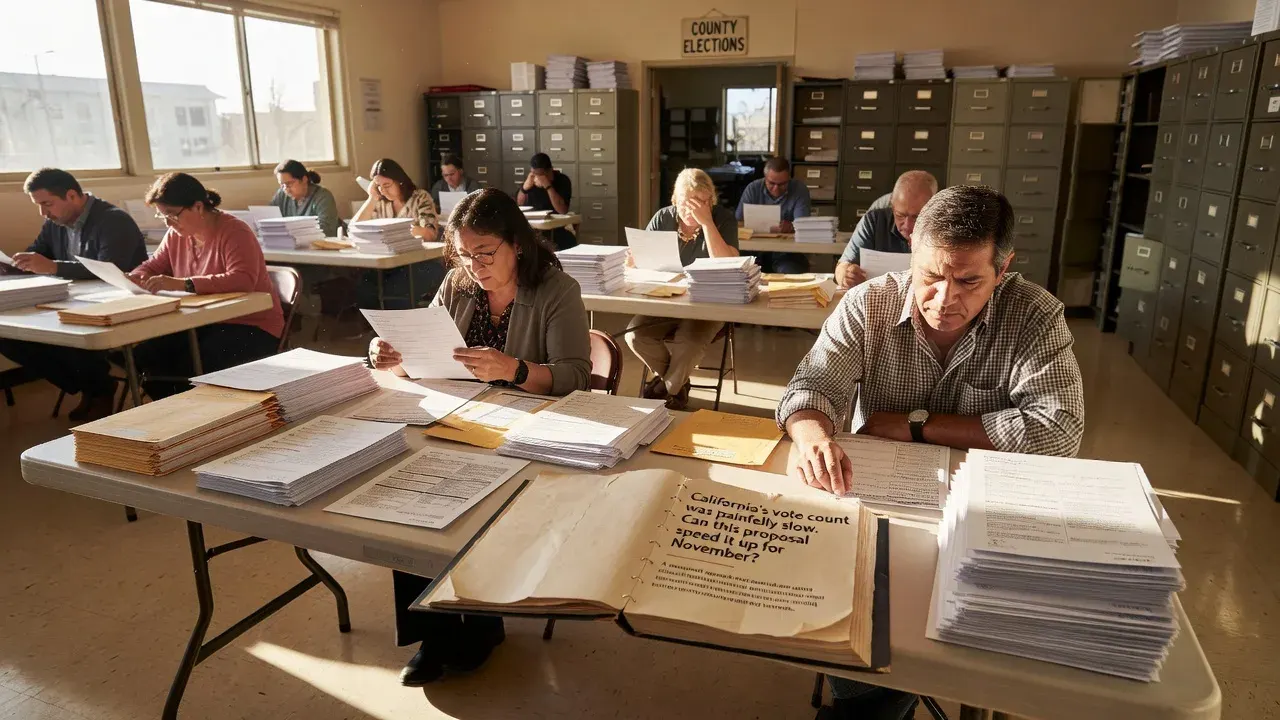
California’s vote-counting process remains a slow-motion embarrassment even after years of warnings. The California Voter Foundation’s new report concedes that signature verification and curing delays stretched the 2024 tally for weeks in many counties, leaving voters in the dark and fueling skepticism about results that arrived long after Election Day.
The foundation, which exists to streamline elections for everyday Californians, now urges counties to accept more curing methods and train staff earlier. Yet the report itself reveals the core problem: state law still requires election workers to chase down missing or mismatched signatures on mail ballots one by one, a labor-intensive ritual that scales poorly when turnout spikes.
Buried in the document is the admission that some counties finished counting in days while others limped along until December. The difference wasn’t technology or fraud; it was how strictly officials interpreted the signature-matching rules and how quickly they contacted voters. The foundation’s own data shows curing outreach often arrived after ballots were already set aside as provisional.

Instead of confronting the perverse incentive created by rigid signature rules, the report offers incremental tweaks: pre-election training, standardized outreach templates, and expanded use of online curing portals. These steps may shave days off the process, but they do nothing to address the underlying mismatch between California’s vote-by-mail-heavy system and its 19th-century verification standards.
California Voter Foundation director Kim Alexander noted that voters expect results on election night, not weeks later. The report stops short of recommending the most obvious reform, loosening or eliminating the signature requirement for ballots that match voter-registration records, apparently because lawmakers have shown zero interest in touching that political third rail.
The deeper contradiction is that the same officials who tout California as a national model for accessible voting have built a system that reliably produces the slowest counts in the country. Until Sacramento confronts the trade-off between security theater and timely results, November 2026 will look a lot like 2024: accurate, exhaustive, and painfully late.
Original reporting: LA Times (https://www.latimes.com/california/story/2026-07-27/vote-count-watchdog-report)
Original reporting: LA Times, California.
More in California
- UC Berkeley Lab Proposes New Civic Framework for California’s Next Governor
A research-driven agenda calls for institutionalizing 'co-governance' to address low public trust and lack of resident influence in state decision-making.
- Five Tax Measures on California’s Ballot Aim to Reshape State Finances
Propositions 3, 40–43 would alter income, wealth and local taxation rules—marking the highest number of tax measures on a general election ballot since 1994.
- Catalina Helicopter Crash Highlights Risks of Island Medevac Flights
A medical evacuation chopper carrying Catalina Romero, pilot, and nurse Jessica Devries crashed into the ocean shortly after takeoff, killing all three; federal investigators are assessing causes including night flying, spatial disorientation, and the island’s challenging Pebbly Beach heliport.