

Californians have a right to know about 911 calls from ICE detention centers
California's immigrant detention centers hide behind private operators and secrecy, but a new bill insists 911 call logs belong to the public.
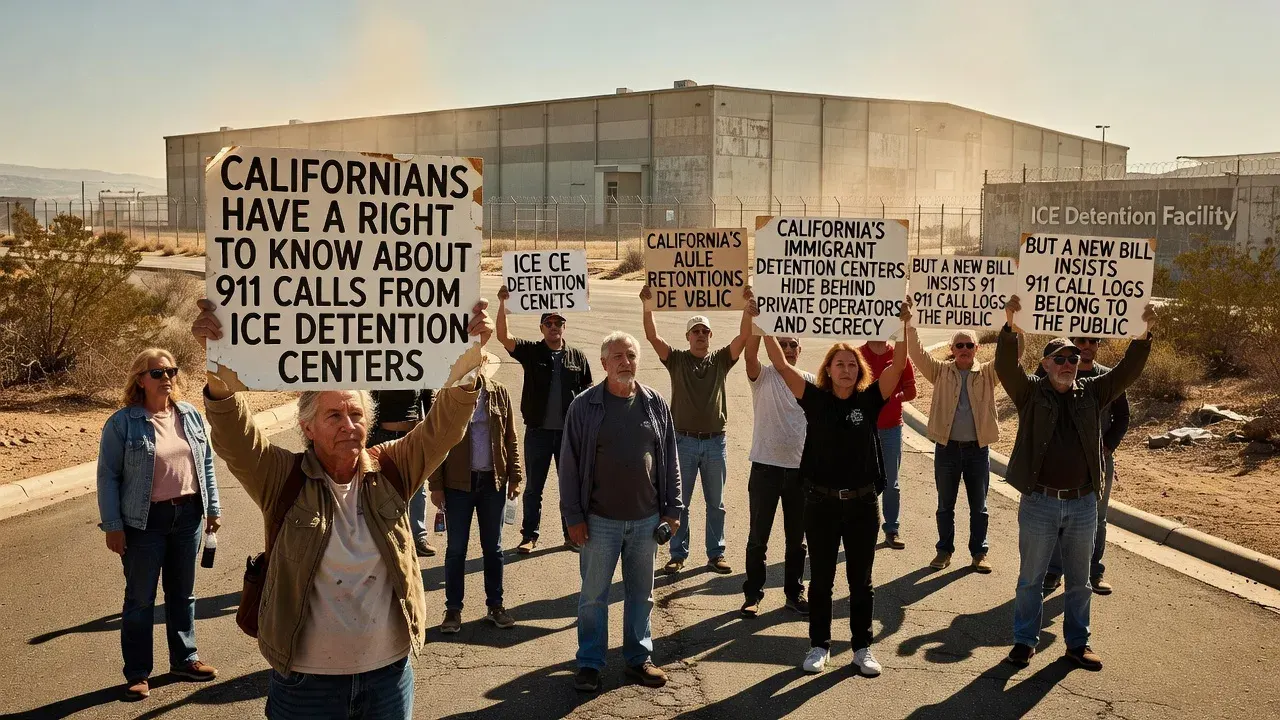
Immigrant detention centers in California operate behind layers of private contractors and official opacity. When emergencies strike inside them, the only outside record is often a 911 call. Yet those calls have remained hidden from public view, until now.
A bill moving through the Legislature would change that. It demands that records of 911 calls placed from these facilities be treated as public documents, stripping away the secrecy that has shielded operators from scrutiny. The measure targets a system where most centers are privately run, turning what should be transparent emergency data into proprietary information.
Californians have a right to know what is happening inside facilities that hold people on behalf of the state and federal government. These calls document medical crises, disturbances, and alleged misconduct. Keeping them secret protects contractors more than it protects detainees or the public. The bill’s backers argue that sunlight on these logs is the bare minimum of accountability in an industry built on opacity.

Private operators have long resisted disclosure, claiming operational sensitivity. But when a facility dials 911, it is using public infrastructure and invoking public first responders. The resulting record should not vanish into corporate vaults. Californians pay for the system that detains immigrants; they should not be barred from seeing the most basic evidence of how it functions.
The legislation faces predictable pushback from an industry that profits from low visibility. Yet the principle is straightforward: if the state relies on these centers, it cannot outsource both the operations and the oversight. Public dollars and public safety demand public records.
Whether the bill survives lobbying pressure will test Sacramento’s commitment to transparency over convenience. The 911 logs are not a minor procedural issue; they are one of the few external signals of what actually occurs behind the walls.
Original reporting: CalMatters.
More in California
- UC Berkeley Lab Proposes New Civic Framework for California’s Next Governor
A research-driven agenda calls for institutionalizing 'co-governance' to address low public trust and lack of resident influence in state decision-making.
- Five Tax Measures on California’s Ballot Aim to Reshape State Finances
Propositions 3, 40–43 would alter income, wealth and local taxation rules—marking the highest number of tax measures on a general election ballot since 1994.
- Catalina Helicopter Crash Highlights Risks of Island Medevac Flights
A medical evacuation chopper carrying Catalina Romero, pilot, and nurse Jessica Devries crashed into the ocean shortly after takeoff, killing all three; federal investigators are assessing causes including night flying, spatial disorientation, and the island’s challenging Pebbly Beach heliport.