

California pension ruling limits how many vacation hours workers can count for retirement
California’s highest court just blocked public workers from inflating their pensions with unlimited vacation cash-outs, delivering a rare win for taxpayers against runaway retirement costs.
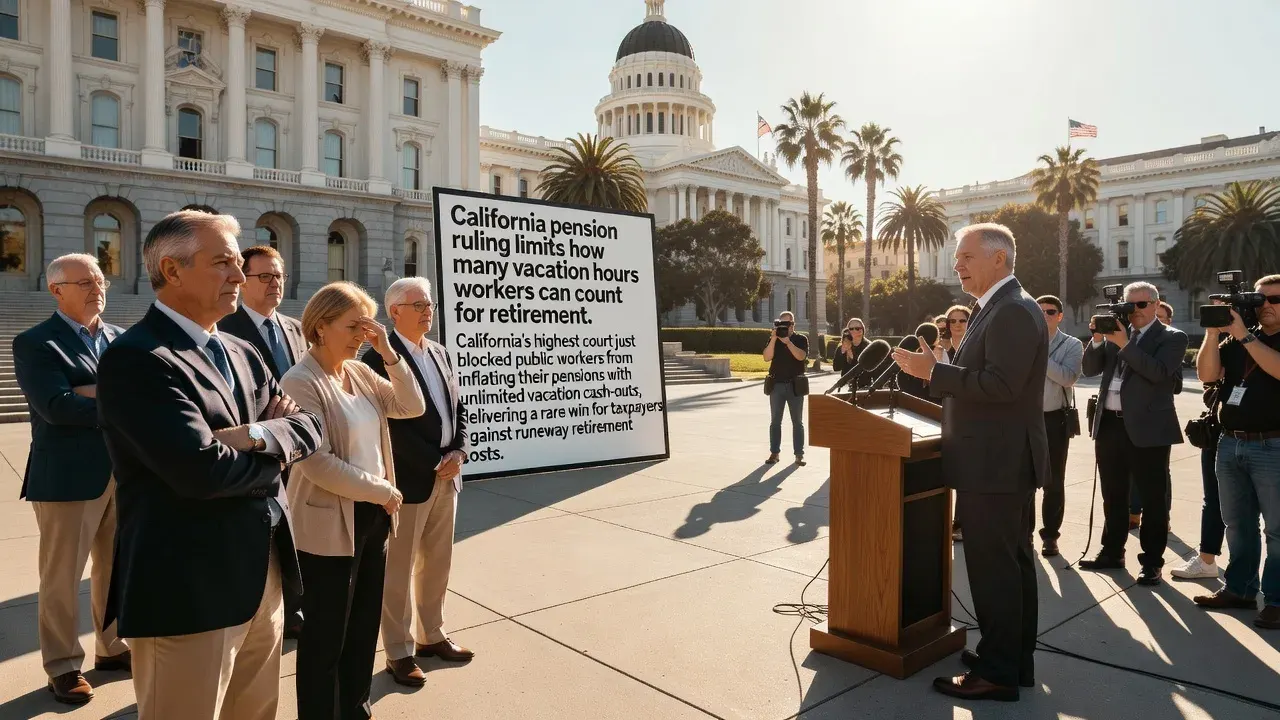
The California Supreme Court has shut down a creative end-run around pension limits, ruling that state and local government workers cannot cash out unlimited vacation hours to artificially boost their retirement payouts.
At issue was whether employees could convert massive banks of accrued vacation time into additional “service credit” under the state’s defined-benefit formulas. The court upheld strict caps, preventing workers from treating every unused hour as pensionable compensation and forcing agencies to rein in the practice that had quietly inflated costs for decades.
By siding with pension administrators who imposed the limits, the justices rejected arguments from public-employee unions that such cash-outs were an earned benefit protected by contract. The decision makes clear that retirement formulas cannot be gamed through last-minute lump-sum payouts that bear little resemblance to actual time worked.

The ruling arrives as California’s massive public-pension obligations continue to crowd out spending on schools, infrastructure and safety-net programs. For years, generous vacation-conversion rules allowed some long-serving employees to retire with significantly higher monthly checks than their base salaries alone would justify.
While the court’s language was technical, the practical effect is straightforward: fewer six-figure windfalls charged to taxpayers. Government employers must now calculate pensions based on more realistic service credits rather than letting workers stockpile and monetize vacation time without limit.
Whether lawmakers will now tighten other loopholes in the pension system remains an open question. The decision protects the principle that retirement benefits should reflect actual wages and service, but it does not solve the broader structural imbalance between what California promises its public workforce and what it can sustainably pay.
Original reporting: CalMatters.
More in California
- UC Berkeley Lab Proposes New Civic Framework for California’s Next Governor
A research-driven agenda calls for institutionalizing 'co-governance' to address low public trust and lack of resident influence in state decision-making.
- Five Tax Measures on California’s Ballot Aim to Reshape State Finances
Propositions 3, 40–43 would alter income, wealth and local taxation rules—marking the highest number of tax measures on a general election ballot since 1994.
- Catalina Helicopter Crash Highlights Risks of Island Medevac Flights
A medical evacuation chopper carrying Catalina Romero, pilot, and nurse Jessica Devries crashed into the ocean shortly after takeoff, killing all three; federal investigators are assessing causes including night flying, spatial disorientation, and the island’s challenging Pebbly Beach heliport.