

California man drank all day then drove into a tree at 101 mph with a car full of people
A drunk driver who slammed into a tree at 101 mph, killing passengers, then allegedly carjacked a stranger to escape, received a sentence that treats vehicular manslaughter like a traffic ticket.
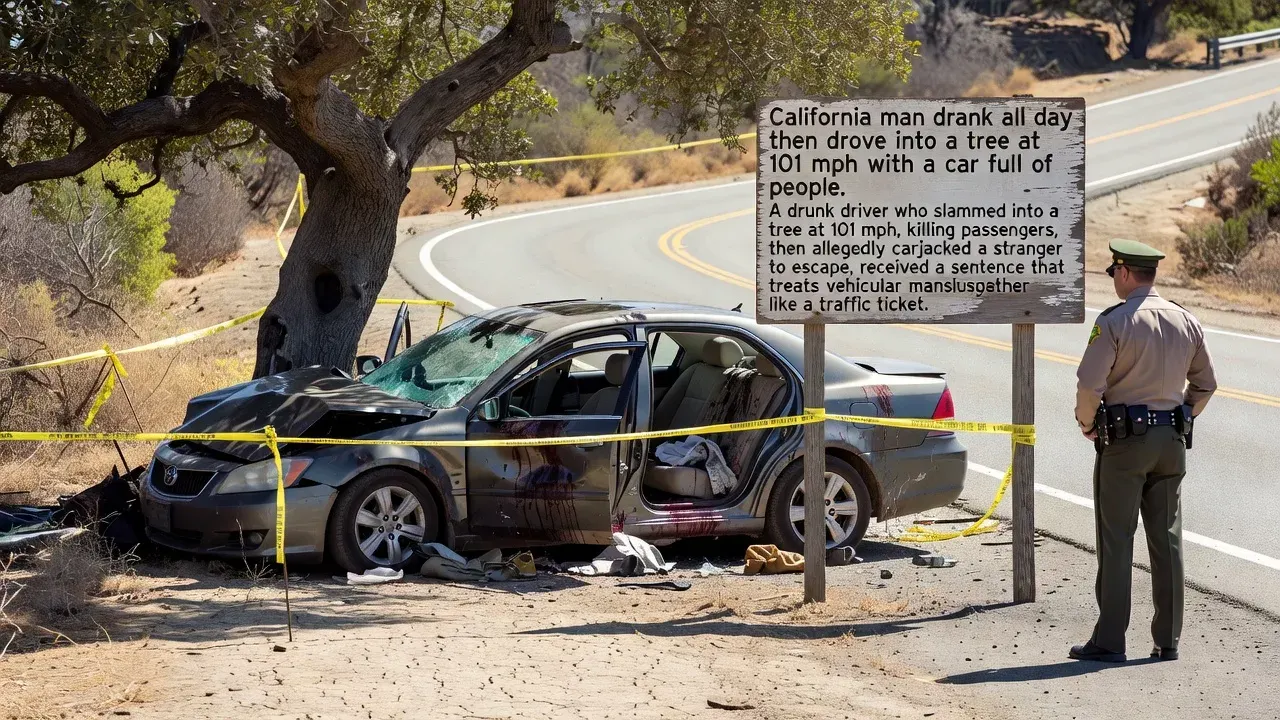
Cameron Garcia spent the day drinking, then got behind the wheel with a car full of people and accelerated to 101 mph before smashing into a tree. The 2023 crash killed at least one passenger. Prosecutors say that wasn’t the end of his crime spree: Garcia allegedly carjacked a bystander to flee the wreckage.
Yet the punishment handed down in a California courtroom reflects the state’s strangely lenient approach to vehicular homicide. While the exact sentence length was not released in initial reports, the fact that Garcia faced only a manslaughter charge rather than murder tells its own story about how the justice system treats drivers who turn cars into weapons after a day of drinking.
The details are grim even by Southern California crash standards. Garcia didn’t simply lose control; he was traveling more than twice the speed limit on a road where such velocity guarantees catastrophe. Prosecutors outlined a sequence that began with intoxication, escalated to a fatal collision, and ended with an alleged violent theft of another vehicle to avoid accountability.

This case lands amid years of rising concern over repeat drunk drivers and lenient plea deals in Los Angeles and surrounding counties. California’s laws still allow many such offenders to plead down from murder, even when blood-alcohol levels are sky-high and speed borders on reckless homicide. Garcia’s crash, with multiple people in the car who trusted him to drive, exposes how that gap between rhetoric about road safety and actual consequences keeps repeating.
The victims’ families watched a system that treated their loss as a foreseeable accident rather than the foreseeable result of choosing to drink all day and then drive at triple-digit speeds. Garcia’s decision to carjack someone after the wreck suggests an individual who understood exactly how much trouble he was in, yet the charge stayed at vehicular manslaughter.
One question lingers for every California driver sharing the road with the next Cameron Garcia: if 101 mph drunk with a car full of passengers and a subsequent carjacking still doesn’t trigger murder charges, what exactly does?
Original reporting: LA Times (https://www.latimes.com/california/story/2026-07-24/vehicular-manslaughter-conviction-sentencing)
Original reporting: LA Times, California.
More in California
- UC Berkeley Lab Proposes New Civic Framework for California’s Next Governor
A research-driven agenda calls for institutionalizing 'co-governance' to address low public trust and lack of resident influence in state decision-making.
- Five Tax Measures on California’s Ballot Aim to Reshape State Finances
Propositions 3, 40–43 would alter income, wealth and local taxation rules—marking the highest number of tax measures on a general election ballot since 1994.
- Catalina Helicopter Crash Highlights Risks of Island Medevac Flights
A medical evacuation chopper carrying Catalina Romero, pilot, and nurse Jessica Devries crashed into the ocean shortly after takeoff, killing all three; federal investigators are assessing causes including night flying, spatial disorientation, and the island’s challenging Pebbly Beach heliport.