

CA landlord fights law meant to help low-income renters
A Sacramento landlord is suing to overturn California’s law forcing property owners to accept Section 8 vouchers, arguing it violates property rights in a state desperate for more housing.
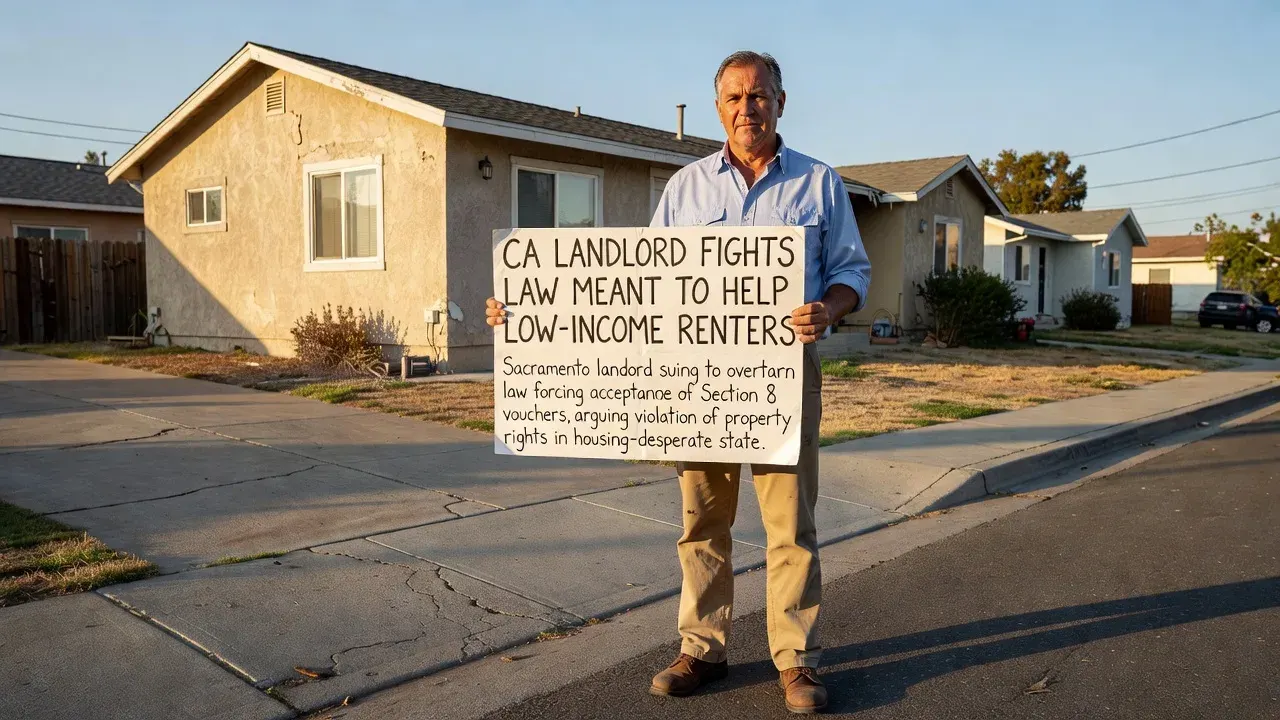
A Sacramento property manager is taking California to court over a law that compels landlords to accept federal housing vouchers, exposing the tension between anti-discrimination rules and basic property rights.
Under state law, landlords must rent to tenants with Section 8 vouchers, officially known as the Housing Choice Voucher Program. The requirement, meant to help low-income renters find housing, has instead become a flashpoint. The plaintiff, a Sacramento-based property manager, claims the mandate infringes on owners’ freedom to choose their tenants.
This lawsuit echoes similar legal challenges cropping up nationwide, where landlords argue that governments cannot simply order private property owners to participate in a federal subsidy program. California’s version of the law aims to prevent voucher discrimination, yet it collides with practical concerns: screening tenants, potential property damage, and the administrative burden of government paperwork.

The case highlights a deeper contradiction in Sacramento’s housing policy. While lawmakers trumpet new construction mandates and tenant protections to fix the affordability crisis, they increasingly treat private landlords as extensions of the welfare state. Forcing acceptance of Section 8 may reduce barriers for some renters, but it risks deterring investment in rental housing at a time when the state already struggles to build enough units.
Buried in the legal arguments is a recurring national refrain: if the government wants to guarantee housing access, it should fund and manage that guarantee itself rather than conscripting private owners. The Sacramento manager’s suit tests whether California courts will uphold that boundary or further erode property rights in the name of equity.
What happens next could ripple far beyond one building in Sacramento. If the challenge succeeds, it may embolden other landlords; if it fails, expect tighter regulations that treat rental property less like an investment and more like a public utility.
Original reporting: CalMatters.
More in California
- UC Berkeley Lab Proposes New Civic Framework for California’s Next Governor
A research-driven agenda calls for institutionalizing 'co-governance' to address low public trust and lack of resident influence in state decision-making.
- Five Tax Measures on California’s Ballot Aim to Reshape State Finances
Propositions 3, 40–43 would alter income, wealth and local taxation rules—marking the highest number of tax measures on a general election ballot since 1994.
- Catalina Helicopter Crash Highlights Risks of Island Medevac Flights
A medical evacuation chopper carrying Catalina Romero, pilot, and nurse Jessica Devries crashed into the ocean shortly after takeoff, killing all three; federal investigators are assessing causes including night flying, spatial disorientation, and the island’s challenging Pebbly Beach heliport.