Brain Mapping Reveals Stages of Hand Ownership Perception
A study from Karolinska Institutet has identified three distinct phases of brain activity linked to the perception that a hand belongs to the body, offering new insights into body perception and potential implications…

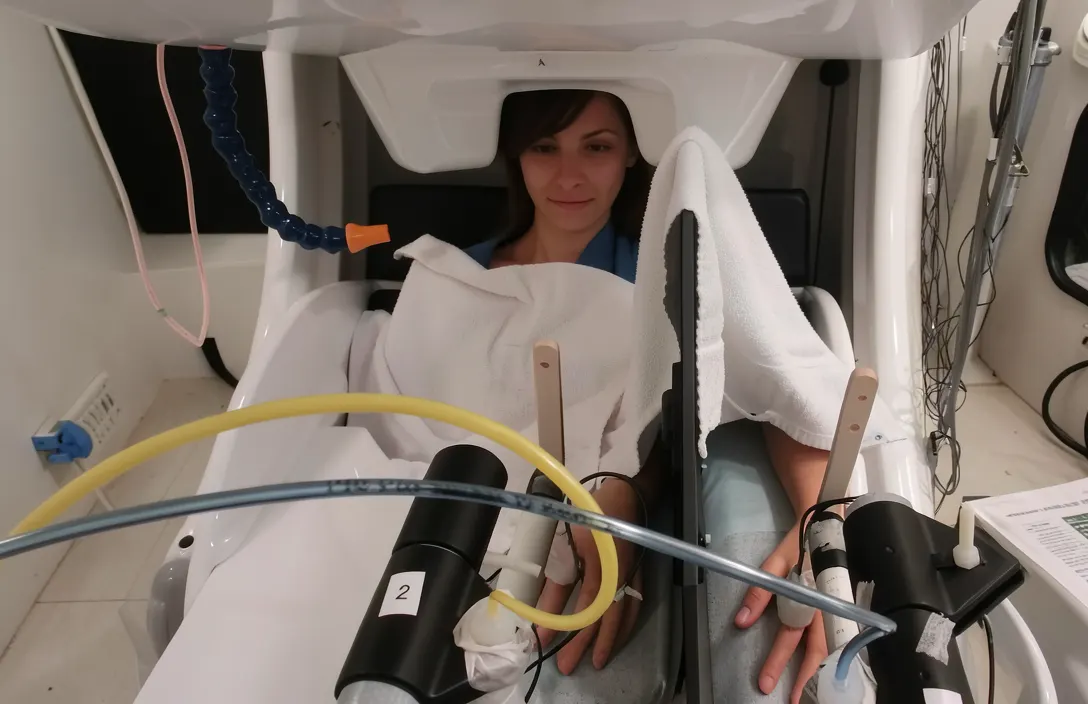

A study from Karolinska Institutet has identified three distinct phases of brain activity linked to the perception that a hand belongs to the body, offering new insights into body perception and potential implications for stroke patients. The research, published in Nature Communications, used magnetoencephalography (MEG) to map brain activity in 45 healthy volunteers as they participated in the rubber hand illusion experiment (Evidence ID: 1). This illusion involves participants experiencing a lifelike artificial hand as part of their own body through synchronized touches applied to both the rubber hand and their real hand (Evidence ID: 1). [1]
The study revealed that brain activity linked to the perception of hand ownership begins even before the hand is touched, followed by rapid activity in various parts of the right hemisphere, including the frontal and parietal lobes and the cerebellum. This was observed in the 28 participants who clearly experienced the illusion, with brain activity analyzed every four milliseconds across the entire brain (Evidence ID: 1). The researchers created videos showing the spatiotemporal dynamics of brain activity, highlighting the sequence in which different brain regions become active (Evidence ID: 1). [1]
The findings suggest that the brain's expectations of sensory input are closely linked to the conscious experience of body ownership. The researchers noted that during the first two phases of the study, activity was observed almost exclusively in the right hemisphere, which may help explain why some stroke patients no longer perceive their left arm as their own following damage to the right hemisphere (Evidence ID: 1). Further investigations are needed to explore this phenomenon in patients and to better understand the roles of the brain's hemispheres in body perception (Evidence ID: 1). [1]
A study from Karolinska Institutet has revealed that the brain's perception of hand ownership involves a complex interplay of brain regions that become active in a specific sequence, beginning even before the hand is touched (1). Researchers mapped participants' brain activity millisecond by millisecond, demonstrating how activity patterns develop over time. The study, published in Nature Communications, aimed to understand how the brain creates the fundamental experience of body ownership. Henrik Ehrsson, a professor at Karolinska Institutet and the study's lead, explained that while much is known about the brain areas involved in body perception, less is understood about the timing and interaction of these regions (1). [1]
Advertisement
The researchers used the rubber hand illusion, in which participants can experience a lifelike artificial hand as part of their own body. By applying brief, light touches simultaneously to the rubber hand and the participant's real hand, the researchers were able to measure brain activity using magnetoencephalography (MEG) (1). The analysis revealed three distinct phases of brain activity linked to participants' sense that the hand belonged to them. The first phase began even before the touch, highlighting the brain's expectations of sensory input as closely linked to the conscious experience of body ownership (1). [1]
During the first two phases of the study, brain activity was observed almost exclusively in the right hemisphere. This finding may help explain why some people no longer perceive their left arm as their own following a stroke (1). The researchers suggest that damage to the right hemisphere of the brain may be responsible for the loss of the sense of ownership of the left arm in stroke patients. However, this link has not yet been investigated in patients, and the researchers plan to explore this further in future studies (1). [1]
A study from Karolinska Institutet has revealed that the brain's perception of hand ownership involves a complex interplay of brain regions that become active in a specific sequence, beginning even before the hand is touched (1). The researchers used the rubber hand illusion, in which participants can experience a lifelike artificial hand as part of their own body. During the first two phases of the study, brain activity was observed almost exclusively in the right hemisphere. [1]
The researchers mapped participants' brain activity millisecond by millisecond using magnetoencephalography (MEG) during an experiment involving the rubber hand illusion. The study found that brain activity linked to the perception of hand ownership begins even before the hand is touched, followed by rapid activity in various parts of the right hemisphere, including the frontal and parietal lobes and the cerebellum (1). [1]
Advertisement
The study suggests that the brain's expectations of sensory input are closely linked to the conscious experience of body ownership. The researchers observed three distinct phases of brain activity linked to participants' sense that the hand belonged to them, with the first phase beginning even before the touch (1). [1]
A study from Karolinska Institutet has demonstrated that the brain's perception of hand ownership arises from a complex interplay among brain regions that become active in a specific sequence, beginning even before the hand is touched (1). Researchers mapped participants' brain activity millisecond by millisecond using magnetoencephalography (MEG) during an experiment involving the rubber hand illusion. This illusion allows participants to experience a lifelike artificial hand as part of their own body, revealing the neural mechanisms behind the sense of body ownership. [1]
The study involved 45 healthy volunteers who participated in an experiment using the rubber hand illusion. During the experiment, two robotic arms applied brief, light touches simultaneously to the rubber hand, which the participants could see, and to their real left hand, hidden behind a screen (1). By varying how and when the hands were touched, the researchers compared brain activity when the participants experienced the illusion, when they did not, and when they saw their real hand being touched. [1]
The researchers analyzed brain activity in the 28 participants who clearly experienced the illusion. By repeating the analysis every four milliseconds across the entire brain, the researchers were able to create videos showing when and where the activity occurred. They observed three distinct phases of brain activity linked to participants' sense that the hand belonged to them (1). The first phase began even before the touch, indicating that the brain's expectations of sensory input are closely linked to the conscious experience of the body as our own. [1]
Advertisement
The Cali Reporter newsletter
The stories worth your time.
California, the country, and what comes next. Join our free newsletter for reporting that keeps you informed.
More in Health & Medicine
- Brain Cells Identified as Key to Regulating Sleep Pressure
Scientists have discovered two groups of brain cells in mice that become more active with prolonged wakefulness, playing a crucial role in generating the need for sleep.
- New Targeted Therapy for Gum Disease Shows Promise in Early Studies
Researchers in Japan have developed a novel treatment for gum disease that selectively targets harmful bacteria while preserving beneficial microbes, according to a study published in the Journal of Translational…
- Converted Shipping Container Offers Mental Health Relief in South Africa
A repurposed shipping container in Orange Farm, South Africa, has become a unique mental health resource for residents, particularly those in underserved communities.