Brain Clock Gene Influences Alcohol Consumption Differently in Female and Male Mice
A study published in Drug and Alcohol Dependence reveals that the Bmal1 gene, which regulates circadian rhythms, affects alcohol consumption in a sex-specific manner in mice.

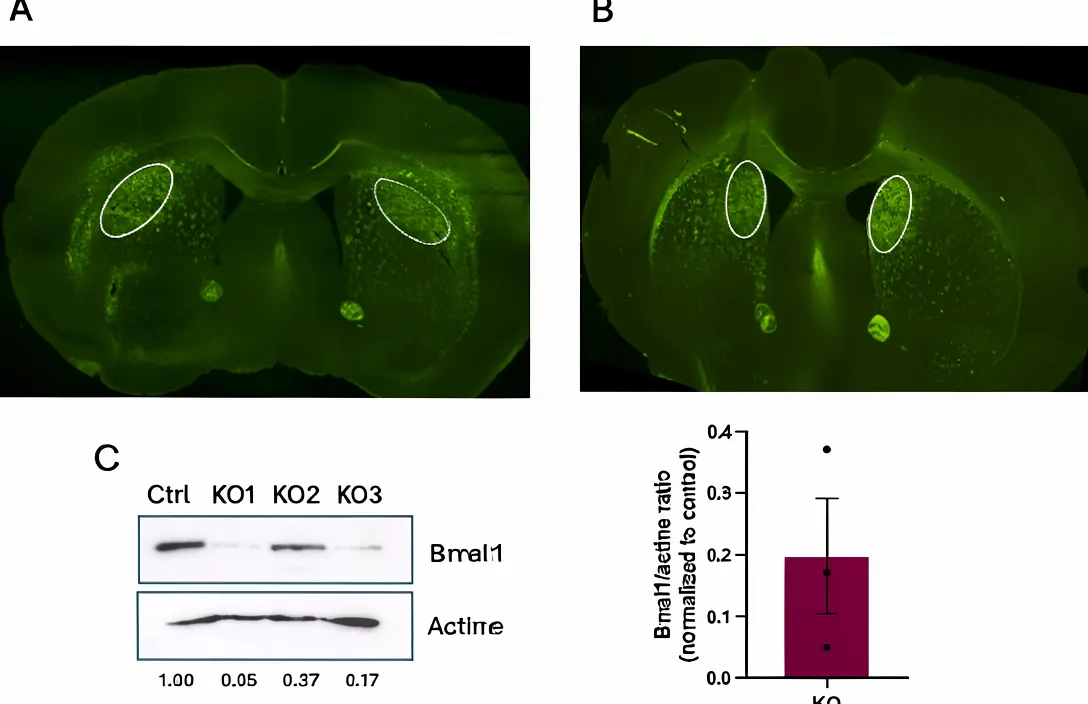

A gene that helps regulate the body's internal clock may influence alcohol consumption differently in males and females, according to new Concordia research. The researchers found that removing the gene Bmal1 from a specific region of the brain significantly reduced alcohol consumption in female mice but had no comparable effect in males. Bmal1 plays a central role in regulating circadian rhythms, the roughly 24-hour biological cycles that govern sleep, hormone production and a vast number of bodily functions. Disruptions to these rhythms have been strongly associated with alcohol use disorder. The study, published in Drug and Alcohol Dependence, offers new insight into how biological sex and the brain's circadian system interact to influence alcohol-related behavior (source ID: 1). [1]
The researchers examined the effects of removing Bmal1 from two areas of the dorsal striatum: the dorsomedial striatum (DMS), which is more closely associated with goal-directed behavior, and the dorsolateral striatum (DLS), which plays a greater role in habit formation. They then measured voluntary alcohol consumption in male and female mice using a two-bottle test that gave animals a choice between water and alcohol. The results revealed a clear difference between the two brain regions. Removing Bmal1 from the DLS had no significant effect on drinking in either sex. In contrast, female mice without Bmal1 in the DMS consumed about 21% less alcohol than control animals and showed a roughly 25% reduction in their preference for alcohol (source ID: 1). [1]
The researchers also found that these effects depended on ovarian hormones. When ovaries in female mice were removed, the reduction in alcohol consumption associated with Bmal1 deletion disappeared. Notably, the changes were specific to alcohol-related behavior. The mice showed no corresponding change in their preference for sugar water, suggesting that the reduced alcohol consumption was not simply the result of a broader change in reward-seeking behavior (source ID: 1). [1]
A gene that helps regulate the body's internal clock may influence alcohol consumption differently in males and females, according to new Concordia research. The researchers found that removing the gene Bmal1 from a specific region of the brain significantly reduced alcohol consumption in female mice but had no comparable effect in males. Bmal1 plays a central role in regulating circadian rhythms, the roughly 24-hour biological cycles that govern sleep, hormone production, and a vast number of bodily functions. Disruptions to these rhythms have been strongly associated with alcohol use disorder. The study, published in Drug and Alcohol Dependence, offers new insight into how biological sex and the brain's circadian system interact to influence alcohol-related behavior (source ID: 1). [1]
Advertisement
The researchers examined the effects of removing Bmal1 from two areas of the dorsal striatum: the dorsomedial striatum (DMS), which is more closely associated with goal-directed behavior, and the dorsolateral striatum (DLS), which plays a greater role in habit formation. The team selectively removed Bmal1 from these regions and measured voluntary alcohol consumption in male and female mice using a two-bottle test that gave animals a choice between water and alcohol. The results revealed a clear difference between the two brain regions. Removing Bmal1 from the DLS had no significant effect on drinking in either sex. In contrast, female mice without Bmal1 in the DMS consumed about 21% less alcohol than control animals and showed a roughly 25% reduction in their preference for alcohol (source ID: 1). [1]
The researchers also found that these effects depended on ovarian hormones. When ovaries in female mice were removed, the reduction in alcohol consumption associated with Bmal1 deletion disappeared. Notably, the changes were specific to alcohol-related behavior. The mice showed no corresponding change in their preference for sugar water, suggesting that the reduced alcohol consumption was not simply the result of a broader change in reward-seeking behavior (source ID: 1). [1]
A gene that helps regulate the body's internal clock may influence alcohol consumption differently in males and females, according to new Concordia research. The researchers found that removing the gene Bmal1 from a specific region of the brain significantly reduced alcohol consumption in female mice but had no comparable effect in males (Source ID: 1). Bmal1 plays a central role in regulating circadian rhythms, the roughly 24-hour biological cycles that govern sleep, hormone production, and a vast number of bodily functions. Disruptions to these rhythms have been strongly associated with alcohol use disorder. [1]
The study, published in Drug and Alcohol Dependence, offers new insight into how biological sex and the brain's circadian system interact to influence alcohol-related behavior. The researchers say the findings could eventually help inform more targeted approaches to treating alcohol use disorder (AUD) (Source ID: 1). Two brain regions, the dorsomedial striatum (DMS) and the dorsolateral striatum (DLS), were examined for their role in this process. The DMS is more closely associated with goal-directed behavior, while the DLS plays a greater role in habit formation. [1]
Advertisement
The researchers also found that these effects depended on ovarian hormones. When ovaries in female mice were removed, the reduction in alcohol consumption associated with Bmal1 deletion disappeared. Notably, the changes were specific to alcohol-related behavior. The mice showed no corresponding change in their preference for sugar water, suggesting that the reduced alcohol consumption was not simply the result of a broader change in reward-seeking behavior (Source ID: 1). [1]
Sources
Prepared with AI assistance from the cited sources.
The Cali Reporter newsletter
The stories worth your time.
California, the country, and what comes next. Join our free newsletter for reporting that keeps you informed.
More in Health & Medicine
- Understanding Fascia and the Evidence Behind Fascia Release
Fascia is a connective tissue that plays a structural role in the human body, but evidence supporting specific exercises or tools for 'fascia release' remains limited.
- Antidepressant Effectiveness and Long-Term Use
A new review suggests that some antidepressants may be more effective than others in helping people manage depression symptoms over the long term, according to a study published in The Lancet Psychiatry.
- Experimental Weight-Loss Drug Shows Promise for Knee Osteoarthritis Pain
A new study suggests that an experimental weight-loss drug, retatrutide, may significantly reduce knee pain in people with osteoarthritis and obesity.