Blocking Receptor Signals Can Help Treat Fibrosis
A recent phase II clinical trial has shown that inhibiting the cytokines IL-4 and IL-13 can prevent fibrosis in localized scleroderma, offering potential for the treatment of other fibrotic conditions.

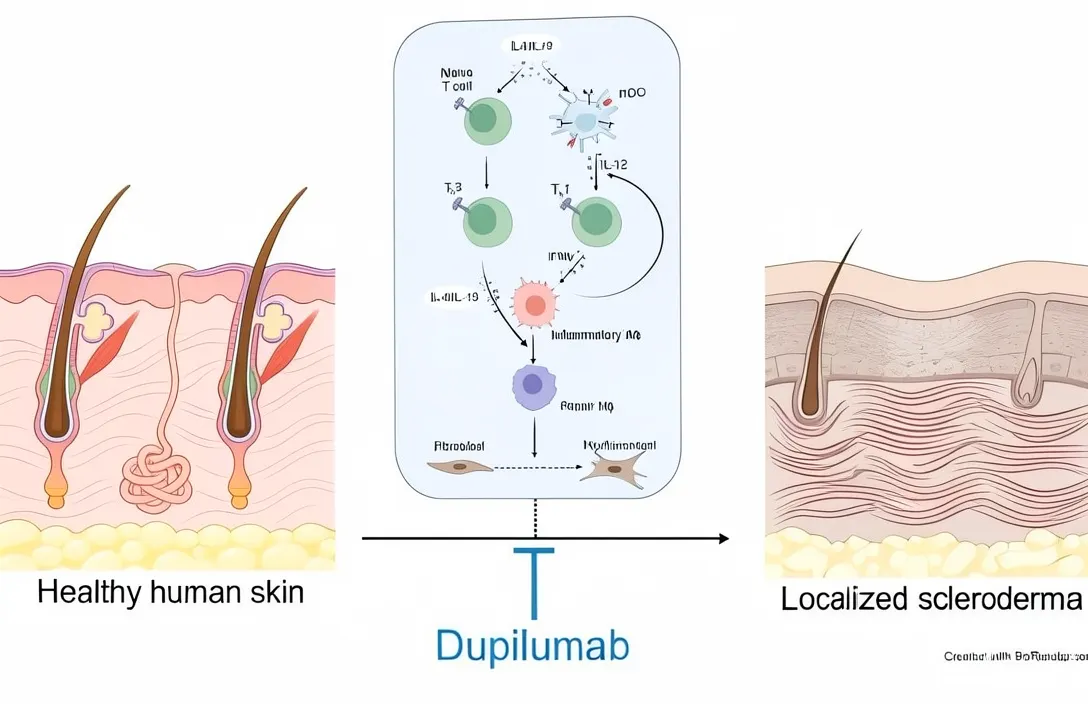

A phase II proof-of-concept study published in the journal Annals of the Rheumatic Diseases has demonstrated that inhibiting the cytokines IL-4 and IL-13 can prevent fibrosis in the skin condition localized scleroderma (Source ID: 1). The study, led by Dr. Sabine Eming, involved 45 participants in a randomized, placebo-controlled trial. The results showed that targeted inhibition of IL-4/IL-13 signaling improved the course of the disease, with a marked clinical improvement observed over the placebo group (Source ID: 1). [1]
The drug used in the study, dupilumab, is already approved for conditions such as neurodermatitis and asthma, and it inhibits IL-4/IL-13 signaling (Source ID: 1). Over a six-month period, the study investigated the effect of a blockade on the course of the disease, inflammation, and gene expression. The findings indicated a significant reduction in local inflammation and suppression of fibrosis-associated genes (Source ID: 1). [1]
The study's results suggest that IL-4/IL-13 signaling plays a key role in the inflammatory process leading to fibrosis. Dr. Eming emphasized the need for follow-up studies involving a larger number of patients and longer treatment durations to validate the efficacy and safety of dupilumab in patients with localized scleroderma (Source ID: 1). The findings may pave the way for the prevention and treatment of other fibrotic conditions (Source ID: 1). [1]
A phase II proof-of-concept study published in the journal Annals of the Rheumatic Diseases has demonstrated that inhibiting the cytokines IL-4 and IL-13 can prevent fibrosis in the skin condition localized scleroderma (Source ID: 1). The study was conducted as an investigator-initiated trial, involving an interdisciplinary team led by Dr. Sabine Eming, professor of dermatology and senior researcher at the University of Cologne's CECAD Cluster of Excellence on Aging Research (Source ID: 1). The trial included 45 participants and assessed the effect of a blockade on the course of the disease, inflammation, and gene expression over a period of six months (Source ID: 1). [1]
Advertisement
The drug used in the study, dupilumab, is already approved for conditions such as neurodermatitis and asthma, and it inhibits IL-4/IL-13 signaling (Source ID: 1). The results of the study showed a marked clinical improvement over the placebo, a significant reduction in local inflammation, and suppression of fibrosis-associated genes (Source ID: 1). Eming and her team observed that targeted inhibition of this signaling pathway improved the course of the disease in the participants (Source ID: 1). [1]
The study's findings suggest that IL-4/IL-13 signaling plays a key role in the inflammatory process leading to fibrosis (Source ID: 1). Fibrotic diseases are common and pose a major challenge for the medical profession, as they are extremely burdensome for those affected (Source ID: 1). The research team emphasized the need for follow-up studies involving a larger number of patients and a longer duration of treatment to validate the efficacy and safety of long-term treatment with dupilumab in patients with localized scleroderma (Source ID: 1). [1]
A phase II proof-of-concept study published in the journal Annals of the Rheumatic Diseases has demonstrated that inhibiting the cytokines IL-4 and IL-13 can prevent fibrosis in the skin condition localized scleroderma (Source ID: 1). The study was conducted by an interdisciplinary team led by Dr. Sabine Eming, professor of dermatology and senior researcher at the University of Cologne's CECAD Cluster of Excellence on Aging Research. The research involved a randomized, placebo-controlled clinical trial with 45 participants, and it aimed to assess the effect of blocking IL-4/IL-13 signaling on the course of the disease, inflammation, and gene expression (Source ID: 1). [1]
The drug used in the study, dupilumab, is already approved for conditions such as neurodermatitis and asthma, and it inhibits IL-4/IL-13 signaling (Source ID: 1). The results showed that targeted inhibition of this signaling pathway improved the course of the disease in the participants. Over a period of six months, the study observed a marked clinical improvement over the placebo, a significant reduction in local inflammation, and suppression of fibrosis-associated genes (Source ID: 1). [1]
Advertisement
The study's findings suggest that IL-4/IL-13 signaling plays a key role in the inflammatory process leading to fibrosis (Source ID: 1). Eming and her team emphasize that the results are promising for the therapeutic prevention of other fibrotic diseases. However, they note the need for follow-up studies involving a larger number of patients and a longer duration of treatment to validate the efficacy and safety of long-term treatment with dupilumab in patients with localized scleroderma (Source ID: 1). [1]
The phase II proof-of-concept study published in the journal Annals of the Rheumatic Diseases has demonstrated that inhibiting the cytokines IL-4 and IL-13 can prevent fibrosis in the skin condition localized scleroderma (Source ID: 1). The drug used in the study, dupilumab, is already approved for conditions such as neurodermatitis and asthma, and it inhibits IL-4/IL-13 signaling (Source ID: 1). This research opens new avenues for treating fibrotic diseases, which are a major challenge for the medical profession and extremely burdensome for affected individuals (Source ID: 1). [1]
The study's results suggest that IL-4/IL-13 signaling plays a key role in the inflammatory process leading to fibrosis (Source ID: 1). The interdisciplinary team, led by Dr. Sabine Eming, conducted a randomized, placebo-controlled clinical trial involving 45 participants to investigate the selective inhibition of IL-4/IL-13 signaling in localized scleroderma (Source ID: 1). The findings showed a marked clinical improvement over the placebo, a significant reduction in local inflammation, and suppression of fibrosis-associated genes (Source ID: 1). [1]
The researchers emphasize the need for follow-up studies involving a larger number of patients and a longer duration of treatment to validate the efficacy and safety of long-term treatment with dupilumab in patients with localized scleroderma (Source ID: 1). The study's findings are very promising for the therapeutic prevention of other fibrotic diseases, but further research is required to confirm these results (Source ID: 1). [1]
Advertisement
The Cali Reporter newsletter
The stories worth your time.
California, the country, and what comes next. Join our free newsletter for reporting that keeps you informed.
More in Health & Medicine
- Understanding Fascia and the Evidence Behind Fascia Release
Fascia is a connective tissue that plays a structural role in the human body, but evidence supporting specific exercises or tools for 'fascia release' remains limited.
- Antidepressant Effectiveness and Long-Term Use
A new review suggests that some antidepressants may be more effective than others in helping people manage depression symptoms over the long term, according to a study published in The Lancet Psychiatry.
- Experimental Weight-Loss Drug Shows Promise for Knee Osteoarthritis Pain
A new study suggests that an experimental weight-loss drug, retatrutide, may significantly reduce knee pain in people with osteoarthritis and obesity.