Babies Rarely Encounter Exaggerated Facial Expressions in Real Life
A new study challenges the use of exaggerated facial expressions in research on babies' emotional understanding, finding that such expressions are rarely seen in everyday life.

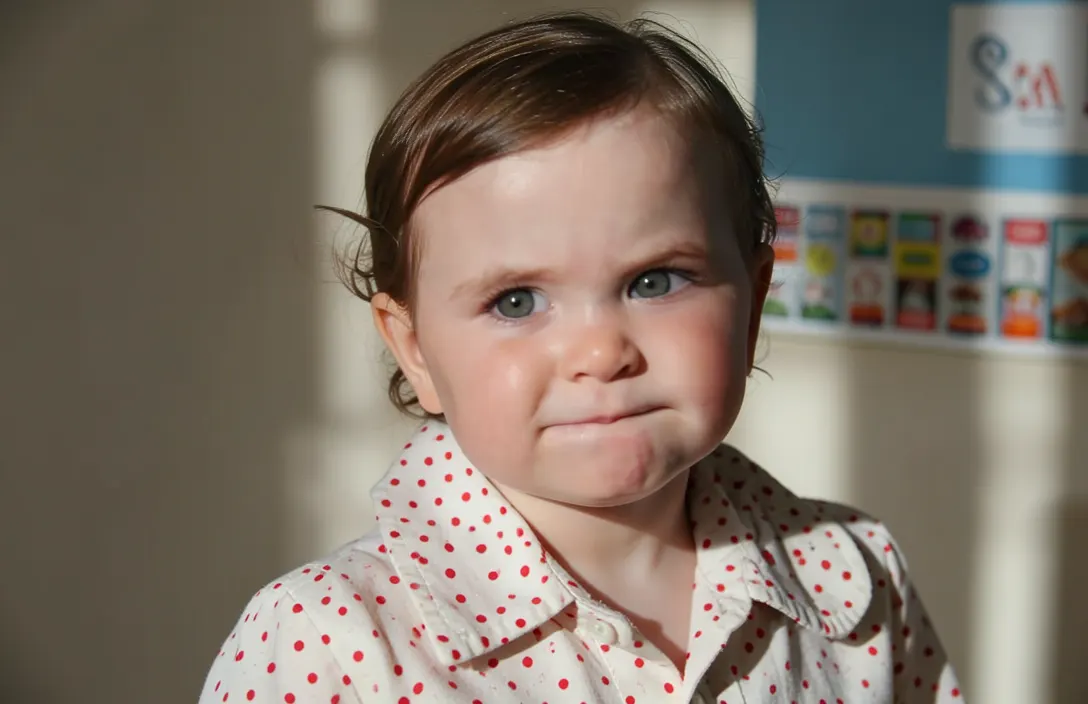

A new paper in Communications Psychology questions the use of exaggerated facial expressions in research on babies' emotional understanding. The study, led by University of Kansas researchers, shows that babies aged 6–17 months rarely encounter these expressions in everyday life. Lead author Katie Hoemann noted that traditional research often uses exaggerated smiles for happiness, scowls for anger, and frowns for sadness, but these expressions are not commonly seen in real life (source ID: 1). [1]
To investigate how often babies see these exaggerated expressions, researchers analyzed home recordings of infants aged 6 to 17 months. They found that the exact matches to hypothesized evolutionarily conserved facial expressions were rare. Even happiness, the most common emotion, was only seen in 12% of full-face exposure time, with other exaggerated expressions appearing even less frequently (source ID: 1). [1]
The study highlights that real-world facial expressions are more varied and context-dependent than previously assumed. Hoemann explained that the same facial movements can mean different things in different contexts, and that emotional development likely involves a broader range of information beyond simplified expressions (source ID: 1). [1]
Researchers suggest that babies' understanding of emotion develops through a complex set of interactions, rather than just from exaggerated facial expressions. Hoemann emphasized the need for future studies to consider the full range of information infants encounter, including words, gestures, and other sensory cues, to better understand emotional learning (source ID: 1). [1]
Advertisement
The study was conducted by researchers from the University of Kansas, Rutgers University, and other institutions. The data analyzed in the study was collected through monthly, hourlong home recordings of infants aged 6 to 17 months. These recordings were used to categorize the infants' exposures to faces and facial expressions. The research team included lead author Katie Hoemann, assistant professor of psychology at KU, and co-leader Jeffrey M. Girard, associate professor of psychology at KU. Additional coauthors included researchers from Rutgers University, Northeastern University, Massachusetts General Hospital, and the University of California, Davis. The work was published in the journal Communications Psychology in 2026, with the DOI: 10.1038/s44271-026-00539-z. [1]
The research team examined how often babies encounter exaggerated facial expressions in real life. They found that these expressions are rarely seen in everyday interactions. For instance, happiness was the most commonly observed emotion, but even in this case, exaggerated expressions were only present 12% of the time when babies were seeing full faces. The study highlights that real-world facial expressions are more variable and context-dependent than the simplified configurations typically used in emotion perception research. The findings challenge the assumption that these exaggerated expressions are reliable and prevalent in everyday life. [1]
The study also emphasizes that emotional learning in infants is influenced by a broader range of factors beyond facial expressions. Caregiver language, for example, plays a significant role in how infants interpret emotional cues. Researchers are examining how infants' exposure to facial movements relates to the language they hear from caregivers, particularly the use of emotion-related words such as 'gross' or 'yucky.' This research is currently being led by Shannon M. Brady of Rutgers University. The findings suggest that infants gather emotional information from a complex interplay of facial expressions, words, gestures, movement, and other sensory inputs. [1]
A new paper in Communications Psychology questions the use of exaggerated facial expressions in research on babies' emotional understanding. The study, led by University of Kansas researchers, shows that babies ages 6–17 months rarely encounter these expressions in everyday life—and rarely see full faces at all (source ID: 1). Lead author Katie Hoemann, assistant professor of psychology at KU, noted that traditional research often assumes specific facial configurations are evolutionarily conserved as ways of communicating particular emotions. However, the study found that these exaggerated expressions are not commonly seen in real-world settings. [1]
Advertisement
To investigate how often babies see these exaggerated expressions, researchers analyzed home recordings of infants aged 6 to 17 months. The study highlights that real-world facial expressions are more varied and context-dependent than previously assumed (source ID: 1). When researchers looked for exact matches to facial configurations that have been hypothesized to be evolutionarily conserved, they found that it was really rare. Even happiness, which was relatively the most common, only accounted for 12% of full-face exposure time. [1]
The findings suggest that babies' understanding of emotion develops through a much broader and more complex set of factors and interactions than simplified facial expressions can capture (source ID: 1). Hoemann emphasized that real-world faces are much more varied in expression, and the same facial configurations can signify different things in different settings. This challenges the traditional approach to emotional development research, which has often relied on a limited set of facial expressions. [1]
Sources
Prepared with AI assistance from the cited sources.
The Cali Reporter newsletter
The stories worth your time.
California, the country, and what comes next. Join our free newsletter for reporting that keeps you informed.
More in Health & Medicine
- Understanding Fascia and the Evidence Behind Fascia Release
Fascia is a connective tissue that plays a structural role in the human body, but evidence supporting specific exercises or tools for 'fascia release' remains limited.
- Antidepressant Effectiveness and Long-Term Use
A new review suggests that some antidepressants may be more effective than others in helping people manage depression symptoms over the long term, according to a study published in The Lancet Psychiatry.
- Experimental Weight-Loss Drug Shows Promise for Knee Osteoarthritis Pain
A new study suggests that an experimental weight-loss drug, retatrutide, may significantly reduce knee pain in people with osteoarthritis and obesity.