Assembly Language: A Gateway to Understanding Computer Architecture
Assembly language serves as a foundational tool for understanding how computers operate at the lowest level, offering insights into hardware interactions and performance optimization.

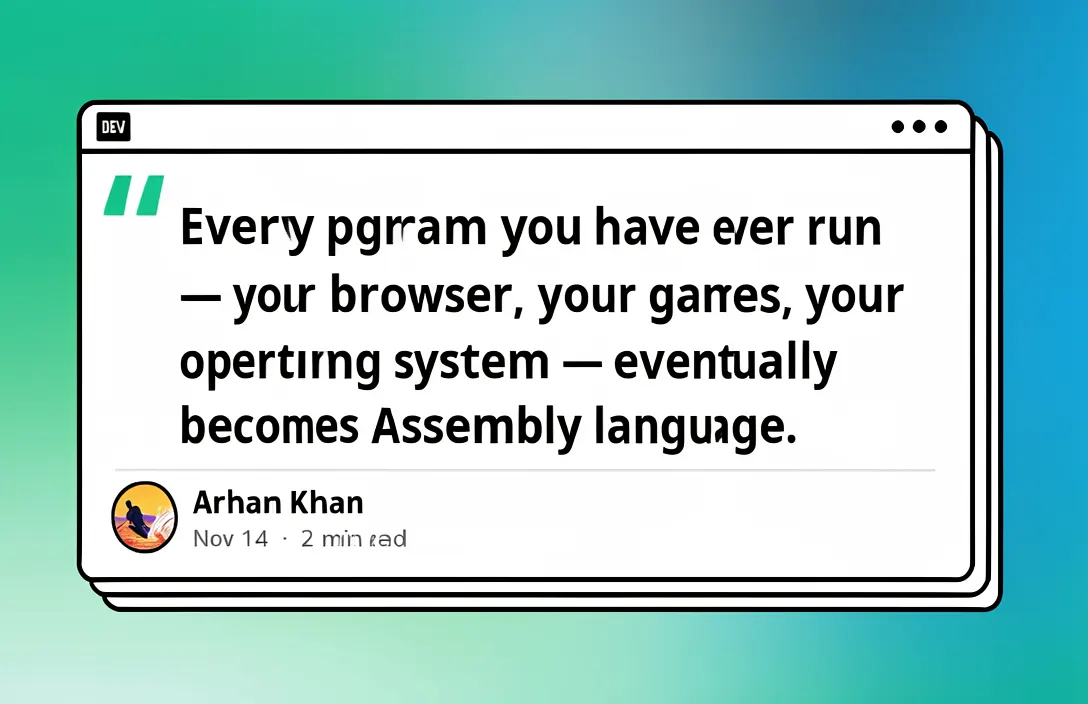

Every program, from web browsers to operating systems, eventually translates into Assembly language, which is the lowest-level programming language humans write by hand. It acts as a readable layer over machine code executed by the CPU. While not typically used for building web applications, learning Assembly provides insight into how computers function, including concepts like registers, memory, and the stack. According to Dev.to, Assembly language lacks high-level constructs such as if statements, loops, and variables, instead relying on direct manipulation of registers and memory addresses (Dev.to, 1). [1]
A simple x86-64 program that exits with code 42 demonstrates how Assembly interacts directly with the CPU. The program uses the mov instruction to copy values into registers and the syscall instruction to request the operating system to perform an action. This direct approach removes the mystery of how computers operate, allowing developers to understand the underlying mechanics of functions, buffer overflows, and compiler optimizations (Dev.to, 1). [1]
Learning Assembly is recommended for students, embedded developers, and security researchers who want to understand performance at a deep level. While it is not suited for everyday programming tasks, it serves as a learning tool for those who want to comprehend what happens when code runs. Dev.to suggests starting with tools like NASM and online assemblers, and recommends writing simple programs such as one that exits with a specific code or prints "Hello" using syscalls (Dev.to, 1). [1]
Every program, from web browsers to operating systems, eventually translates into Assembly language, which is the lowest-level programming language humans write by hand. According to Dev.to, Assembly is a thin, readable layer over the machine code your CPU actually executes. It is not typically used for building web applications, but it is invaluable for learning how computers really work, including concepts like registers, memory, and the stack. This understanding can help explain why certain programming languages perform better in specific scenarios. [1]
Advertisement
A simple x86-64 program that exits with code 42 demonstrates how Assembly interacts directly with the CPU. Dev.to provides an example of such a program, which involves moving values into registers and making system calls. This example illustrates that what is written in Assembly is almost exactly what the CPU does, with no abstraction hiding underneath. This direct interaction makes Assembly an excellent tool for learning the inner workings of computer systems. [1]
Learning Assembly is recommended for students, embedded developers, and security researchers who want to understand performance at a deep level. According to Dev.to, it removes the mystery of how programs operate and makes developers better debuggers in every other language. It also provides insights into why certain operations, like buffer overflows or function calls, are costly or dangerous. However, Assembly is not suited for everyday use and is best treated as a learning tool or a specialist tool for specific applications. [1]
Every program, from web browsers to operating systems, eventually translates into Assembly language, which is the lowest-level programming language humans write by hand (Dev.to). Assembly serves as a direct interface between human code and the CPU, allowing developers to interact with hardware at a fundamental level. This language lacks high-level constructs such as if statements, loops, and variables, instead relying on registers, memory, and direct CPU instructions to perform tasks (Dev.to). [1]
A simple x86-64 program that exits with code 42 demonstrates how Assembly interacts directly with the CPU. This program uses a minimal set of instructions, including moving a value into a register and making a system call, to execute a task (Dev.to). Learning Assembly provides insight into concepts such as the stack, memory management, and the performance implications of high-level languages like Python (Dev.to). [1]
Advertisement
Assembly is particularly recommended for students studying computer science, embedded developers, and security researchers who want to understand performance at a deep level (Dev.to). It removes the mystery of how computers operate, offering a clear view of how functions are called, why buffer overflows are dangerous, and how compilers optimize code (Dev.to). [1]
Sources
Prepared with AI assistance from the cited sources.
The Cali Reporter newsletter
The stories worth your time.
California, the country, and what comes next. Join our free newsletter for reporting that keeps you informed.
More in Technology
- Modern Web Guidance 1.0 and Browser Compatibility
Modern Web Guidance 1.0, announced by Chrome for Developers on November 10, introduces browser compatibility data to assist coding agents in building web features. The initiative emphasizes the importance of fallback…
- Apache mod_http2 Vulnerability Detection with Nmap
A new Nmap scripting module has been developed to detect the Apache mod_http2 vulnerability (CVE-2026-119618), addressing the challenges of identifying affected systems accurately.
- Securing Remote Vendor Access in Industrial Networks
Best practices for managing remote vendor access in operational technology (OT) networks emphasize controlled access points, multifactor authentication, and time-bound sessions to reduce cybersecurity risks.