Artists Confront Technology as Both Pathogen and Cure in Midtown Show
An intergenerational group of artists explores technology's dual role in contemporary culture at 260 Madison, an exhibition in a derelict Midtown office building.

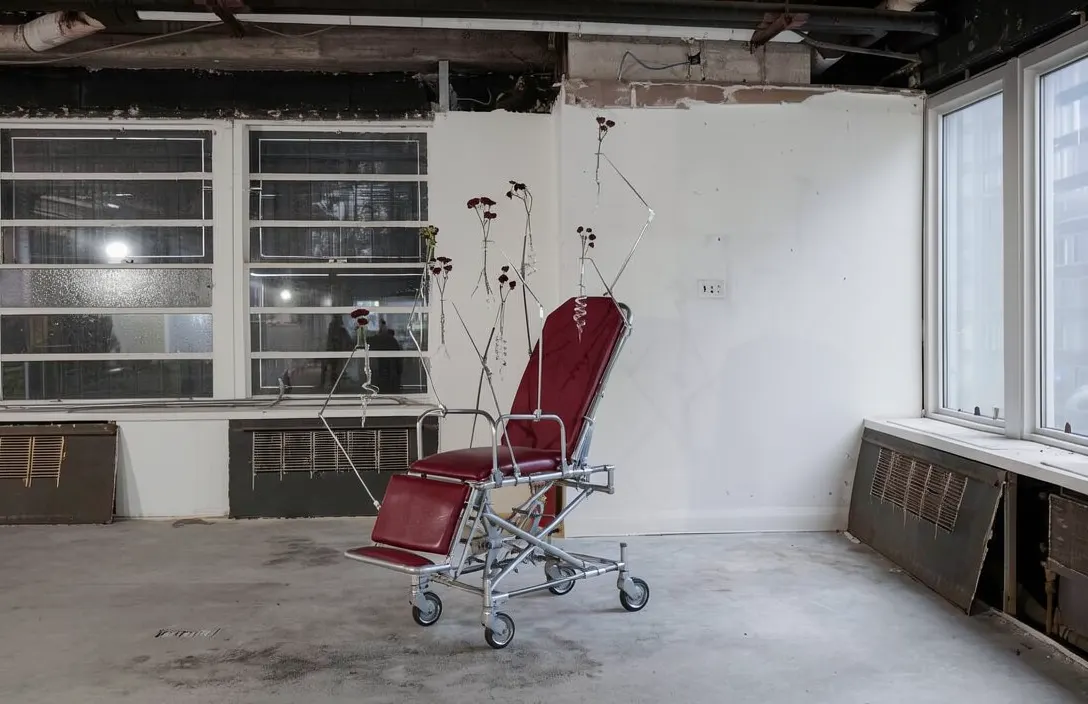
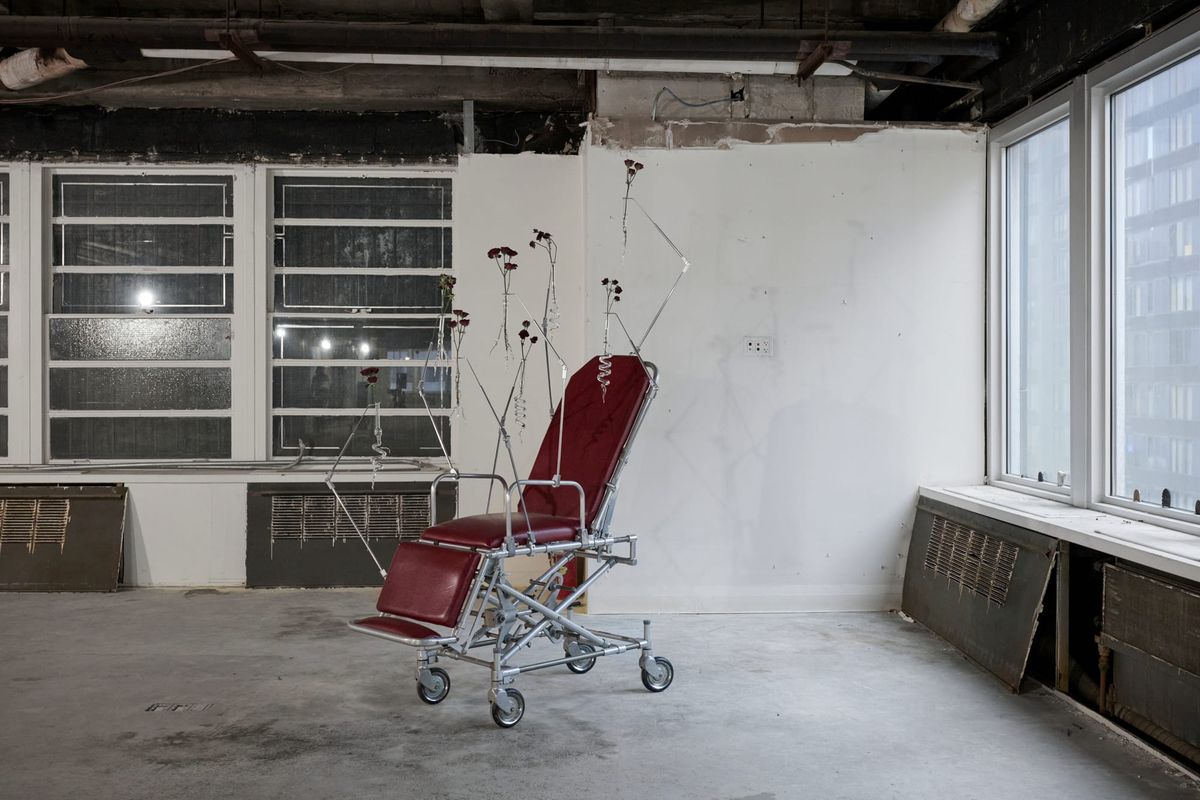
An intergenerational group of artists confronts technology as both a pathogen and a cure for today’s cultural ailments in the husk of an office at 260 Madison. The exhibition, curated by Shaina Tabak, Dayana Matesheva, and Edison Niebla Rodríguez, features work by over 50 artists, including self-taught and non-traditionally educated practitioners. The show, which opened on September 24 and runs through November 22, takes place in a 23,000-square-foot office space provided free of charge by AmTrustRE, a real estate company preparing the building for future corporate tenants. The exhibition is described as an intergenerational, 'inter-everything' show that reflects on the role of technology in modern society (Hyperallergic). [1]
One of the standout works in the exhibition is Jon Kessler’s towering nine-foot-tall sculpture, titled 'It Takes a Global Village Idiot' (2018), which references philosopher Marshall McLuhan’s theory about the global village. The sculpture forces viewers to confront the fact that the quick fixes of amusement proffered by technology rely on the same methods of data extraction that undergird systemic violence. The curators emphasize that the show does not aim to be escapism but rather a direct engagement with the discomfort of the present moment (Hyperallergic). [1]
The exhibition also includes works that explore the degradation associated with extractive economies, such as Theresa Tomi Faison’s 'The Long Tail' (2026), which features a river of digital spam ending at the viewer’s feet. The curators describe the space as shaped by 'junkspace,' a term coined by architect Rem Koolhaas to describe the fallout after modernization has run its course. The artists have used the existing conditions of the office, including gutted bathrooms and stripped concrete floors, as part of the installation process (Hyperallergic). [1]
The exhibition also features works that blur the line between the hand and technology, such as Brian Oakes’s 'Vessel 9' (2025), which gathers 3D-modeled circuit boards into a suspended 'techno-Gothic' chandelier. The curators view technology not as something that has arrived in the 20th century, but as something that has made humanity possible, including language, a chisel, and everything else. The exhibition continues through November 22, with a related exhibition, 'HOW I FEEL,' opening in the former Duane Reade space in December (Hyperallergic). [1]
Advertisement
The exhibition 260 Madison is located on the 14th floor of a 1950s office building at 260 Madison Avenue in Midtown Manhattan. The space, which spans 23,000 square feet, was previously unoccupied and had been prepared by the real estate company AmTrustRE for future corporate tenants. The curators, Shaina Tabak, Dayana Matesheva, and Edison Niebla Rodríguez, were granted free access to this derelict space for the duration of the exhibition, which ran from September 24 to November 22, 2026. The building itself, with its drop ceilings, exposed HVAC systems, and stripped concrete floors, embodies the concept of 'junkspace' as described by architect Rem Koolhaas — the remnants of modernization that remain after technological and infrastructural development has run its course. This raw, abandoned environment served as a foundational element for the exhibition’s site-specific interventions and curatorial vision. [1]
The project scope of 260 Madison involved over 50 artists, including self-taught and non-traditionally educated practitioners, and featured a wide range of media, from sculpture and video art to installation and performance. Works by artists such as Jon Kessler, Theresa Tomi Faison, and Matt Mullican were prominently displayed, with some pieces directly responding to the building’s existing infrastructure. For example, Ivana Dama’s sound work “The Air Was Already Here” (2026) used the building’s exposed air vents, while Mullican’s monumental graphite piece “Representing The Work” (2026) covered a 47-foot span of unused wall space. The exhibition also included contributions from alumni of platforms such as Do Not Research and Rhizome, with many works addressing themes of surveillance, AI, and internet culture. [1]
The history of the 260 Madison exhibition is tied to the building’s previous use as an office space and its eventual transformation into an art venue. The real estate developers initially approached Columbia University’s School of the Arts with the idea of activating a 36,000-square-foot gutted Duane Reade on the building’s ground floor, but this plan was retracted due to ongoing construction. Instead, the exhibition was moved to the 14th floor, where it was hosted in the derelict office space. The original plan for the Duane Reade space will be realized in a different form next month, with a new group exhibition curated by Tabak titled HOW I FEEL, opening on December 3. This shift highlights the fluid and often unpredictable nature of real estate and art collaborations in the context of urban redevelopment. [1]
Documented limits of the 260 Madison project include its temporary nature and the constraints imposed by the building’s existing conditions. The exhibition was explicitly situated within the framework of a derelict office space, which meant that curators and artists had to work with the building’s existing infrastructure rather than altering it significantly. Some works, such as Anthony Discenza’s “Offers” (2026), which featured a pile of unopened credit card and loan offer letters, blurred the line between corporate detritus and artistic intervention. Additionally, the curators emphasized that the exhibition was not meant to be an escape from contemporary issues but rather a confrontation with them, as stated by Edison Niebla Rodríguez, who referenced the quote from Werner Herzog: 'The poet must not avert his eyes.' This approach reflects a broader curatorial ethos that seeks to engage with the discomfort and urgency of the present moment rather than offering easy solutions or distractions. [1]
Advertisement
An intergenerational group of artists confronts technology as both a pathogen and a cure for today’s cultural ailments in the husk of an office at 260 Madison. The exhibition includes Jon Kessler’s towering nine-foot-tall sculpture, 'It Takes a Global Village Idiot' (2018), which references philosopher Marshall McLuhan’s theory about the global village. This work forces viewers to confront the fact that the quick fixes of amusement proffered by technology rely on the same methods of data extraction that undergird systemic violence (Source ID: 1). [1]
The exhibition also includes works that explore the degradation associated with extractive economies, such as Theresa Tomi Faison’s 'The Long Tail' (2026), which features a river of digital spam ending at the viewer’s feet. The curators describe the space as shaped by 'junkspace,' a term coined by architect Rem Koolhaas to describe the fallout that 'remains after modernization has run its course' (Source ID: 1). [1]
Among the works in the exhibition are those that either take the form of readymades or play with the history of the form, including Anthony Discenza’s windowsill pile of unopened credit card and loan offer letters in 'Offers' (2026) and Eva and Franco Mattes’s distended taxidermied cat, 'Longcat' (2026). The curators view the exhibition through 'layers of site responsiveness,' with some works emerging during the eleventh hour of installation and others being directly occasioned by the space itself (Source ID: 1). [1]
Sources
Prepared with AI assistance from the cited sources.
The Cali Reporter newsletter
The stories worth your time.
California, the country, and what comes next. Join our free newsletter for reporting that keeps you informed.
More in Culture
- Trump Meme Recasts Nvidia CEO as Butler Incident Survivor
President Donald Trump shared a meme reimagining Nvidia CEO Jensen Huang as the hero of his own assassination attempt in Butler, Pennsylvania, according to Hyperallergic.
- Venice Biennale Concludes with High Attendance Despite Challenges
The 61st Venice Biennale concluded with a record number of visitors despite challenges including political disputes and the curator's sudden passing.
- Artist Residencies as a Strategy for Navigating Precarity
Artists are increasingly relying on residencies as a means of coping with economic instability, commercial pressures, and the demands of sustained artistic production.