Ancient Roman Coffin May Hold Medieval Abbot
A skeleton discovered in an ancient Roman coffin at Westminster Abbey may belong to a medieval abbot, according to new archaeological research.

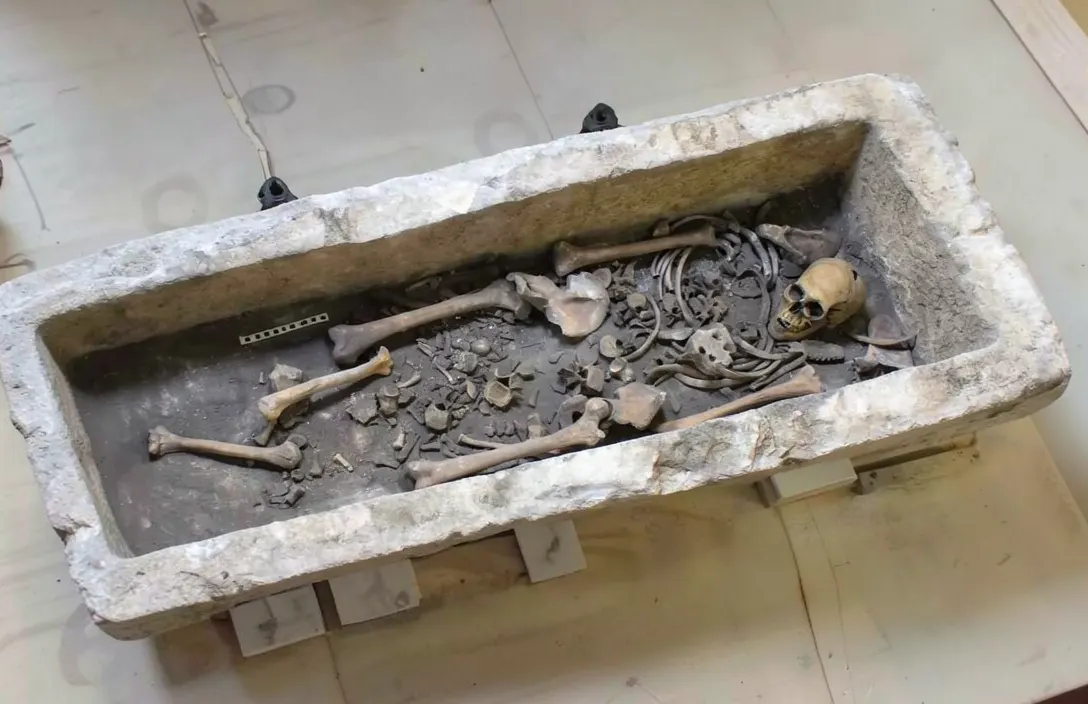
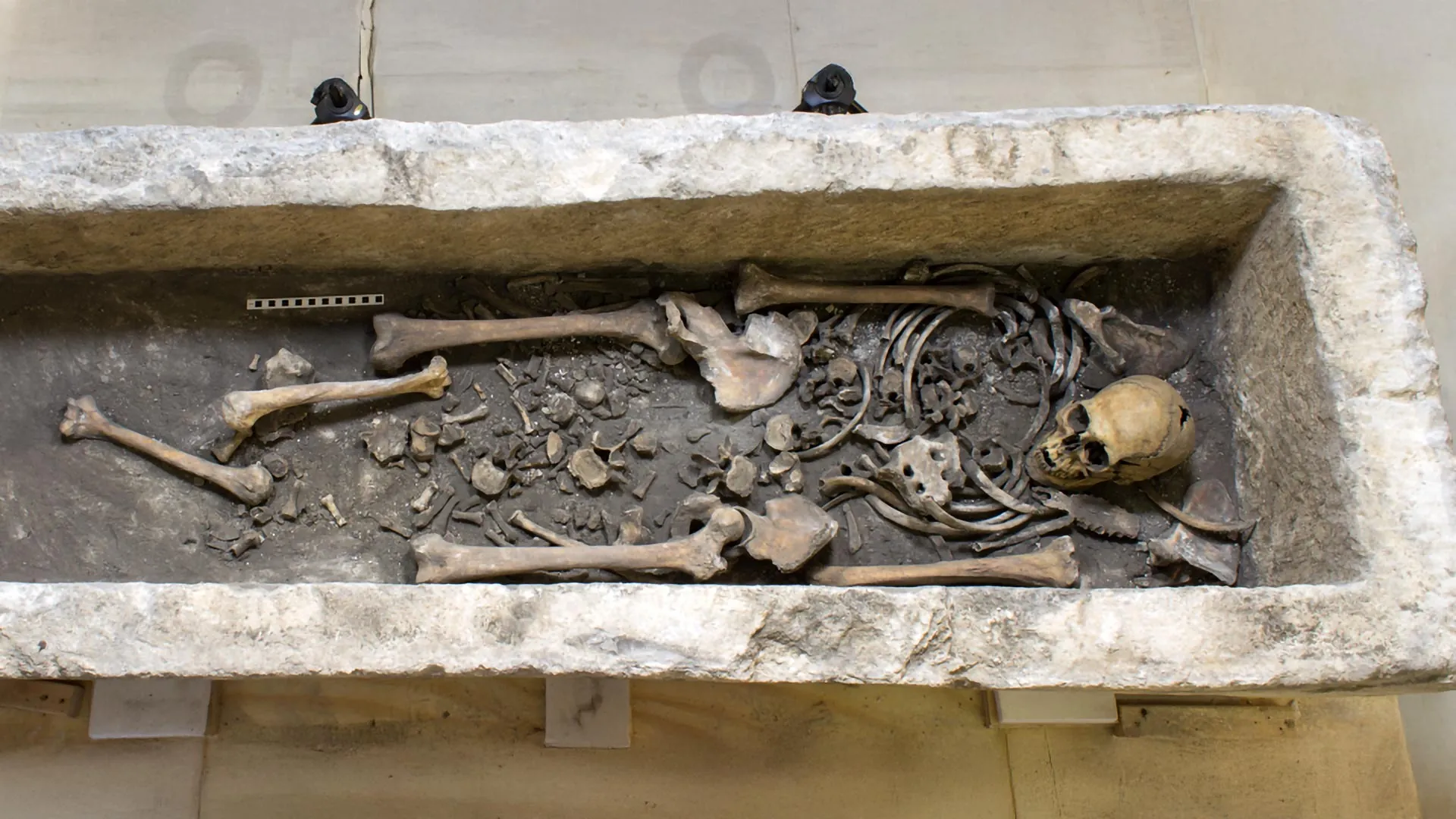
A mystery surrounding a skeleton discovered inside an ancient Roman coffin at Westminster Abbey may finally be approaching a solution, more than 150 years after the remains first attracted attention. The limestone sarcophagus, formally excavated in 1869, carries an inscription naming Valerius Amandinus, a wealthy Briton who lived in London sometime between 300 and 400 AD. However, a large Latin cross carved into its lid dates to approximately the 10th or 11th century, suggesting that the person buried inside lived hundreds of years after the coffin was originally made (source ID 1). [1]
Now, fresh archaeological research points to a surprising explanation. The remains likely belong to a prominent medieval monk, and researchers have narrowed the possible identities to two men who once led Westminster Abbey. Two Medieval Abbots Emerge as Leading Candidates The new findings, published in the peer-reviewed Journal of the British Archaeological Association, come from Professor Warwick Rodwell, Consultant Archaeologist at Westminster Abbey. Rodwell identifies Aelfwig, an abbot who died around 1020, as the strongest candidate (source ID 1). [1]
Carbon dating confirms a 1,000-year-old burial. A bone sample was submitted to the Scottish Universities Environmental Research Centre for radiocarbon analysis, which produced a date range of 987 to 1052 AD. This places the burial firmly within the late Saxon period, centuries after the Roman sarcophagus was originally created. The dates also align with the deaths of both Aelfwig and Wulnoth, strengthening the case that the skeleton belonged to one of these medieval abbots (source ID 1). [1]
A Skeleton Thought Lost Was Hiding in Plain Sight The investigation also brought renewed attention to an unexpected discovery made in 2016. For years, researchers had believed that the skeleton was missing, leaving an important part of the burial's history unresolved. That assumption proved mistaken when the sarcophagus was transported to a conservation studio. PCA researchers removed its lid and were surprised to find an almost complete human skeleton still inside (source ID 1). [1]
Advertisement
A skeleton discovered inside an ancient Roman coffin at Westminster Abbey, which had been the subject of mystery for over 150 years, may finally be approaching a solution. The limestone sarcophagus, formally excavated in 1869, carries an inscription naming Valerius Amandinus, a wealthy Briton who lived in London sometime between 300 and 400 AD. However, a large Latin cross carved into its lid dates to approximately the 10th or 11th century, suggesting that the person buried inside lived hundreds of years after the coffin was originally made (source ID: 1). [1]
Fresh archaeological research points to a surprising explanation, with the remains likely belonging to a prominent medieval monk. Researchers have narrowed the possible identities to two men who once led Westminster Abbey: Aelfwig, an abbot who died around 1020, and Wulnoth, who succeeded Aelfwig and died in 1049. Both men are believed to have been buried at the Abbey, making either a plausible match for the skeleton (source ID: 1). [1]
New excavations and scientific dating have provided further evidence. A bone sample submitted to the Scottish Universities Environmental Research Centre for radiocarbon analysis produced a date range of 987 to 1052 AD, placing the burial firmly within the late Saxon period. This aligns with the deaths of both Aelfwig and Wulnoth, strengthening the case that the skeleton belonged to one of these medieval abbots (source ID: 1). [1]
The investigation also brought renewed attention to an unexpected discovery made in 2016. Researchers had long believed that the skeleton was missing, but this assumption proved mistaken when the sarcophagus was transported to a conservation studio. PCA researchers removed its lid and were surprised to find an almost complete human skeleton still inside (source ID: 1). [1]
Advertisement
The Cali Reporter newsletter
The stories worth your time.
California, the country, and what comes next. Join our free newsletter for reporting that keeps you informed.
More in Science
- Volcanic Eruption Reshapes Iwo Jima’s Coastline
A recent volcanic eruption near Iwo Jima has temporarily extended the island's black sand beaches, though the longevity of the new land remains uncertain.
- Galaxies in the NGC 7771 Group Engage in Cosmic Merger
Astronomers have observed a group of galaxies in the NGC 7771 Group, which is located approximately 200 million light-years away in the constellation Pegasus. These galaxies are in the process of merging, a phenomenon…
- NASA Awards Contract for NOAA’s Near Earth Orbit Network Program
NASA has awarded a contract to Northrop Grumman Systems Corporation for the Sounder for Microwave-Based Applications (SMBA) instruments on NOAA’s Near Earth Orbit Network (NEON) satellites. The contract includes a…