Alzheimer's Disease Protein Atlas Reveals Hidden Cell-Type Biology
A new study from St. Jude Children's Research Hospital has created a cell-type-specific protein atlas for Alzheimer's disease, uncovering previously unknown protein changes and intercellular communication networks.

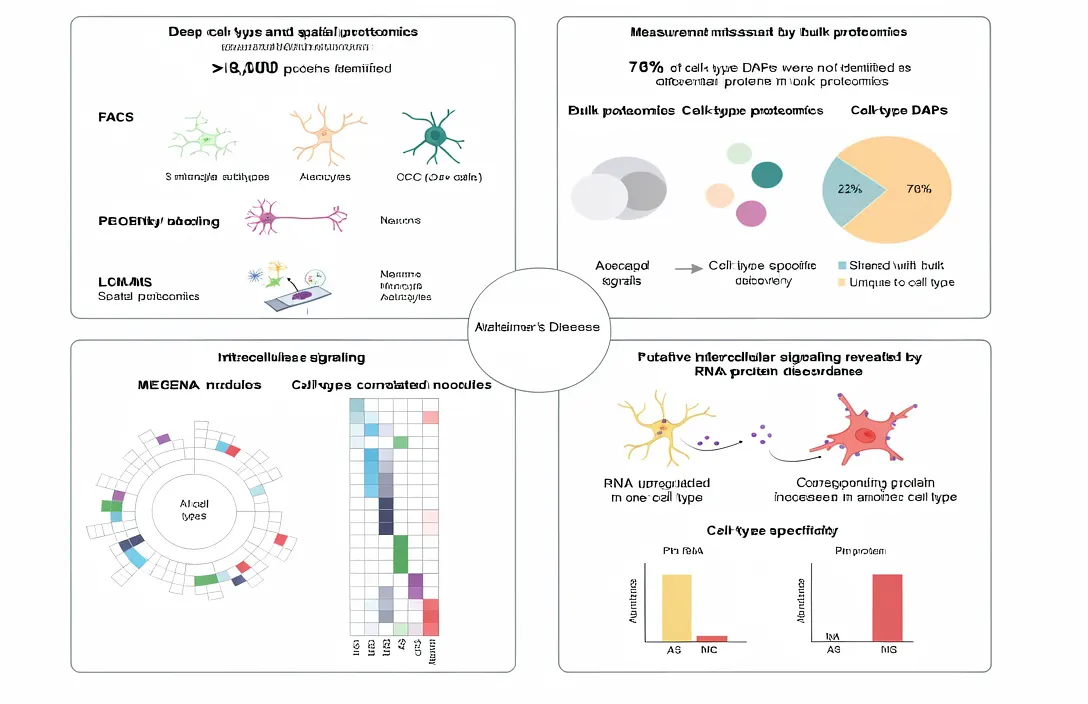

A new study from St. Jude Children's Research Hospital has created a cell-type-specific protein atlas for Alzheimer's disease, uncovering previously unknown protein changes and intercellular communication networks (Source ID: 1). The research, published in Neuron, used a combination of next-generation mass spectrometry, single-cell RNA sequencing, and spatial omics to profile more than 13,000 proteins across multiple ages and cell types in Alzheimer's disease mouse models. This approach identified over 3,000 proteins with altered levels, 78% of which had not been previously captured. The findings provide much-needed cell type–specific context to the pathology of Alzheimer's disease. [1]
The study revealed that microglia, which express many Alzheimer's disease risk genes, showed almost all changes to this cell type were previously undetected (Source ID: 1). A focused analysis of microglia and other cell types uncovered a potential intercellular communication network, where proteins made in one cell type are secreted and function in another cell type. For example, the protein pleiotrophin was found to have high RNA levels in astrocytes but high protein levels in microglia, suggesting an interesting form of intercellular communication. [1]
The research team combined multiple data types to obtain the needed cell type–specific information, allowing direct comparison with single-cell RNA sequencing data (Source ID: 1). This integration identified thousands of cell type–specific changes in proteins, pathways, and intercellular signaling networks. The study highlights the importance of high-resolution cell-type proteomics and matched samples analyzed using multiple methods and at different levels of resolution. The atlas and accompanying data sets provide a valuable resource for future research into Alzheimer's disease. [1]
A new study from St. Jude Children's Research Hospital has created a cell type–specific protein atlas for Alzheimer's disease, revealing previously undetected changes in microglia and uncovering potential intercellular communication networks (Source ID: 1). The research team combined multiple data types to obtain the needed cell type–specific information, allowing direct comparison with single-cell RNA sequencing data (Source ID: 1). The study revealed that microglia, which express many Alzheimer's disease risk genes, showed almost all changes to this cell type were previously undetected (Source ID: 1). [1]
Advertisement
The research team used next-generation mass spectrometry methods in conjunction with single-cell RNA sequencing and spatial omics to obtain the needed cell type–specific information (Source ID: 1). This integrated approach allowed the identification of more than 3,000 proteins with altered levels across a range of cell types, 78% of which had not been captured before (Source ID: 1). The study also uncovered a potential intercellular communication network, where proteins made in one cell type are secreted and function in another cell type (Source ID: 1). [1]
By profiling over 13,000 proteins across multiple ages and cell types in two Alzheimer's disease mouse models, the team identified thousands of cell type–specific changes in proteins, pathways, and intercellular signaling networks (Source ID: 1). The findings provide much-needed cell type–specific context to the pathology of Alzheimer's disease (Source ID: 1). The study also revealed that proteins found in one cell type were expressed by, and secreted from, another cell type, as seen with the protein pleiotrophin (Source ID: 1). [1]
A new study from St. Jude Children's Research Hospital has developed a cell type–specific protein atlas using brains from mouse models of Alzheimer's disease. By combining and comparing multiple types of data, the research team identified more than 3,000 proteins with altered levels across a range of cell types, 78% of which had not been captured before (Source ID: 1). This atlas provides much-needed cell type–specific context to the pathology of Alzheimer's disease, highlighting the importance of integrating proteomic and transcriptomic data to understand cellular changes in the brain (Source ID: 1). [1]
The research team used next-generation mass spectrometry methods in conjunction with single-cell RNA sequencing and spatial omics to obtain the needed cell type–specific information. By profiling over 13,000 proteins across multiple ages and cell types in two Alzheimer's disease mouse models, the team identified thousands of cell type–specific changes in proteins, pathways, and intercellular signaling networks (Source ID: 1). This integrated approach enabled direct comparison with single-cell RNA sequencing data, revealing new insights into the complex interactions between different cell types in the brain (Source ID: 1). [1]
Advertisement
The study also uncovered a potential intercellular communication network, where proteins made in one cell type are secreted and function in another cell type. For example, the protein pleiotrophin was found to have high RNA levels in astrocytes but high protein levels in microglia, suggesting that proteins can be secreted and function in different cell types (Source ID: 1). This discovery highlights the importance of considering both RNA and protein levels when studying disease mechanisms and identifying potential disease drivers (Source ID: 1). [1]
A new study from St. Jude Children's Research Hospital has developed a cell type–specific protein atlas using brains from mouse models of Alzheimer's disease. This atlas was created by combining and comparing multiple types of data, which allowed the identification of more than 3,000 proteins with altered levels across a range of cell types, 78% of which had not been captured before (Source ID: 1). [1]
The research team used next-generation mass spectrometry methods in conjunction with single-cell RNA sequencing and spatial omics to obtain the needed cell type–specific information. By profiling over 13,000 proteins across multiple ages and cell types in two Alzheimer's disease mouse models, the team identified thousands of cell type–specific changes in proteins, pathways, and intercellular signaling networks (Source ID: 1). [1]
The study also uncovered a potential intercellular communication network, where proteins made in one cell type are secreted and function in another cell type. For example, the protein pleiotrophin was found to have high RNA levels in astrocytes but high protein levels in microglia, suggesting that these proteins are secreted and function in microglia (Source ID: 1). [1]
Advertisement
The Cali Reporter newsletter
The stories worth your time.
California, the country, and what comes next. Join our free newsletter for reporting that keeps you informed.
More in Health & Medicine
- Understanding Fascia and the Evidence Behind Fascia Release
Fascia is a connective tissue that plays a structural role in the human body, but evidence supporting specific exercises or tools for 'fascia release' remains limited.
- Antidepressant Effectiveness and Long-Term Use
A new review suggests that some antidepressants may be more effective than others in helping people manage depression symptoms over the long term, according to a study published in The Lancet Psychiatry.
- Experimental Weight-Loss Drug Shows Promise for Knee Osteoarthritis Pain
A new study suggests that an experimental weight-loss drug, retatrutide, may significantly reduce knee pain in people with osteoarthritis and obesity.